Kidney and eye
Lupus Nephritis (LN)
Lupus nephritis is kidney inflammation that develops alongside systemic lupus erythematosus (SLE), a systemic autoimmune condition. Current understanding describes immune complexes and autoantibodies binding to structures within the glomerulus and surrounding kidney tissue, which draws in inflammatory cells and can damage the filtering units over time. It is one of the more serious manifestations of lupus and is described in the research literature as a significant contributor to illness and reduced kidney function among people with the disease.
Research describes kidney involvement occurring in roughly half of people with SLE, and it can sometimes be the first sign that leads to a lupus diagnosis. Because the course varies widely from person to person, ongoing monitoring and specialist care play a central role in protecting long-term kidney function.
Common signs
Foamy urine from protein, blood in the urine, swelling in the legs or around the eyes, high blood pressure, more frequent urination especially at night, and the wider lupus picture such as joint pain, fatigue, and rash.
This is a plain-language summary for orientation, not a diagnosis. Mechanisms are described as current understanding, not settled fact. Work with your own clinician for your care.
Where this comes from
Questions people ask
What causes lupus nephritis?+
What are the symptoms of lupus nephritis?+
How many people with lupus develop lupus nephritis?+
In a doctor’s words
“The combined expertise at Yale continues to advance the understanding and clinical care of SLE, and is part of a global mission to accelerate the discovery of a cure.”
Joseph Craft, MD, Rheumatologist; directs a Yale School of Medicine laboratory devoted to the study of systemic lupus erythematosus
Read more at Yale Medicine ↗
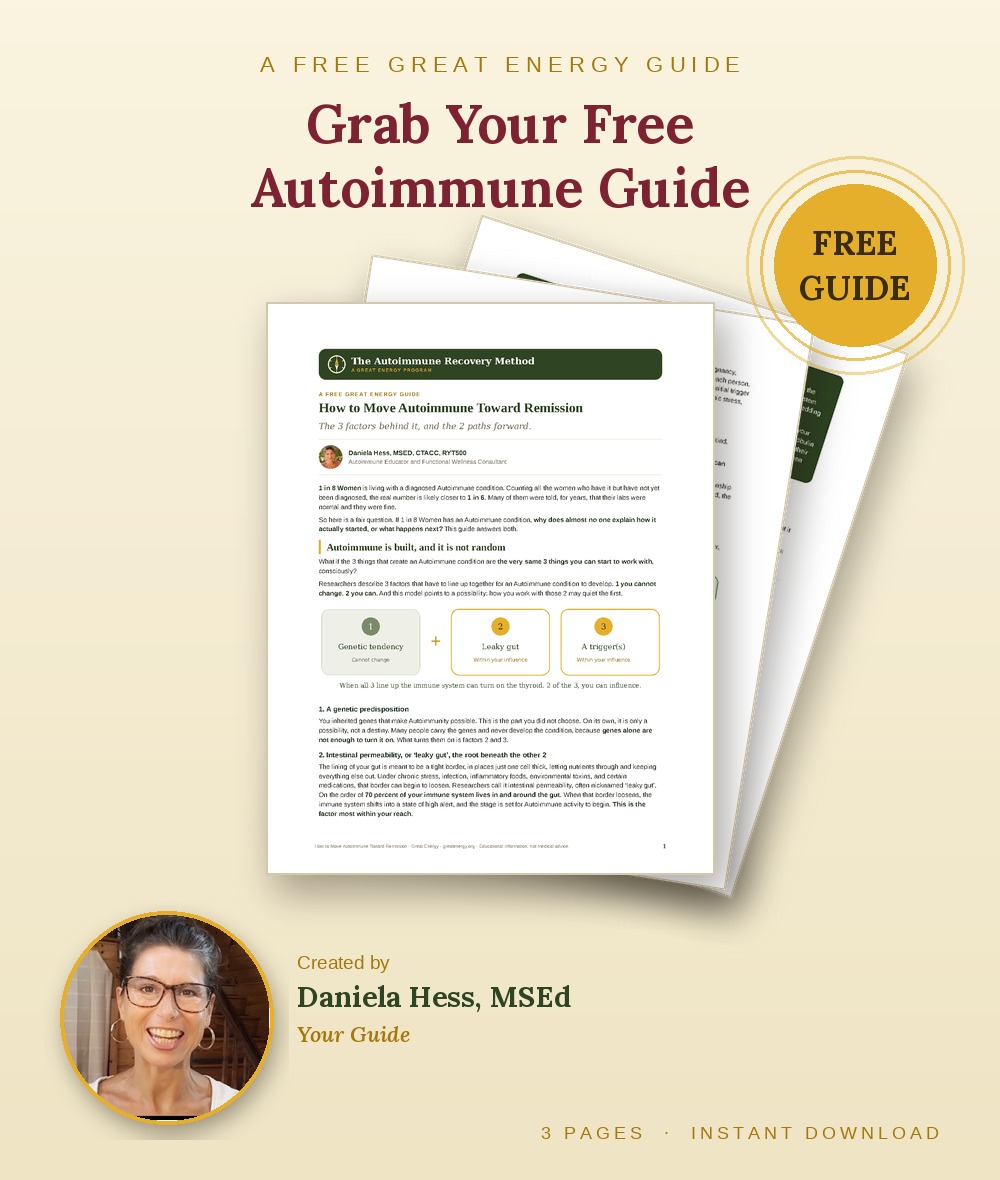
How to Move Autoimmune Toward Remission
The 3 factors behind an Autoimmune condition and the 2 paths forward, free, straight to your inbox.
No spam. Unsubscribe anytime.
Your guide is on its way. You can also open it now (PDF).

Articles from Daniela
Daniela Hess, MSEd, is a co-founder of Great Energy and an Autoimmune Educator and Functional Wellness Consultant who lives and thrives with Hashimoto’s. She is not a licensed medical provider.
AIP recipes to try
A place to start in the kitchen while you work on this with your own clinician: