Neuromuscular and nervous system
MOG antibody disease (MOGAD)
MOG antibody disease is an autoimmune condition of the central nervous system associated with antibodies against myelin oligodendrocyte glycoprotein (MOG), a protein on the surface of myelin, the insulating coating around nerve fibers. It's now recognized as distinct from both multiple sclerosis and neuromyelitis optica spectrum disorder, though the three can look similar at onset. It can occur as a single event or take a relapsing course, and it often responds well to treatment, though individual attacks vary in severity.
Research describes MOGAD as a rare condition, with worldwide prevalence estimated at roughly 1.3 to 2.5 per 100,000 people and annual incidence around 3.4 to 4.8 per million. Unlike many autoimmune neurological conditions, it doesn't show a strong sex difference, and about 30 percent of cases begin in childhood, with an average age of onset around 30.
Common signs
Optic neuritis with vision loss is the most common presentation, often in both eyes, along with transverse myelitis (weakness, numbness, bladder changes) and, especially in children, an ADEM-like picture with confusion and multiple neurological symptoms.
This is a plain-language summary for orientation, not a diagnosis. Mechanisms are described as current understanding, not settled fact. Work with your own clinician for your care.
Questions people ask
How is MOGAD different from MS and NMOSD?+
What are the symptoms of MOGAD?+
Can MOGAD be cured, or does it come back?+
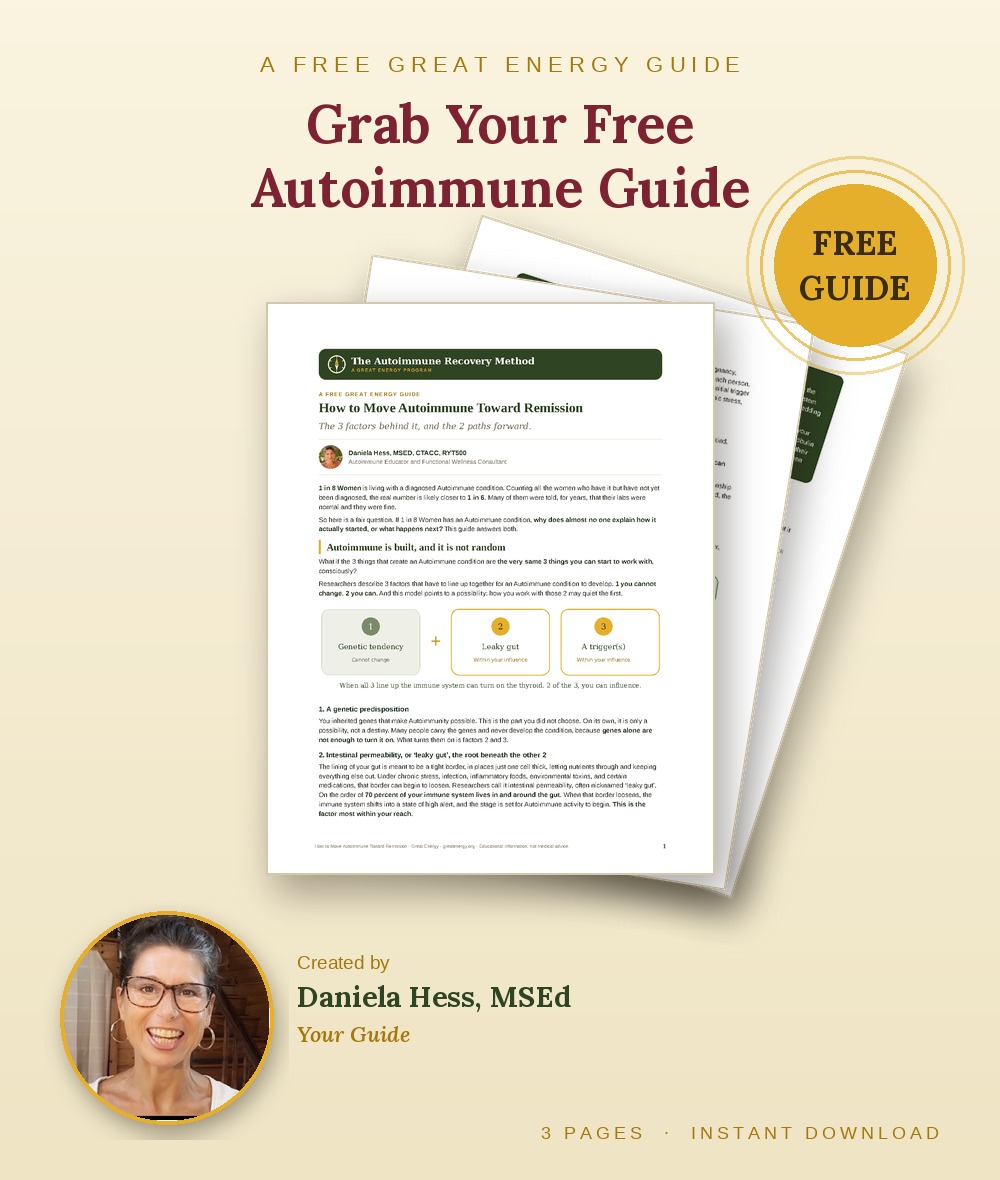
How to Move Autoimmune Toward Remission
The 3 factors behind an Autoimmune condition and the 2 paths forward, free, straight to your inbox.
No spam. Unsubscribe anytime.
Your guide is on its way. You can also open it now (PDF).

Articles from Daniela
Daniela Hess, MSEd, is a co-founder of Great Energy and an Autoimmune Educator and Functional Wellness Consultant who lives and thrives with Hashimoto’s. She is not a licensed medical provider.
AIP recipes to try
A place to start in the kitchen while you work on this with your own clinician: