Neuromuscular and nervous system
Multiple sclerosis (MS)
Multiple sclerosis is a condition in which the immune system attacks myelin, the protective sheath around nerve fibers in the brain and spinal cord, along with the nerve fibers themselves. Autoreactive T cells and B cells cross an impaired blood-brain barrier and drive inflammation and progressive nerve damage, which is part of why MS symptoms and their severity vary so widely from person to person depending on which part of the central nervous system is affected.
MS affects an estimated 2.3 million people worldwide and is typically diagnosed between ages 20 and 50, occurring roughly 2 to 3 times more often in women than men.
Common signs
Fatigue, numbness or tingling, vision problems such as blurred or double vision and pain with eye movement, muscle weakness, stiffness or spasticity, balance and coordination trouble, dizziness, bladder and bowel changes, and problems with memory, attention, or processing. Symptoms often come and go in relapses, or build steadily over time, depending on the disease course.
This is a plain-language summary for orientation, not a diagnosis. Mechanisms are described as current understanding, not settled fact. Work with your own clinician for your care.
Questions people ask
What causes multiple sclerosis?+
What are the first signs of MS?+
Is multiple sclerosis hereditary?+
In a doctor’s words
“The diagnosis of multiple sclerosis can be devastating, but there is a lot of hope as well. You can have MS and still live a happy and healthy life.”
Meghan Romba, MD, neurologist, Multiple Sclerosis Center at UW Medical Center, Northwest
Read more at Right as Rain by UW Medicine ↗
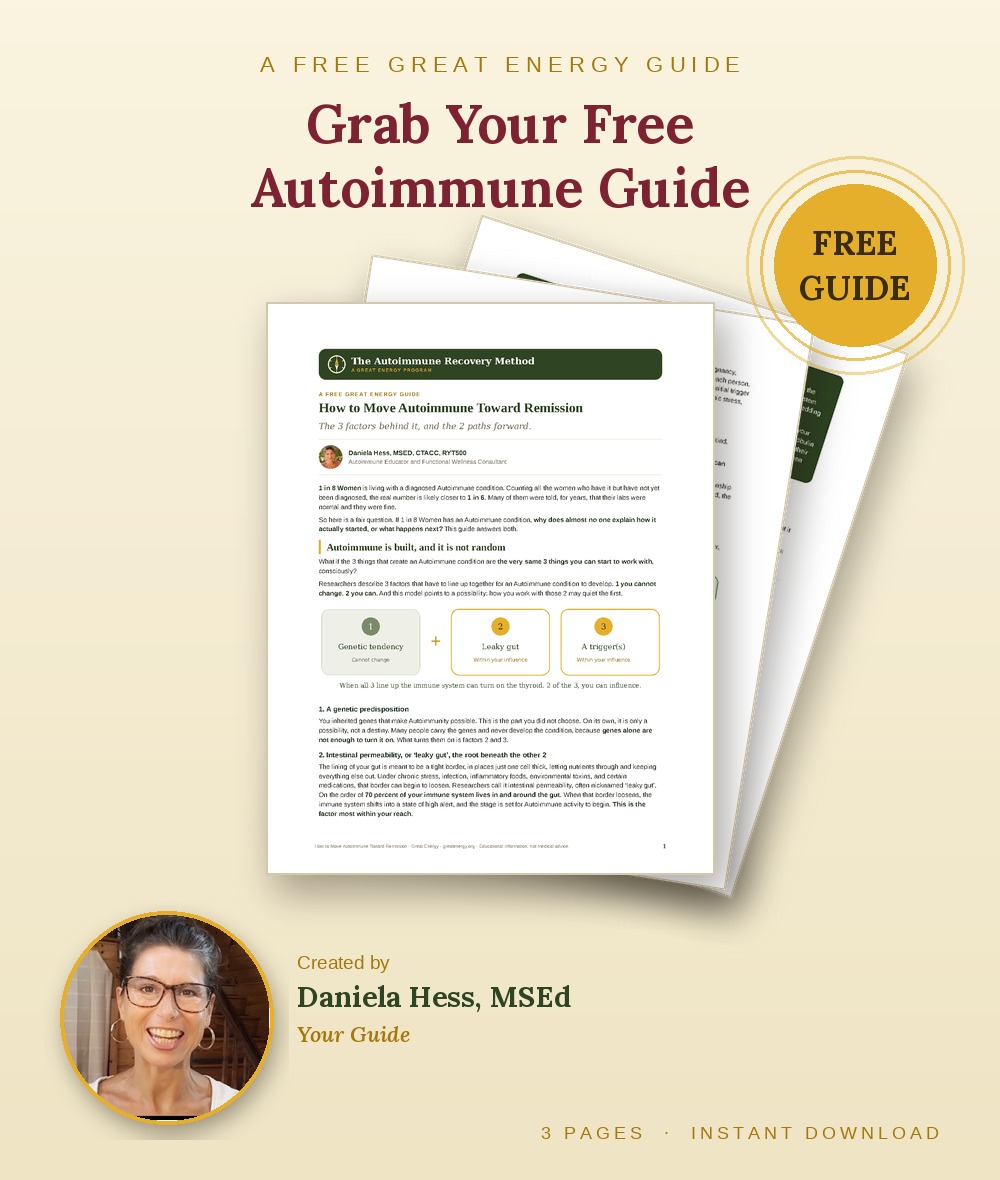
How to Move Autoimmune Toward Remission
The 3 factors behind an Autoimmune condition and the 2 paths forward, free, straight to your inbox.
No spam. Unsubscribe anytime.
Your guide is on its way. You can also open it now (PDF).

Articles from Daniela
Daniela Hess, MSEd, is a co-founder of Great Energy and an Autoimmune Educator and Functional Wellness Consultant who lives and thrives with Hashimoto’s. She is not a licensed medical provider.
AIP recipes to try
A place to start in the kitchen while you work on this with your own clinician: