Neuromuscular and nervous system
Myalgic encephalomyelitis / chronic fatigue syndrome (ME/CFS) (related)
Myalgic encephalomyelitis, also called chronic fatigue syndrome, is autoimmune-related or suspected by some researchers, though its cause is not established. It is a complex, long-term illness affecting the nervous, immune, and energy-producing systems, often beginning after an infection. Immune dysregulation is one of several leading areas of research, and studies describe reduced natural killer cell activity, T-cell exhaustion, and diverse autoantibodies in many patients, together suggesting an autoimmune component without confirming one as the cause. Other research threads point to metabolic and neuroendocrine changes, and no single marker has been confirmed.
ME/CFS mostly affects adults, with peak onset between twenty and forty-five and a female-to-male ratio near three to one. Prevalence estimates vary by study, from roughly 0.3 to just under 1 percent of the population.
Common signs
Profound fatigue not relieved by rest, post-exertional malaise (a worsening of symptoms after even small physical or mental effort), unrefreshing sleep, difficulty with memory and concentration (brain fog), lightheadedness or worsening symptoms on standing, and pain.
This is a plain-language summary for orientation, not a diagnosis. Mechanisms are described as current understanding, not settled fact. Work with your own clinician for your care.
Questions people ask
Is ME/CFS an autoimmune disease?+
What is post-exertional malaise?+
Who does ME/CFS affect?+
In a doctor’s words
“Number one is hope – just the word hope. The progress has been very significant in the past few years. We've really made big gains. Learning about ME/CFS with the new tools we have available really will bring effective therapy.”
Nancy Klimas, MD, Professor of Medicine, physician, researcher, and longtime ME/CFS advocate (Nova Southeastern University)
Read more at Phoenix Rising (ME/CFS community site), "Dr. Klimas on the Immune System, Treatment Options, Recovery and the Future" ↗
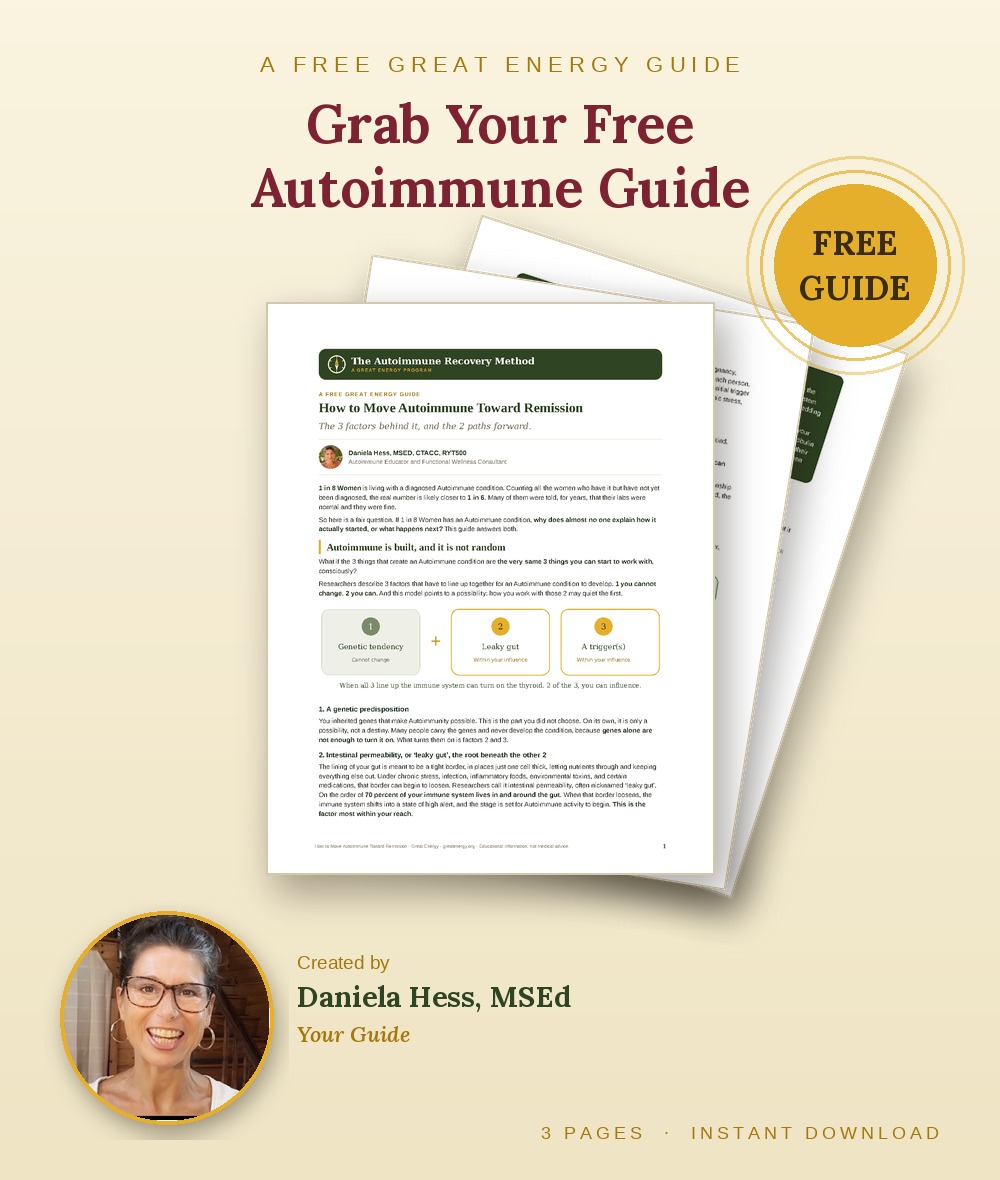
How to Move Autoimmune Toward Remission
The 3 factors behind an Autoimmune condition and the 2 paths forward, free, straight to your inbox.
No spam. Unsubscribe anytime.
Your guide is on its way. You can also open it now (PDF).

Articles from Daniela
Daniela Hess, MSEd, is a co-founder of Great Energy and an Autoimmune Educator and Functional Wellness Consultant who lives and thrives with Hashimoto’s. She is not a licensed medical provider.
AIP recipes to try
A place to start in the kitchen while you work on this with your own clinician: