Neuromuscular and nervous system
Myasthenia gravis (MG)
Myasthenia gravis affects the neuromuscular junction, the point where a nerve signals a muscle to contract. Autoantibodies target key molecules at this junction, most often the acetylcholine receptor and, in a smaller group of people, muscle-specific kinase (MuSK) or a related protein called Lrp4, and this reduces the density and function of the receptors that let the signal through. The result is fatigable weakness, muscle strength that drops with repeated use and recovers with rest.
Myasthenia gravis is considered a rare disease and the most common disorder of the neuromuscular junction, with an estimated 60,000 people affected in the United States. Onset age varies widely, with the disease tending to peak in younger women and older men, and researchers expect the number of people living with it to grow as the population ages.
Common signs
Drooping eyelids, double vision, weakness that gets worse as the day goes on or with repeated effort, trouble with facial expression, difficulty speaking, chewing, or swallowing, and weakness in the neck, arms, or legs. The MuSK form tends to involve the bulbar muscles (speech and swallowing) and breathing muscles more than the eyes.
This is a plain-language summary for orientation, not a diagnosis. Mechanisms are described as current understanding, not settled fact. Work with your own clinician for your care.
Questions people ask
What causes myasthenia gravis?+
What are the symptoms of myasthenia gravis?+
What is the difference between myasthenia gravis and Lambert-Eaton myasthenic syndrome?+
In a doctor’s words
“These advances bring greater potential for more patients with MG being able to achieve a disease-free life. This will not come rapidly, but each advance is a building block to the future.”
James F. Howard Jr., MD, professor of neurology, medicine, and allied health, University of North Carolina at Chapel Hill
Read more at MedCentral ↗
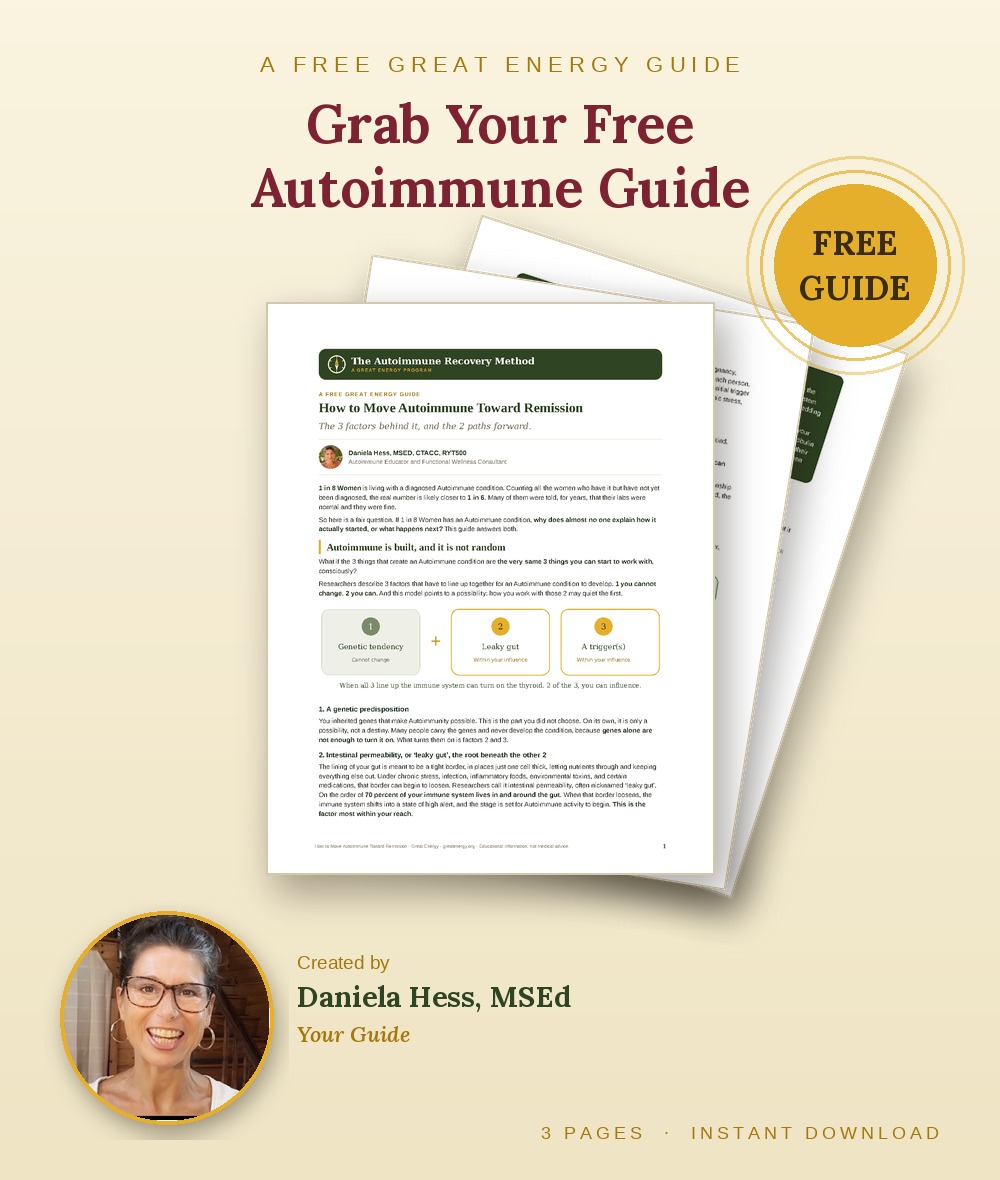
How to Move Autoimmune Toward Remission
The 3 factors behind an Autoimmune condition and the 2 paths forward, free, straight to your inbox.
No spam. Unsubscribe anytime.
Your guide is on its way. You can also open it now (PDF).

Articles from Daniela
Daniela Hess, MSEd, is a co-founder of Great Energy and an Autoimmune Educator and Functional Wellness Consultant who lives and thrives with Hashimoto’s. She is not a licensed medical provider.
AIP recipes to try
A place to start in the kitchen while you work on this with your own clinician: