Neuromuscular and nervous system
Narcolepsy type 1 (related)
Narcolepsy type 1 is autoimmune-related or suspected to be autoimmune. It involves the loss of brain cells in the hypothalamus that make hypocretin, also called orexin, a chemical that helps keep wakefulness and sleep stable. Research increasingly points to an immune process, with T cells thought to target and destroy hypocretin neurons in people with a particular genetic background.
Nearly all people with narcolepsy type 1 carry the HLA-DQB1*06:02 gene variant, compared with about 20 to 25 percent of the general population, and rates of the condition have been observed to rise following certain infections, most notably H1N1 influenza, and after the Pandemrix influenza vaccine used in parts of Europe. Researchers describe the evidence for an autoimmune basis as strong, and note it is not fully settled, since a defining autoantigen has not been confirmed.
Common signs
Strong daytime sleepiness and sudden sleep attacks, cataplexy (a brief loss of muscle tone triggered by emotion such as laughter, which is fairly specific to type 1), sleep paralysis, vivid dream-like experiences while falling asleep or waking, and disrupted nighttime sleep.
This is a plain-language summary for orientation, not a diagnosis. Mechanisms are described as current understanding, not settled fact. Work with your own clinician for your care.
Questions people ask
Is narcolepsy type 1 an autoimmune disease?+
What triggers cataplexy in narcolepsy type 1?+
What causes narcolepsy type 1?+
In a doctor’s words
“We didn't just see an improvement in symptoms; for the first time, patients simply felt cured.”
Yves Dauvilliers, MD, PhD, Director, Reference Center for Narcolepsy and Rare Hypersomnias, Montpellier University Hospital / Inserm / University of Montpellier
Read more at University of Montpellier (press release) ↗
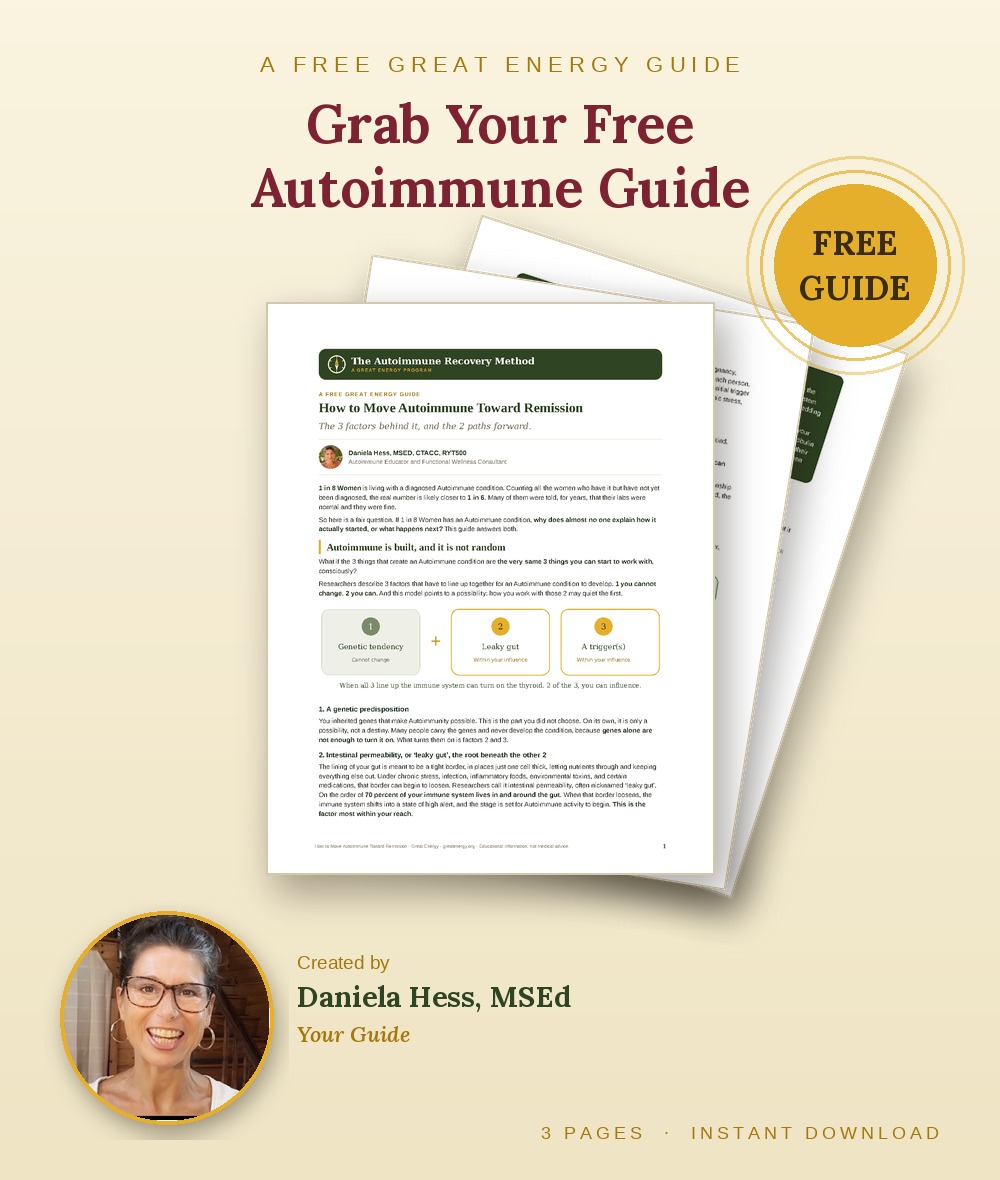
How to Move Autoimmune Toward Remission
The 3 factors behind an Autoimmune condition and the 2 paths forward, free, straight to your inbox.
No spam. Unsubscribe anytime.
Your guide is on its way. You can also open it now (PDF).

Articles from Daniela
Daniela Hess, MSEd, is a co-founder of Great Energy and an Autoimmune Educator and Functional Wellness Consultant who lives and thrives with Hashimoto’s. She is not a licensed medical provider.
AIP recipes to try
A place to start in the kitchen while you work on this with your own clinician: