Neuromuscular and nervous system
Neuromyotonia (Isaacs syndrome)
Neuromyotonia, often called Isaacs syndrome, is a condition of overactive peripheral nerves that keep firing and make muscles contract when they should be at rest. Research describes it as an antibody-mediated channelopathy, meaning antibodies are thought to target voltage-gated potassium channels on peripheral nerves, suppressing the outward potassium current that normally keeps nerve firing in check and leaving the nerve hyperexcitable. Roughly half of cases show elevated antibodies against the voltage-gated potassium channel complex, such as CASPR2, though the antibody is not found in every case. Some cases are connected to a thymoma or other tumor, so evaluation typically includes cancer screening.
Isaacs syndrome is considered rare, and because the evidence base is built mainly from case reports rather than population studies, a firm prevalence figure is not well established.
Common signs
Continuous muscle twitching or rippling described as a bag of worms (myokymia), cramps and stiffness, delayed muscle relaxation, weakness, excessive sweating, and sometimes burning or aching pain.
This is a plain-language summary for orientation, not a diagnosis. Mechanisms are described as current understanding, not settled fact. Work with your own clinician for your care.
Questions people ask
What causes Isaacs syndrome (neuromyotonia)?+
What are the symptoms of Isaacs syndrome?+
Is Isaacs syndrome linked to cancer?+
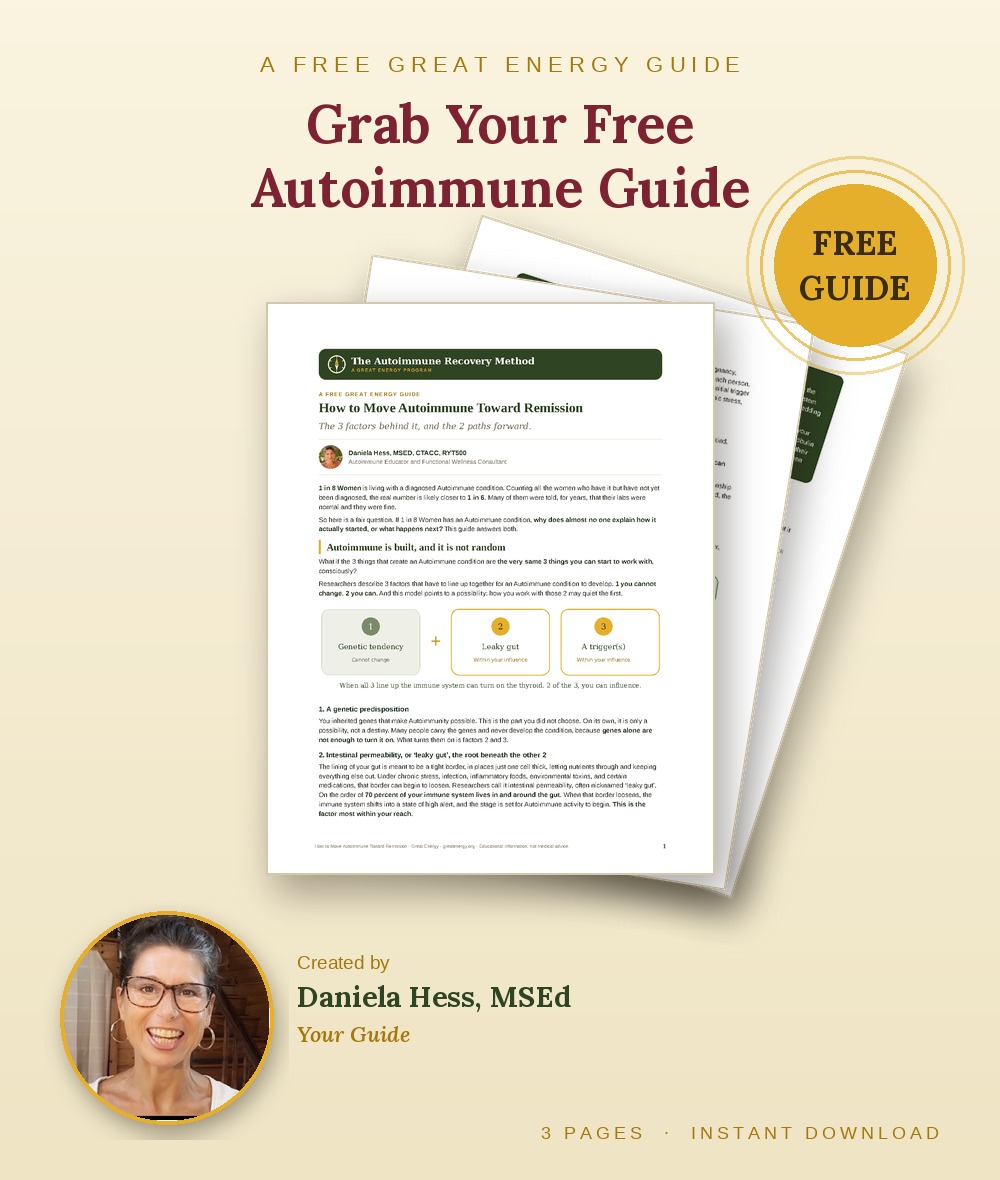
How to Move Autoimmune Toward Remission
The 3 factors behind an Autoimmune condition and the 2 paths forward, free, straight to your inbox.
No spam. Unsubscribe anytime.
Your guide is on its way. You can also open it now (PDF).

Articles from Daniela
Daniela Hess, MSEd, is a co-founder of Great Energy and an Autoimmune Educator and Functional Wellness Consultant who lives and thrives with Hashimoto’s. She is not a licensed medical provider.
AIP recipes to try
A place to start in the kitchen while you work on this with your own clinician: