Joints, muscles, and connective tissue
Palindromic rheumatism
Palindromic rheumatism produces sudden, short-lived episodes of joint inflammation that resolve completely between attacks, and research links the condition to the same autoantibodies seen in rheumatoid arthritis, including rheumatoid factor and anti-citrullinated protein antibodies, thought to provoke joint inflammation during flares.
A population-based study from South Korea estimated the incidence at roughly 7 per 100,000 person-years, occurring at similar rates in men and women, with onset typically in a person's late forties. Research describes it as more common than once believed, and it sits on a spectrum with rheumatoid arthritis. Studies following people over time have found that a meaningful share, in some cohorts around two-thirds, eventually develop chronic arthritis, most often rheumatoid arthritis, while others experience only the episodic pattern for years.
Common signs
Sudden episodes of pain, swelling, and warmth in one or a few joints, often the hands, wrists, or knees, lasting hours to days and then clearing completely. The attacks can recur unpredictably, with symptom-free stretches in between.
This is a plain-language summary for orientation, not a diagnosis. Mechanisms are described as current understanding, not settled fact. Work with your own clinician for your care.
Questions people ask
What are the symptoms of a palindromic rheumatism attack?+
Does palindromic rheumatism turn into rheumatoid arthritis?+
How common is palindromic rheumatism?+
In a doctor’s words
“Many people do not see a lot of progression of their disease, and if we can find something that prevents the flares, then they do quite well.”
Christopher Morris, MD, Rheumatologist, Arthritis Associates of Kingston, Kingston, Tennessee
Read more at CreakyJoints ↗
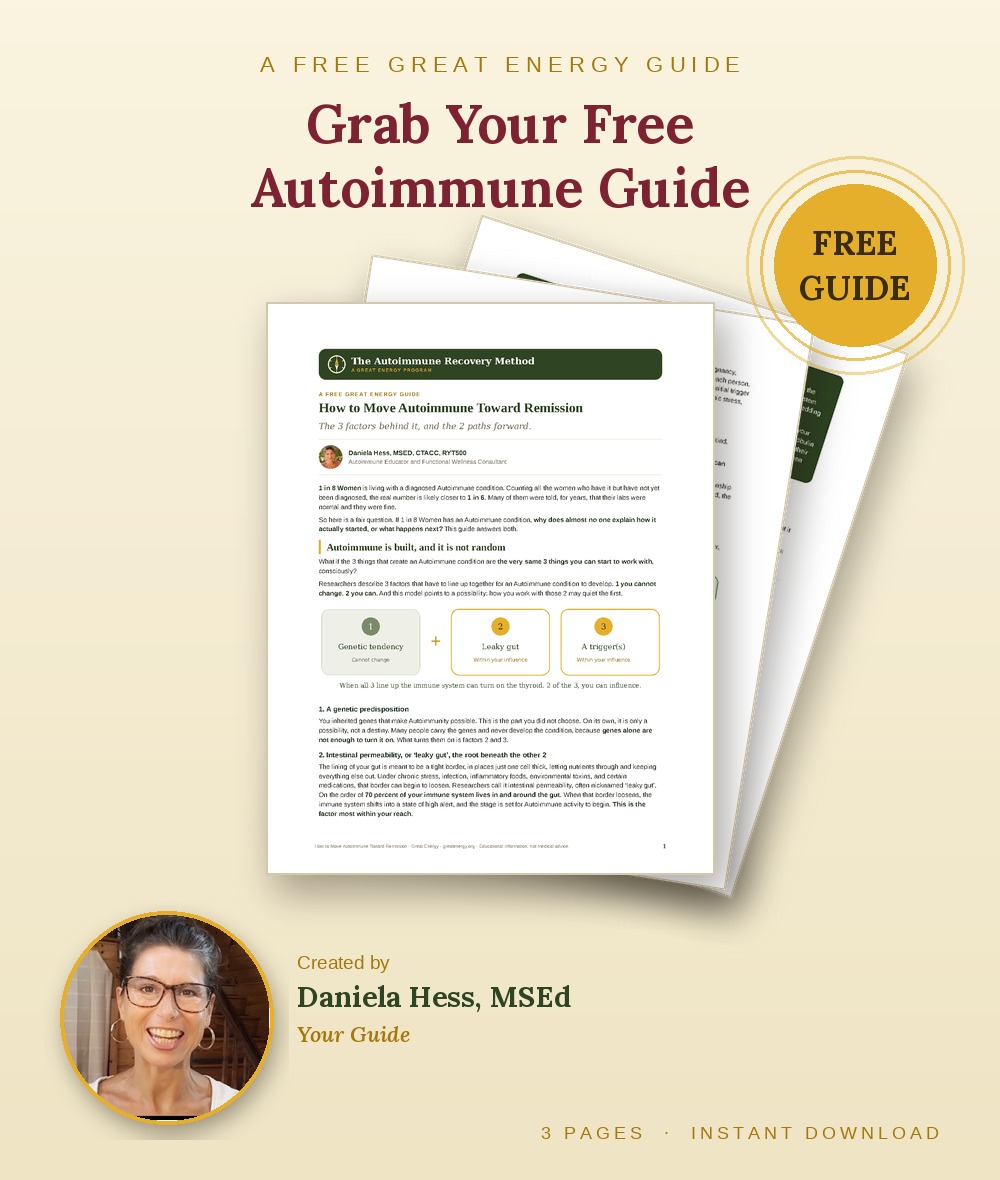
How to Move Autoimmune Toward Remission
The 3 factors behind an Autoimmune condition and the 2 paths forward, free, straight to your inbox.
No spam. Unsubscribe anytime.
Your guide is on its way. You can also open it now (PDF).

Articles from Daniela
Daniela Hess, MSEd, is a co-founder of Great Energy and an Autoimmune Educator and Functional Wellness Consultant who lives and thrives with Hashimoto’s. She is not a licensed medical provider.
AIP recipes to try
A place to start in the kitchen while you work on this with your own clinician: