Multi-system and other
PANS / PANDAS (related, pediatric)
PANS (pediatric acute-onset neuropsychiatric syndrome) and PANDAS (pediatric autoimmune neuropsychiatric disorders associated with streptococcal infections) describe a sudden, dramatic onset of obsessive-compulsive symptoms or severe food restriction in children, often after an infection. PANDAS is considered a subset of the broader PANS category and is specifically linked to group A streptococcal infection, while PANS can follow a wider range of infectious or environmental triggers. Current understanding proposes that in a susceptible child, the immune response to infection involves autoantibodies, complement activation, and inflammatory signaling that affect the basal ganglia, a brain region involved in movement and behavior regulation, based on imaging studies, though the exact mechanism is still debated among researchers and the diagnostic entities themselves remain somewhat controversial in the medical literature. Onset is typically between about 2 and 14 years old, and the abrupt onset of obsessive-compulsive behaviors or eating restriction is often accompanied by tics, anxiety, mood swings, sleep disruption, and sometimes a return of bedwetting.
Because research is still evolving, precise prevalence figures are not firmly established, and the relapsing-remitting course means some children improve while others have a more persistent path.
Common signs
A strikingly abrupt onset of obsessive-compulsive behaviors or sharply restricted eating, often alongside tics, separation anxiety, mood swings, irritability, sleep disruption, handwriting or motor changes, and sometimes a return of bedwetting. In PANDAS, symptoms tend to follow a strep infection and can flare again with each new infection, following an up-and-down course.
This is a plain-language summary for orientation, not a diagnosis. Mechanisms are described as current understanding, not settled fact. Work with your own clinician for your care.
Questions people ask
What is the difference between PANS and PANDAS?+
What are the symptoms of PANS or PANDAS in a child?+
Is PANDAS a real or controversial diagnosis?+
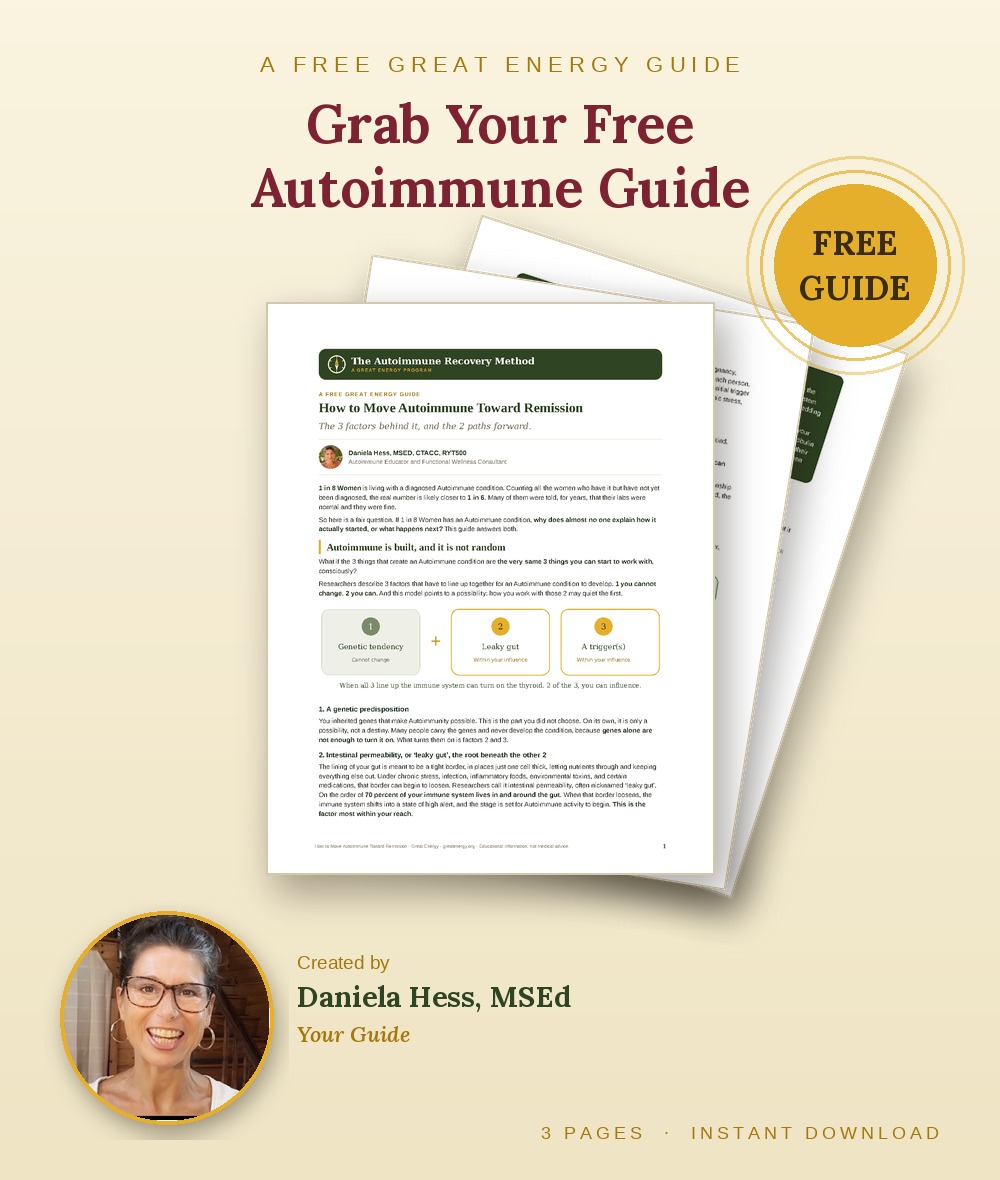
How to Move Autoimmune Toward Remission
The 3 factors behind an Autoimmune condition and the 2 paths forward, free, straight to your inbox.
No spam. Unsubscribe anytime.
Your guide is on its way. You can also open it now (PDF).

Articles from Daniela
Daniela Hess, MSEd, is a co-founder of Great Energy and an Autoimmune Educator and Functional Wellness Consultant who lives and thrives with Hashimoto’s. She is not a licensed medical provider.
AIP recipes to try
A place to start in the kitchen while you work on this with your own clinician: