Neuromuscular and nervous system
Parsonage-Turner syndrome
Parsonage-Turner syndrome, also called neuralgic amyotrophy, is a sudden inflammation of nerves in the brachial plexus, the network that supplies the shoulder and arm. Researchers consider the underlying process to be immune-mediated, and pathogenesis is thought to be multifactorial, with several observations supporting an immune-triggering event, most often a preceding infection, though it can also follow vaccination, surgery, or physical stress. It is usually a single episode, though it can recur.
Newer epidemiological research suggests the condition is substantially more common than once believed, with one large health-insurance-data study estimating an incidence of roughly 8 to 13 per 100,000 people per year, well above earlier estimates. In a series of over 300 patients the average age was in the early forties, with a majority male and a tendency to affect the right side.
Common signs
Sudden, severe pain in one shoulder or arm lasting days to weeks, followed as the pain eases by weakness and muscle wasting in the shoulder or arm, with some numbness. Recovery often takes many months.
This is a plain-language summary for orientation, not a diagnosis. Mechanisms are described as current understanding, not settled fact. Work with your own clinician for your care.
Questions people ask
What causes Parsonage-Turner syndrome?+
What are the symptoms of Parsonage-Turner syndrome?+
How long does it take to recover from Parsonage-Turner syndrome?+
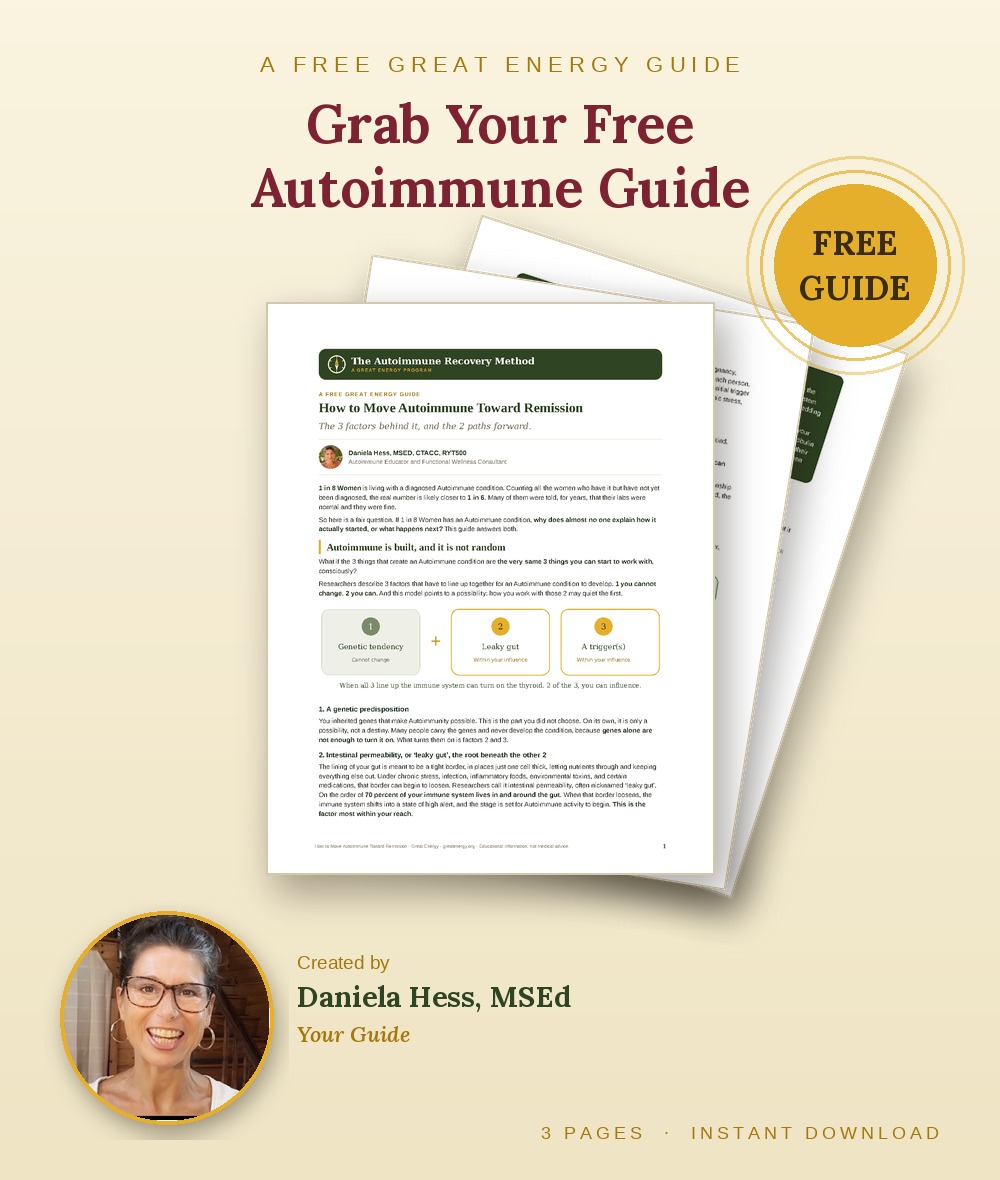
How to Move Autoimmune Toward Remission
The 3 factors behind an Autoimmune condition and the 2 paths forward, free, straight to your inbox.
No spam. Unsubscribe anytime.
Your guide is on its way. You can also open it now (PDF).

Articles from Daniela
Daniela Hess, MSEd, is a co-founder of Great Energy and an Autoimmune Educator and Functional Wellness Consultant who lives and thrives with Hashimoto’s. She is not a licensed medical provider.
AIP recipes to try
A place to start in the kitchen while you work on this with your own clinician: