Skin and hair
Pemphigus vulgaris (PV)
Pemphigus vulgaris affects the skin and mucous membranes. The immune system makes IgG antibodies against desmoglein 3 and, in many cases, desmoglein 1, proteins that hold epidermal cells together at structures called desmosomes. When those antibodies bind their targets, cell-to-cell adhesion breaks down, a process called acantholysis, and cells separate to form fragile blisters that erode easily. The condition is closely linked to specific HLA class II gene variants, which helps explain why it clusters in certain families and populations, and it tends to appear between the third and sixth decades of life.
Pemphigus vulgaris is considered a rare disease, and research also describes a notable association with thyroid disease and type 1 diabetes in affected people and their relatives, though a precise worldwide prevalence figure is not well established in the literature.
Common signs
Soft, fragile blisters and painful erosions that very often begin in the mouth and can spread to the skin and other mucous membranes such as the throat, nose, eyes, or genitals. The blisters break easily, leaving tender raw areas, and eating and swallowing can become painful when the mouth is involved. Skin blisters, when present, often start on the scalp or trunk and rupture easily.
This is a plain-language summary for orientation, not a diagnosis. Mechanisms are described as current understanding, not settled fact. Work with your own clinician for your care.
Questions people ask
What is pemphigus vulgaris and what causes it?+
What are the symptoms of pemphigus vulgaris, and where does it usually start?+
Is pemphigus vulgaris contagious?+
In a doctor’s words
“It's important to me that pemphigus and its treatments don't limit patients' ability to live their lives.”
Kyle Amber, MD, Dermatologist specializing in autoimmune blistering diseases, RUSH University Medical Center
Read more at Rush University Medical Center (Rush.edu) ↗
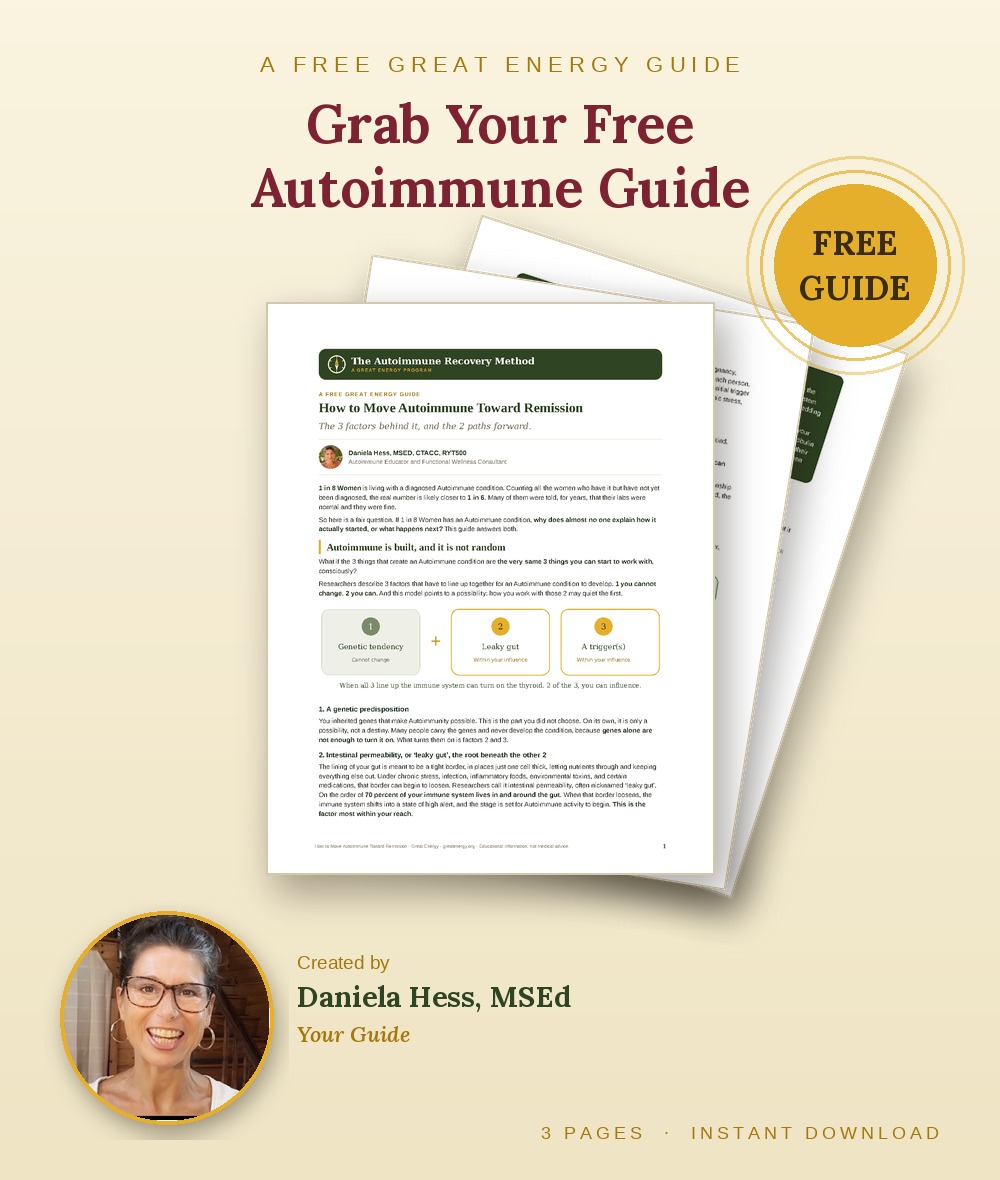
How to Move Autoimmune Toward Remission
The 3 factors behind an Autoimmune condition and the 2 paths forward, free, straight to your inbox.
No spam. Unsubscribe anytime.
Your guide is on its way. You can also open it now (PDF).
Articles from Daniela
Daniela Hess, MSEd, is a co-founder of Great Energy and an Autoimmune Educator and Functional Wellness Consultant who lives and thrives with Hashimoto’s. She is not a licensed medical provider.
AIP recipes to try
A place to start in the kitchen while you work on this with your own clinician: