Gastrointestinal and liver
Pernicious anemia
Pernicious anemia develops as a downstream effect of autoimmune gastritis, centered on the stomach and the body's ability to absorb vitamin B12. Research describes it as a multifactorial autoimmune condition in which autoantibodies against parietal cells and intrinsic factor impair the stomach's ability to produce intrinsic factor and can also block it directly, so dietary B12 cannot be absorbed in the small intestine. Without enough B12, the body cannot make healthy red blood cells, and nerve tissue can also be affected over time.
It is considered the most common cause of vitamin B12 deficiency anemia worldwide, and research notes that diagnosis remains challenging because of its varied presentations. Pernicious anemia is understood mainly as a disease of older adults, and it frequently occurs alongside other autoimmune conditions such as autoimmune thyroid disease and type 1 diabetes.
Common signs
Tiredness, weakness, pale or slightly yellow skin, shortness of breath, and a sore or smooth tongue are common. Because B12 also supports the nervous system, some people notice numbness or tingling in the hands or feet, balance trouble, memory or mood changes, or brain fog. Symptoms build slowly and can be hard to reverse if left untreated too long.
This is a plain-language summary for orientation, not a diagnosis. Mechanisms are described as current understanding, not settled fact. Work with your own clinician for your care.
Questions people ask
What is pernicious anemia?+
What causes pernicious anemia?+
Does pernicious anemia run in families?+
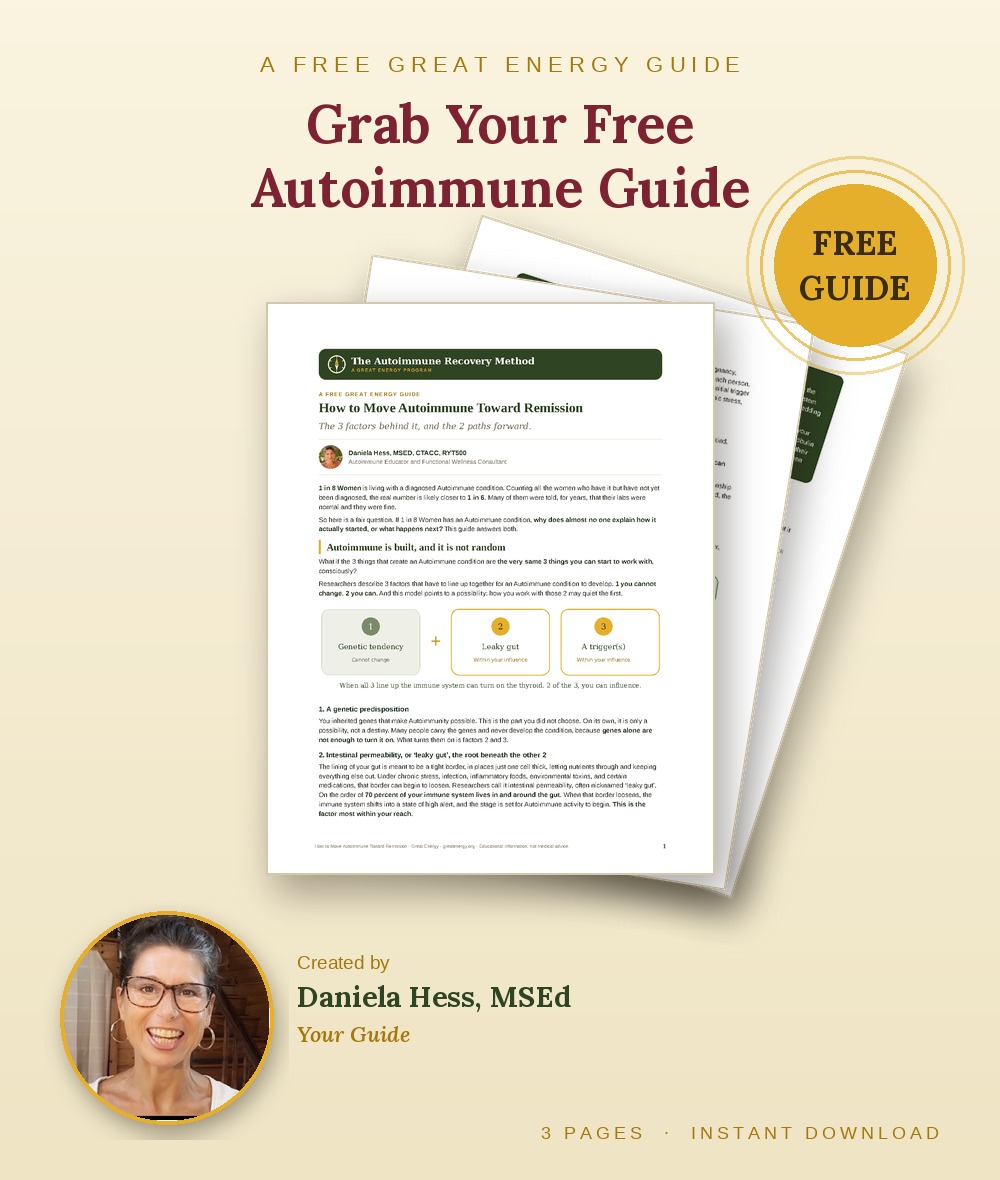
How to Move Autoimmune Toward Remission
The 3 factors behind an Autoimmune condition and the 2 paths forward, free, straight to your inbox.
No spam. Unsubscribe anytime.
Your guide is on its way. You can also open it now (PDF).

Articles from Daniela
Daniela Hess, MSEd, is a co-founder of Great Energy and an Autoimmune Educator and Functional Wellness Consultant who lives and thrives with Hashimoto’s. She is not a licensed medical provider.
AIP recipes to try
A place to start in the kitchen while you work on this with your own clinician: