Blood and blood vessels
Polyarteritis nodosa (PAN)
Polyarteritis nodosa is inflammation of medium-sized, and sometimes small, arteries, in which the immune system appears to attack vessel walls in a pattern of necrotizing vasculitis that can reduce blood flow to the tissues those arteries supply. Unlike some related vasculitis conditions, PAN typically does not involve ANCA antibodies or granuloma formation, and it preferentially affects the skin, peripheral nerves, and gastrointestinal tract.
It is rare, with a French population study estimating prevalence at roughly 31 cases per million adults, and that same research found the condition about twice as common in people of European ancestry. Cases were once frequently linked to hepatitis B infection, and while that association has declined substantially as hepatitis B rates have fallen, current research increasingly explores genetic and other contributing factors.
Common signs
Fever, fatigue, weight loss, muscle and joint aches, skin nodules, ulcers or a lacy purplish rash, numbness or weakness from nerve involvement, abdominal pain, and high blood pressure.
This is a plain-language summary for orientation, not a diagnosis. Mechanisms are described as current understanding, not settled fact. Work with your own clinician for your care.
Questions people ask
What is polyarteritis nodosa?+
What causes polyarteritis nodosa?+
Is polyarteritis nodosa the same as microscopic polyangiitis?+
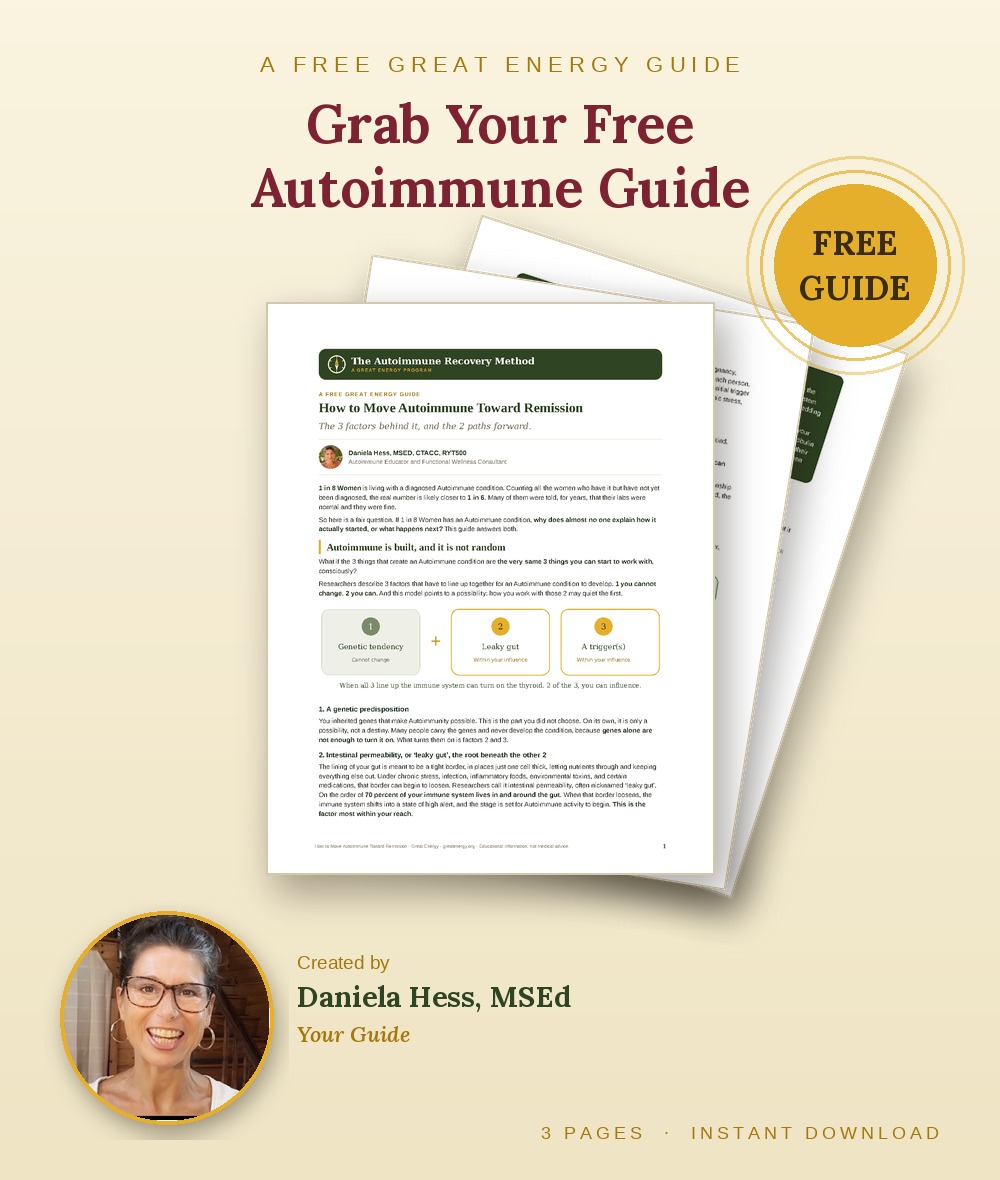
How to Move Autoimmune Toward Remission
The 3 factors behind an Autoimmune condition and the 2 paths forward, free, straight to your inbox.
No spam. Unsubscribe anytime.
Your guide is on its way. You can also open it now (PDF).

Articles from Daniela
Daniela Hess, MSEd, is a co-founder of Great Energy and an Autoimmune Educator and Functional Wellness Consultant who lives and thrives with Hashimoto’s. She is not a licensed medical provider.
AIP recipes to try
A place to start in the kitchen while you work on this with your own clinician: