Joints, muscles, and connective tissue
Polymyositis (PM)
Polymyositis is an inflammatory muscle disease in which the immune system is understood to directly target muscle fibers, producing weakness without the skin rash that distinguishes dermatomyositis. Research describes the process as involving immune cells, particularly CD8 T-cells, infiltrating and damaging muscle tissue from within, most often affecting the muscles closest to the trunk.
Polymyositis and dermatomyositis are frequently studied together because they share many features and differ mainly in histopathology and skin involvement, and both are considered rare, serious conditions. Epidemiological studies describe a female predominance, with one Japanese cohort reporting a female-to-male ratio of roughly 2.7 to 1, and onset most often in mid-adulthood, though reported rates vary by population and diagnostic criteria used.
Common signs
Gradual, usually symmetrical weakness in the muscles of the hips, thighs, shoulders, and upper arms, making it harder to climb stairs, lift objects, or rise from sitting. Muscle aching, fatigue, and sometimes swallowing difficulty can occur, and some people have lung involvement.
This is a plain-language summary for orientation, not a diagnosis. Mechanisms are described as current understanding, not settled fact. Work with your own clinician for your care.
Where this comes from
Questions people ask
What's the difference between polymyositis and dermatomyositis?+
What are the symptoms of polymyositis?+
Who is most likely to get polymyositis, and at what age?+
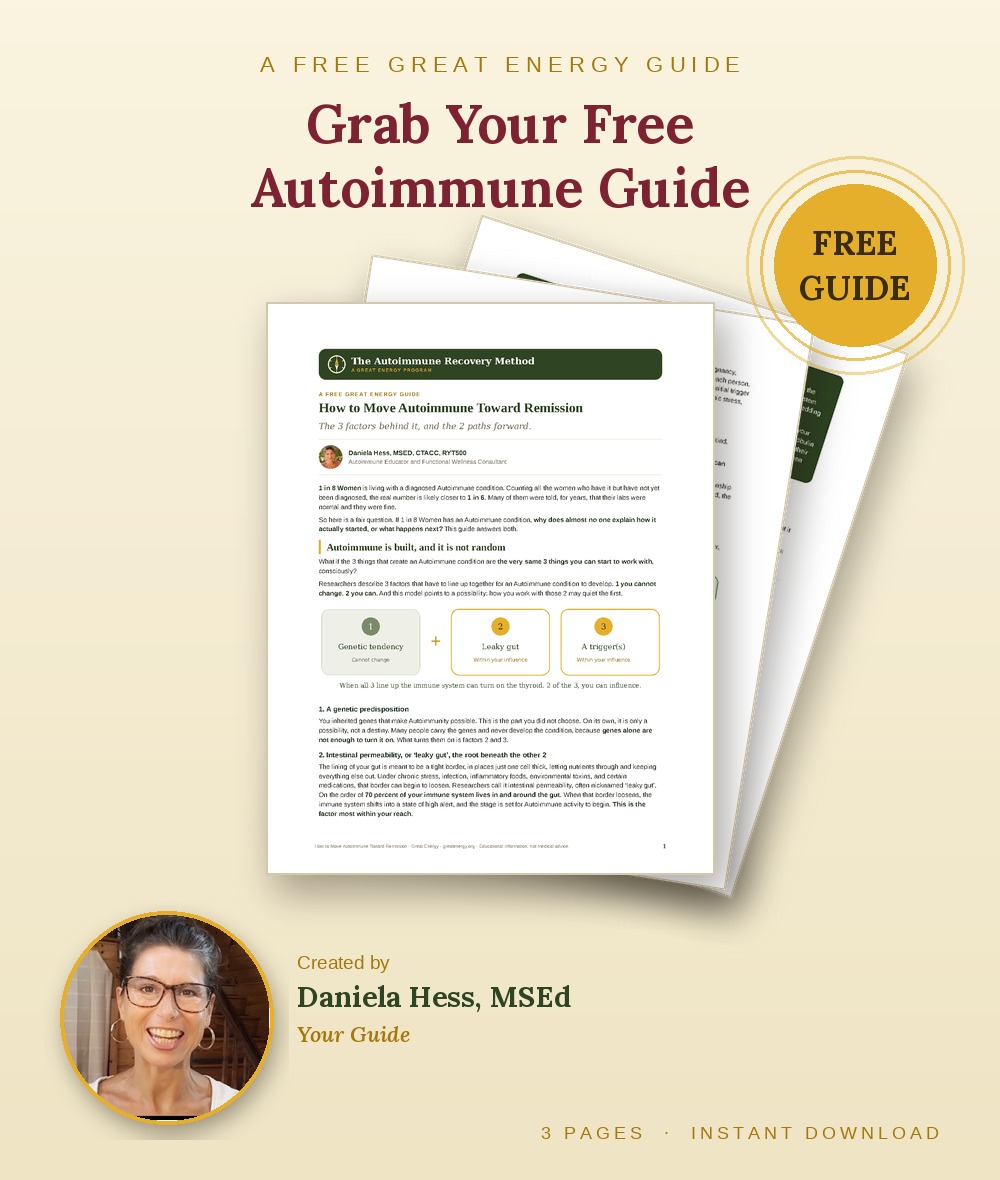
How to Move Autoimmune Toward Remission
The 3 factors behind an Autoimmune condition and the 2 paths forward, free, straight to your inbox.
No spam. Unsubscribe anytime.
Your guide is on its way. You can also open it now (PDF).

Articles from Daniela
Daniela Hess, MSEd, is a co-founder of Great Energy and an Autoimmune Educator and Functional Wellness Consultant who lives and thrives with Hashimoto’s. She is not a licensed medical provider.
AIP recipes to try
A place to start in the kitchen while you work on this with your own clinician: