Neuromuscular and nervous system
Postural orthostatic tachycardia syndrome (POTS) (related)
Postural orthostatic tachycardia syndrome is autoimmune-related or suspected in a portion of cases. It is a form of dysautonomia in which the heart rate rises sharply on standing, typically by 30 beats per minute or more within ten minutes, without the normal accompanying drop in blood pressure. Researchers describe several overlapping subtypes, reflecting that POTS likely results from more than one underlying process. Several lines of research point to immune involvement in some people, including a higher rate of co-occurring autoimmune conditions and certain neural receptor antibodies, though no single causative antibody has been identified.
POTS most often affects people between fifteen and forty-five, with a strong female predominance estimated around 80 percent of cases, and research estimates prevalence somewhere between 0.2 and 1.0 percent in developed countries.
Common signs
A rapid heartbeat, lightheadedness, palpitations, and near-fainting on standing, along with fatigue, exercise intolerance, brain fog, nausea, and headaches.
This is a plain-language summary for orientation, not a diagnosis. Mechanisms are described as current understanding, not settled fact. Work with your own clinician for your care.
Questions people ask
Is POTS an autoimmune disease?+
What are the symptoms of POTS?+
Who does POTS affect?+
In a doctor’s words
“It's very clear at this point that POTS is something very real, and I am hopeful that we will start to unravel this complex disease.”
Brit Adler, MD, Rheumatologist, Johns Hopkins POTS Program, Johns Hopkins Medicine
Read more at Johns Hopkins Medicine (News & Stories) ↗
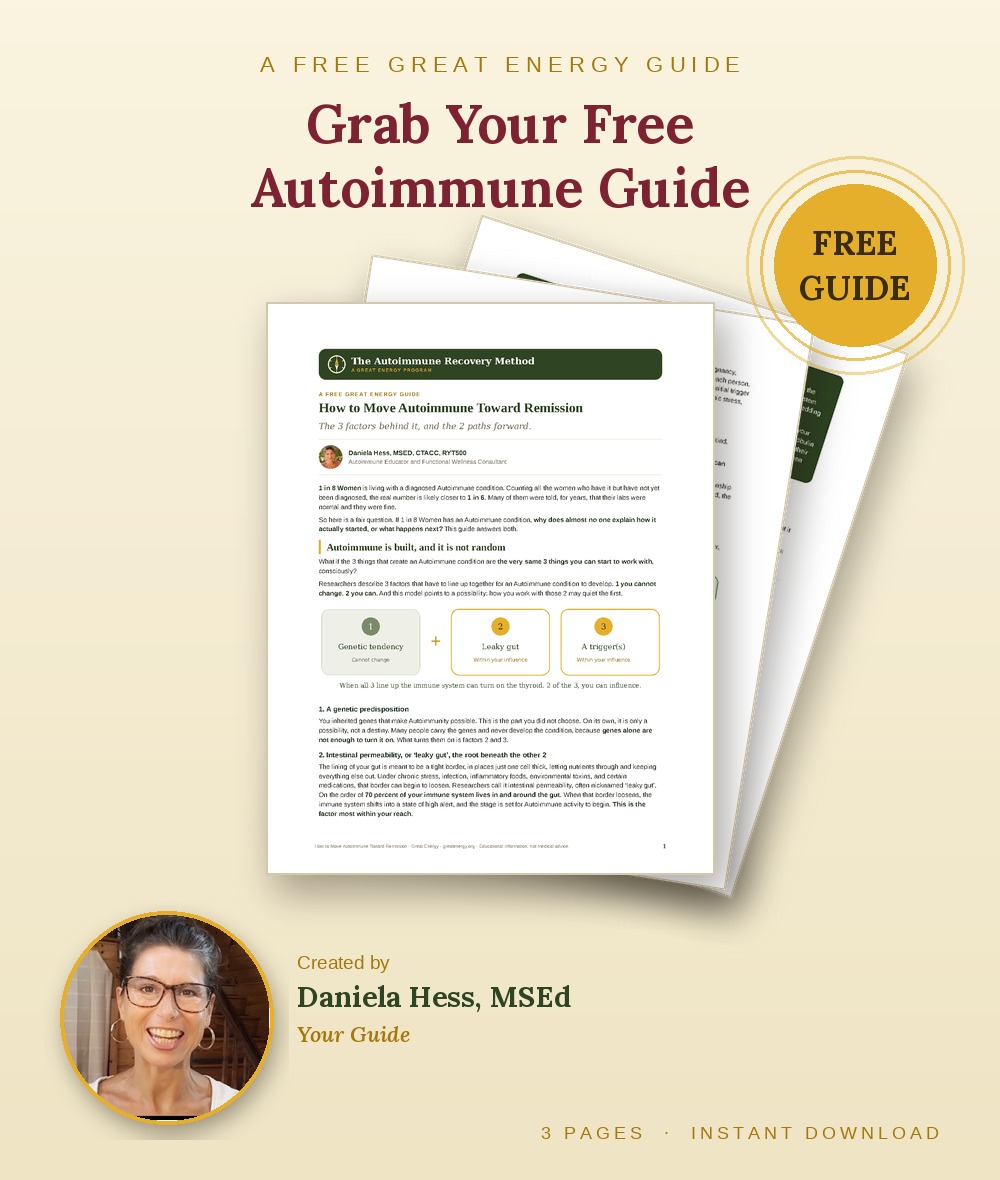
How to Move Autoimmune Toward Remission
The 3 factors behind an Autoimmune condition and the 2 paths forward, free, straight to your inbox.
No spam. Unsubscribe anytime.
Your guide is on its way. You can also open it now (PDF).

Articles from Daniela
Daniela Hess, MSEd, is a co-founder of Great Energy and an Autoimmune Educator and Functional Wellness Consultant who lives and thrives with Hashimoto’s. She is not a licensed medical provider.
AIP recipes to try
A place to start in the kitchen while you work on this with your own clinician: