Endocrine system
Primary ovarian insufficiency (premature ovarian failure)
Primary ovarian insufficiency means the ovaries slow down or stop their normal function before age 40, producing less estrogen and releasing eggs irregularly or not at all. It has several possible causes, including genetic factors, medical treatments such as chemotherapy, and, in a portion of cases, an autoimmune process such as autoimmune oophoritis. The older term 'premature ovarian failure' is being retired in favor of 'insufficiency' because research shows ovarian function can fluctuate and intermittently return rather than stopping permanently.
A large meta-analysis estimated the global prevalence of primary ovarian insufficiency at roughly 3.5 to 3.7 percent of women, with rates varying by region, and among women with an identified cause, autoimmunity was estimated to account for around 10 percent of cases, a similar share to iatrogenic causes such as surgery or cancer treatment.
Common signs
irregular or missed periods, hot flashes and night sweats, vaginal dryness, low libido, trouble conceiving, and mood or sleep changes.
This is a plain-language summary for orientation, not a diagnosis. Mechanisms are described as current understanding, not settled fact. Work with your own clinician for your care.
Questions people ask
Can you get pregnant if you have primary ovarian insufficiency?+
What is the difference between primary ovarian insufficiency and premature ovarian failure?+
Can you reverse primary ovarian insufficiency?+
In a doctor’s words
“Our three-year prospective study at NIH research found that on average, in patients who take physiologic HRT, their bone density levels came back to normal range.”
Lawrence M. Nelson, MD, gynecologist and leading POI researcher, formerly of the NIH Clinical Center; president, Mary Elizabeth Conover Foundation
Read more at Let's Talk Menopause (expert interview article) ↗
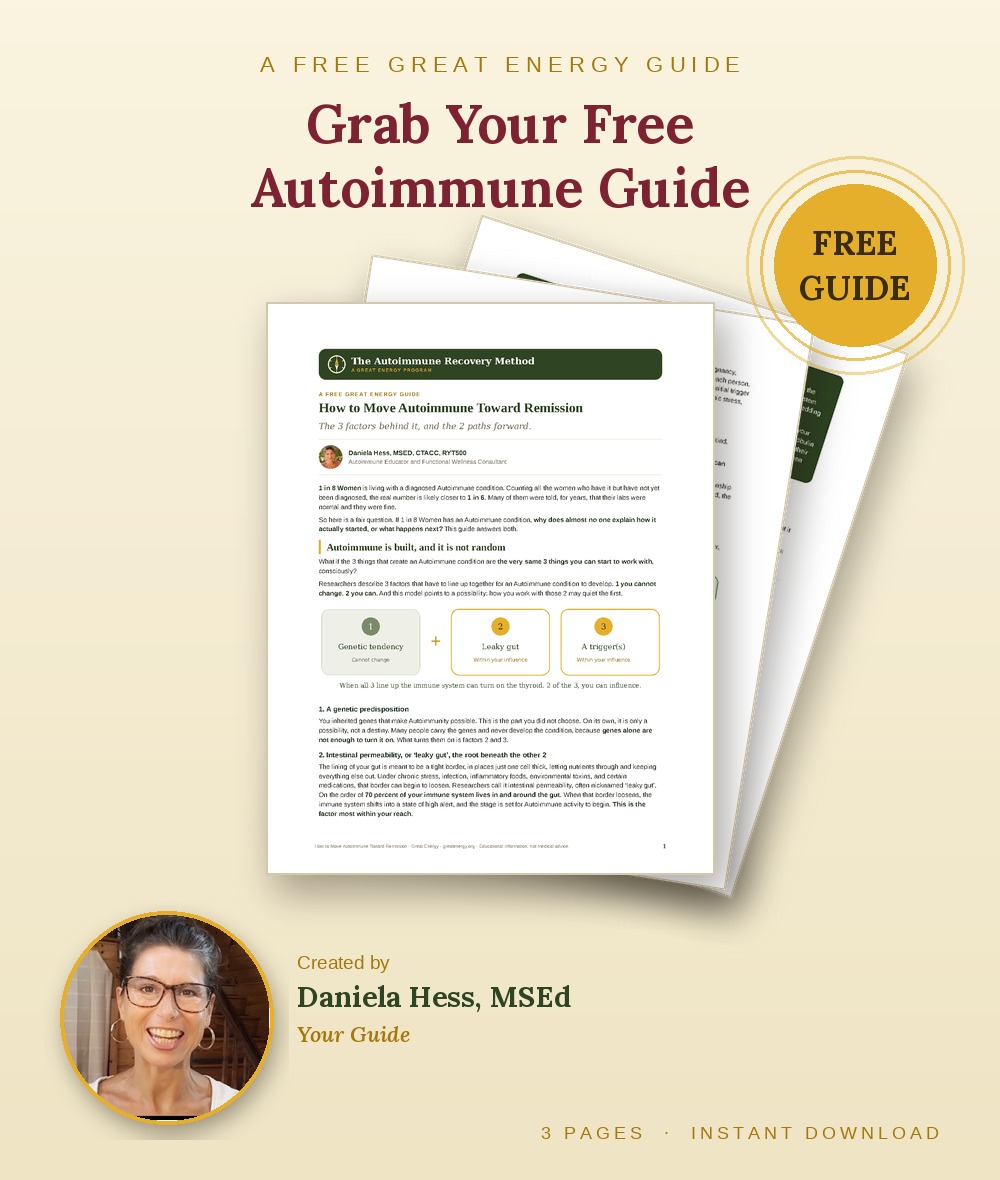
How to Move Autoimmune Toward Remission
The 3 factors behind an Autoimmune condition and the 2 paths forward, free, straight to your inbox.
No spam. Unsubscribe anytime.
Your guide is on its way. You can also open it now (PDF).
Articles from Daniela
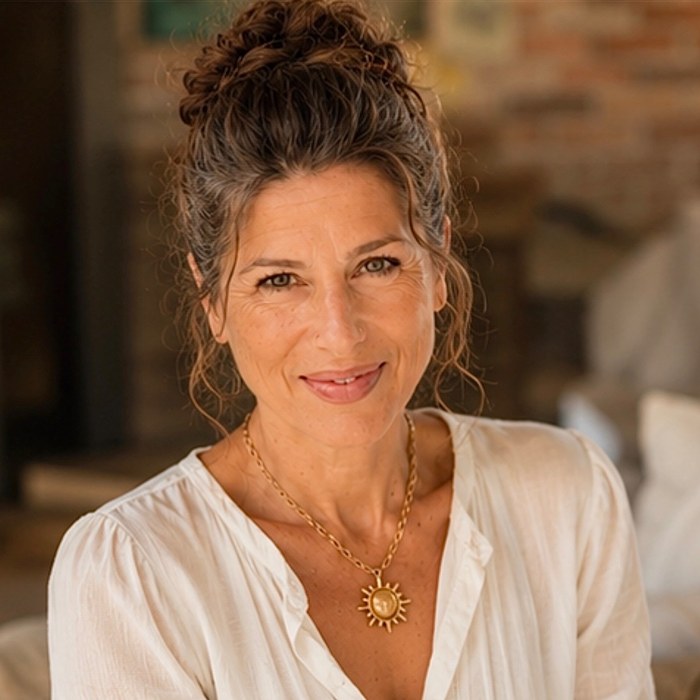
Daniela Hess, MSEd, is a co-founder of Great Energy and an Autoimmune Educator and Functional Wellness Consultant who lives and thrives with Hashimoto’s. She is not a licensed medical provider.
AIP recipes to try
A place to start in the kitchen while you work on this with your own clinician: