Skin and hair
Psoriasis
Psoriasis is a chronic skin condition driven by dysregulated interaction between the innate and adaptive immune systems. Immune cells release cytokines, including TNF-alpha, IL-17, and IL-23, that drive skin cells to multiply far faster than normal, producing the thick, scaled plaques characteristic of the condition.
Psoriasis affects an estimated 2 to 4 percent of the population, roughly 125 million people worldwide, and can appear at any age, though it most often first appears in early adulthood.
Common signs
Raised, thickened patches of skin (plaques) often topped with silvery or whitish scale, most often on the scalp, elbows, knees, and lower back, sometimes appearing red, pink, purple, or darker depending on skin tone. The patches may itch, burn, or sting, and nails and skin folds can be involved too, with pitted nails and cracking in the armpits and groin.
This is a plain-language summary for orientation, not a diagnosis. Mechanisms are described as current understanding, not settled fact. Work with your own clinician for your care.
Questions people ask
Is psoriasis contagious?+
What causes psoriasis?+
What does psoriasis look like on the skin?+
In a doctor’s words
“The idea of clear skin for patients with psoriasis, which once was not really an achievable goal, is now something we can talk about as a possibility.”
David C. Reid, MD, dermatologist, Rush University Medical Center
Read more at Rush University Medical Center ↗
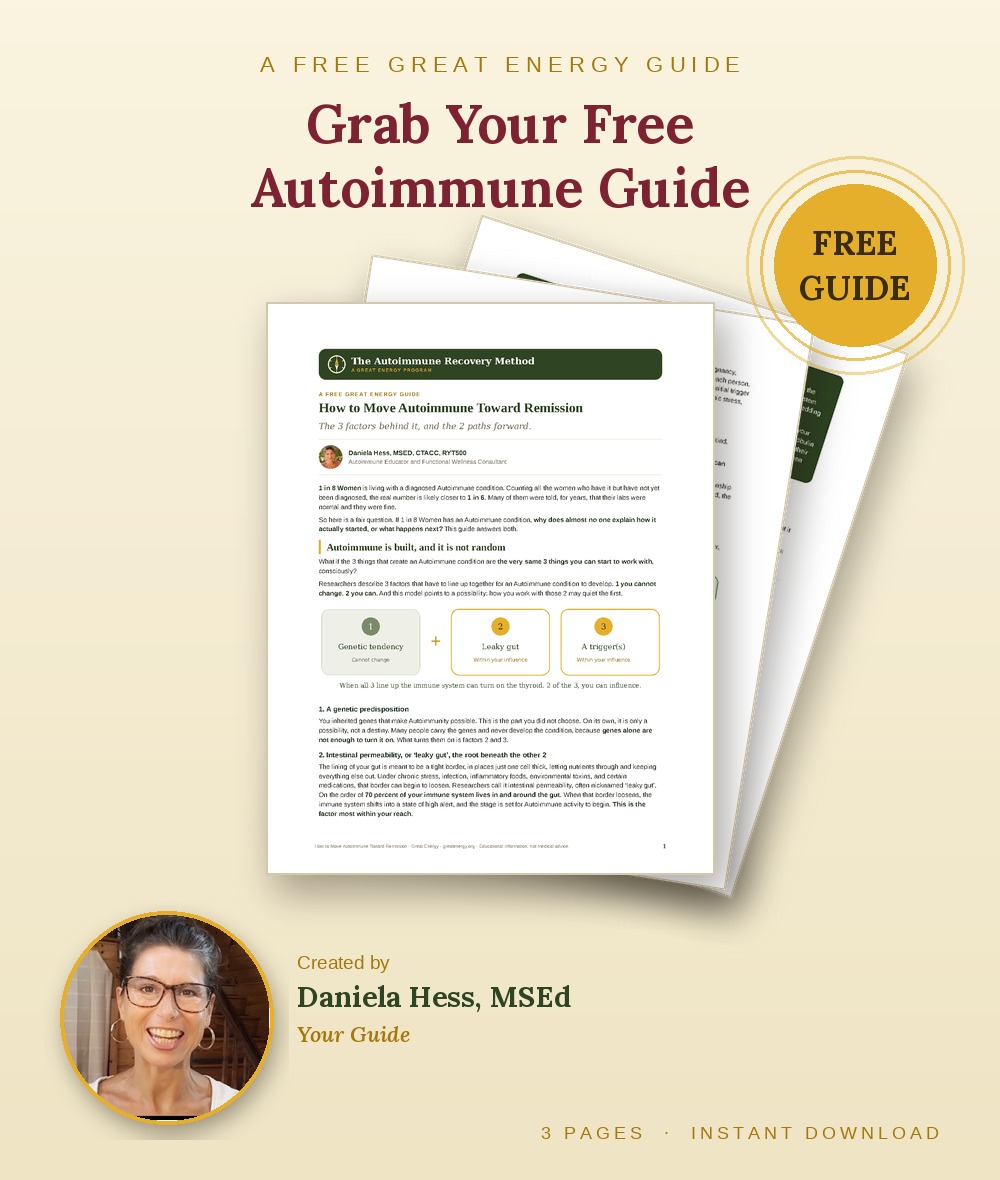
How to Move Autoimmune Toward Remission
The 3 factors behind an Autoimmune condition and the 2 paths forward, free, straight to your inbox.
No spam. Unsubscribe anytime.
Your guide is on its way. You can also open it now (PDF).
Articles from Daniela
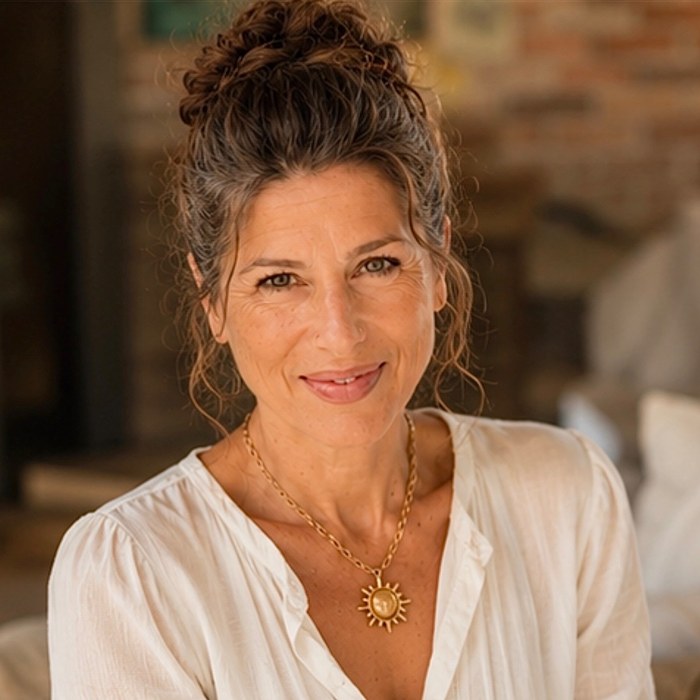
Daniela Hess, MSEd, is a co-founder of Great Energy and an Autoimmune Educator and Functional Wellness Consultant who lives and thrives with Hashimoto’s. She is not a licensed medical provider.
AIP recipes to try
A place to start in the kitchen while you work on this with your own clinician: