Joints, muscles, and connective tissue
Relapsing polychondritis (RP)
Relapsing polychondritis is a rare condition in which the immune system appears to target cartilage in the ears, nose, joints, and airways, along with other proteoglycan-rich tissues such as the eyes, heart, and blood vessels. Research describes it as episodic and progressive, with recurring bouts of inflammation that can, over time, affect the structural integrity of the cartilage involved, and the underlying mechanism is understood to involve an autoimmune response though the exact trigger remains unclear.
Because it is rare, solid population-wide prevalence figures are hard to pin down, and studies note that a concurrent autoimmune disease, often thyroid-related or rheumatic, is present in roughly a third of people diagnosed. It occurs in men and women in roughly equal numbers, with onset most often in the fourth decade of life.
Common signs
Painful, red, swollen ears (usually sparing the soft earlobe), nose inflammation, joint pain, and sometimes hoarseness or breathing changes when the airway cartilage is involved. Eye inflammation and inner-ear symptoms such as dizziness or hearing changes can also occur.
This is a plain-language summary for orientation, not a diagnosis. Mechanisms are described as current understanding, not settled fact. Work with your own clinician for your care.
Questions people ask
What are the symptoms of relapsing polychondritis?+
What causes relapsing polychondritis?+
Is relapsing polychondritis life-threatening?+
In a doctor’s words
“Where there's research, there's hope.”
Marcela Ferrada, MD, NIH researcher studying relapsing polychondritis (NIH Clinical Center)
Read more at NIH MedlinePlus Magazine, "When there's research, there's hope: Living with a rare disease called relapsing polychondritis" ↗
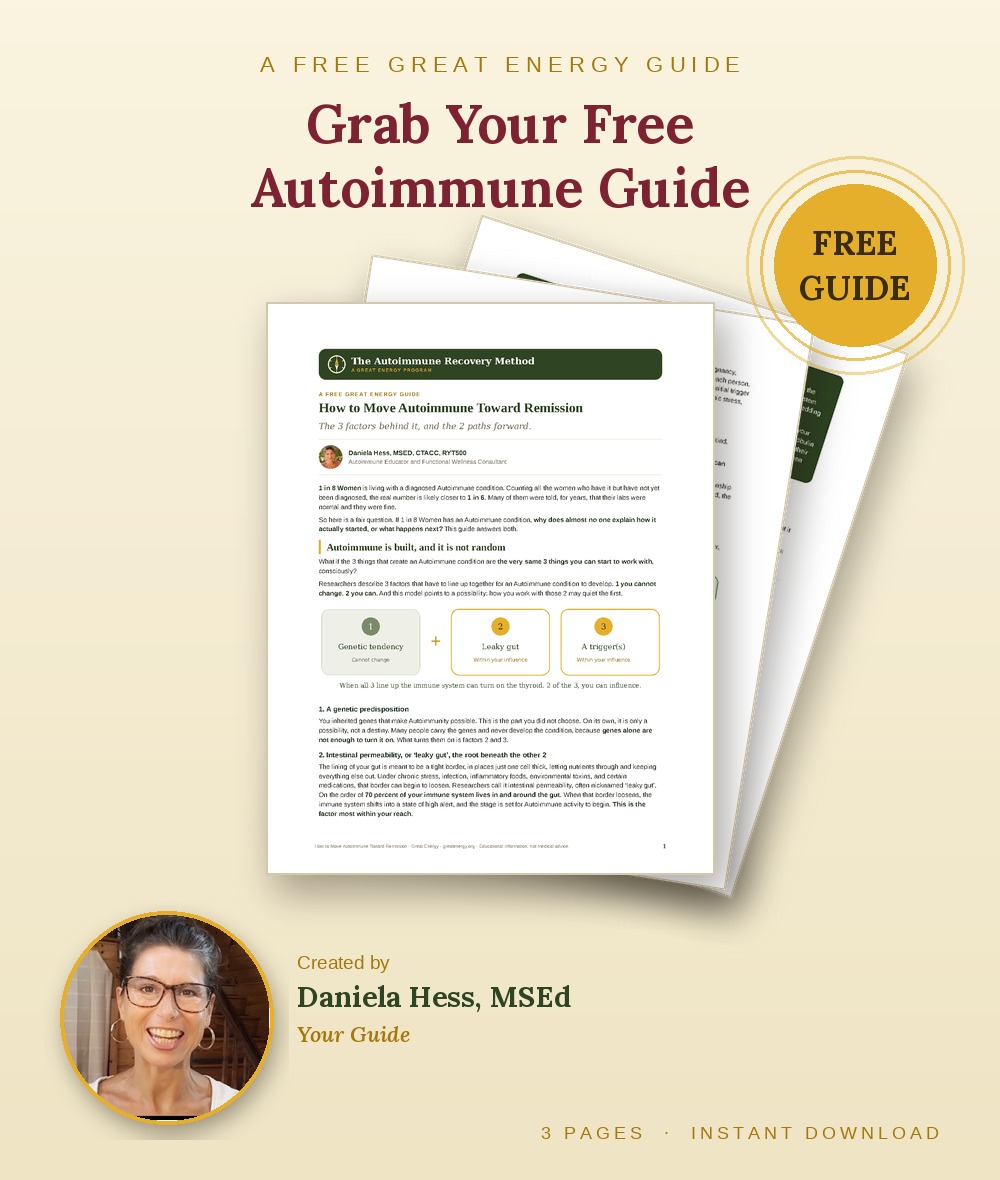
How to Move Autoimmune Toward Remission
The 3 factors behind an Autoimmune condition and the 2 paths forward, free, straight to your inbox.
No spam. Unsubscribe anytime.
Your guide is on its way. You can also open it now (PDF).

Articles from Daniela
Daniela Hess, MSEd, is a co-founder of Great Energy and an Autoimmune Educator and Functional Wellness Consultant who lives and thrives with Hashimoto’s. She is not a licensed medical provider.
AIP recipes to try
A place to start in the kitchen while you work on this with your own clinician: