Blood and blood vessels
Rheumatic fever (related)
Rheumatic fever is an inflammatory condition that can follow a strep throat infection, in which the immune system, while responding to the infection, appears to also react against the body's own tissues such as the heart, joints, skin, and brain. Current research describes the underlying mechanism as molecular mimicry, in which antibodies made against components of the group A streptococcus bacteria cross-react with similar-looking proteins in a person's own heart and other tissues, typically producing symptoms two to four weeks after the initial infection. It is autoimmune-related and is marked here as related, and research estimates roughly 470,000 new cases occur worldwide each year, with the disease burden concentrated in developing countries where access to prompt treatment for strep infections is more limited.
It is most common in children and can lead to lasting heart valve damage, known as rheumatic heart disease, which research links to several hundred thousand deaths globally each year.
Common signs
Fever, painful and swollen joints that may move from one joint to another, chest discomfort or signs of heart inflammation, a rash, small painless bumps under the skin, and sometimes jerky involuntary movements.
This is a plain-language summary for orientation, not a diagnosis. Mechanisms are described as current understanding, not settled fact. Work with your own clinician for your care.
Where this comes from
Questions people ask
What causes rheumatic fever?+
What are the symptoms of rheumatic fever?+
Can rheumatic fever cause lasting heart damage?+
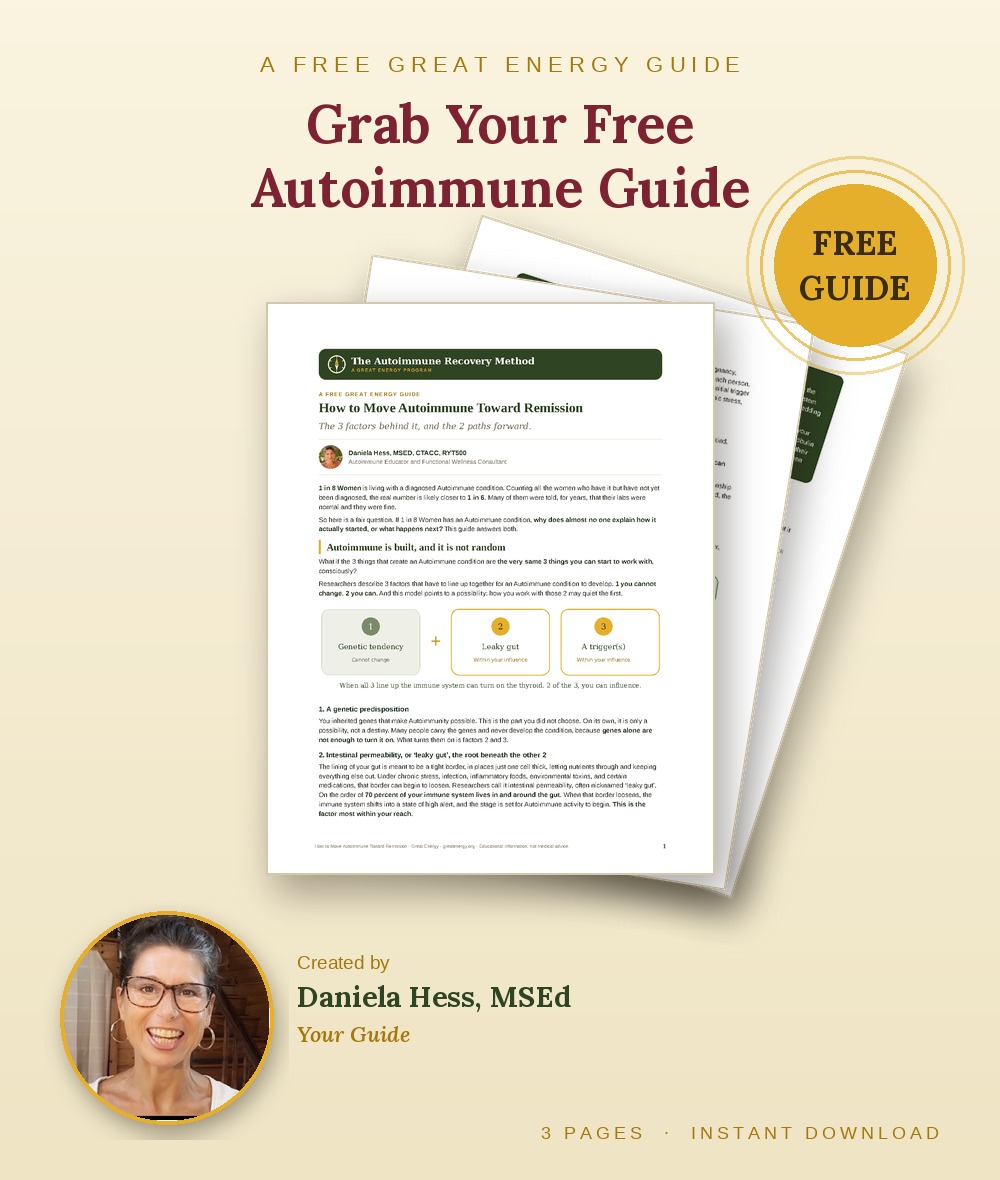
How to Move Autoimmune Toward Remission
The 3 factors behind an Autoimmune condition and the 2 paths forward, free, straight to your inbox.
No spam. Unsubscribe anytime.
Your guide is on its way. You can also open it now (PDF).

Articles from Daniela
Daniela Hess, MSEd, is a co-founder of Great Energy and an Autoimmune Educator and Functional Wellness Consultant who lives and thrives with Hashimoto’s. She is not a licensed medical provider.
AIP recipes to try
A place to start in the kitchen while you work on this with your own clinician: