Joints, muscles, and connective tissue
Rheumatoid arthritis (RA)
Rheumatoid arthritis is a chronic inflammatory condition that most often targets the joints, particularly the small joints of the hands and feet, causing pain, swelling, and progressive damage to cartilage and bone. Research describes RA as driven by autoreactive T cells, B cells, and inflammatory cytokines that sustain inflammation in the joint lining, and the condition can also involve the skin, eyes, heart, kidneys, and lungs as it progresses.
RA affects an estimated 1 percent of the global population, though prevalence varies by region, and it is roughly 3 to 4 times more common in women than men.
Common signs
Joint pain, swelling, warmth, and tenderness, often symmetrical, along with prolonged morning stiffness that can last an hour or more. Many people also notice fatigue, low energy, and a general unwell feeling, especially during active periods.
This is a plain-language summary for orientation, not a diagnosis. Mechanisms are described as current understanding, not settled fact. Work with your own clinician for your care.
Where this comes from
Questions people ask
What are the symptoms of rheumatoid arthritis?+
Is rheumatoid arthritis more common in women than men?+
Is there a cure for rheumatoid arthritis?+
In a doctor’s words
“There are six or seven new molecules being discussed and it's our hope that those people who are not responding to current therapies will respond to the new ones.”
Yusuf Yazici, MD, rheumatologist, NYU Langone / Hospital for Joint Diseases
Read more at HealthCentral ↗
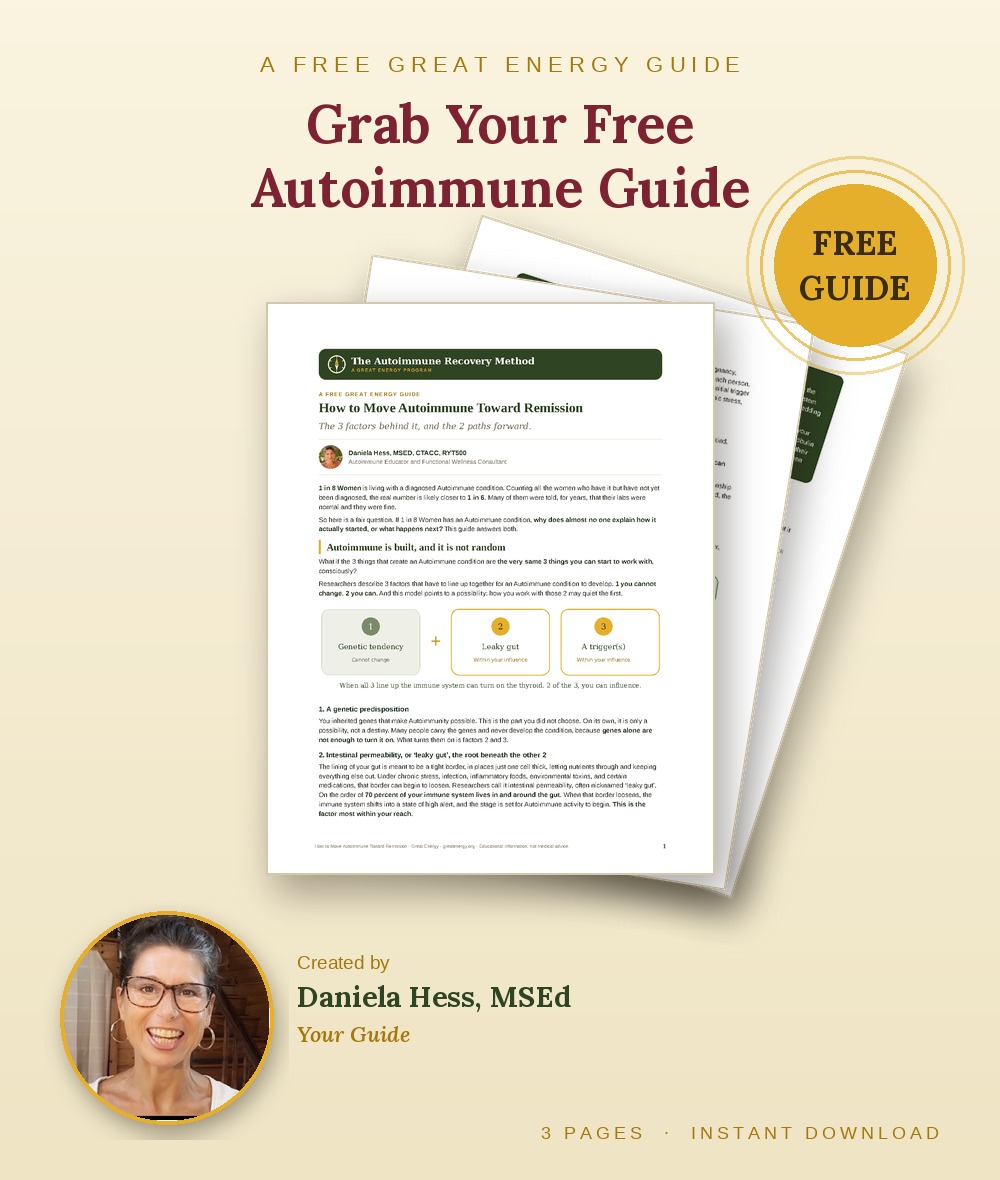
How to Move Autoimmune Toward Remission
The 3 factors behind an Autoimmune condition and the 2 paths forward, free, straight to your inbox.
No spam. Unsubscribe anytime.
Your guide is on its way. You can also open it now (PDF).

Articles from Daniela
Daniela Hess, MSEd, is a co-founder of Great Energy and an Autoimmune Educator and Functional Wellness Consultant who lives and thrives with Hashimoto’s. She is not a licensed medical provider.
AIP recipes to try
A place to start in the kitchen while you work on this with your own clinician: