Multi-system and other
Sarcoidosis
Sarcoidosis affects the lungs and lymph nodes most often, and can involve the skin, eyes, heart, liver, or nervous system. The immune system is thought to overreact to an environmental or infectious trigger in a person with a genetic susceptibility, forming tiny clusters of inflammatory cells called granulomas in the affected tissue. It is generally described as immune-mediated rather than classically autoimmune, since it does not center on antibodies attacking the body's own tissue the way lupus does.
Research describes sarcoidosis as having wide variation in incidence by region, race, and sex, and much about its underlying cause remains unclear despite over a century of study. At least 90 percent of people with sarcoidosis show some lung involvement, and the disease can range from a finding on incidental imaging to a serious multi-organ illness.
Common signs
Many people have a persistent dry cough, shortness of breath, or chest discomfort. Others notice fatigue, low fevers, night sweats, swollen lymph nodes, tender reddish bumps on the shins, eye redness or blurred vision, and joint or skin changes. Some have no symptoms at all and it is found on imaging done for another reason, most often as enlarged lymph nodes on a routine chest x-ray.
This is a plain-language summary for orientation, not a diagnosis. Mechanisms are described as current understanding, not settled fact. Work with your own clinician for your care.
Where this comes from
Questions people ask
What causes sarcoidosis?+
What are the symptoms of sarcoidosis?+
Is sarcoidosis contagious or does it run in families?+
In a doctor’s words
“With a growing understanding of the phenotypes and the emergence of possible new therapies, I truly believe we are entering a new era in sarcoidosis care.”
Michelle Sharp, MD, MHS, Associate Professor of Medicine, Johns Hopkins University School of Medicine; Co-Director, Johns Hopkins Sarcoidosis Center
Read more at ACR Convergence Today (American College of Rheumatology) ↗
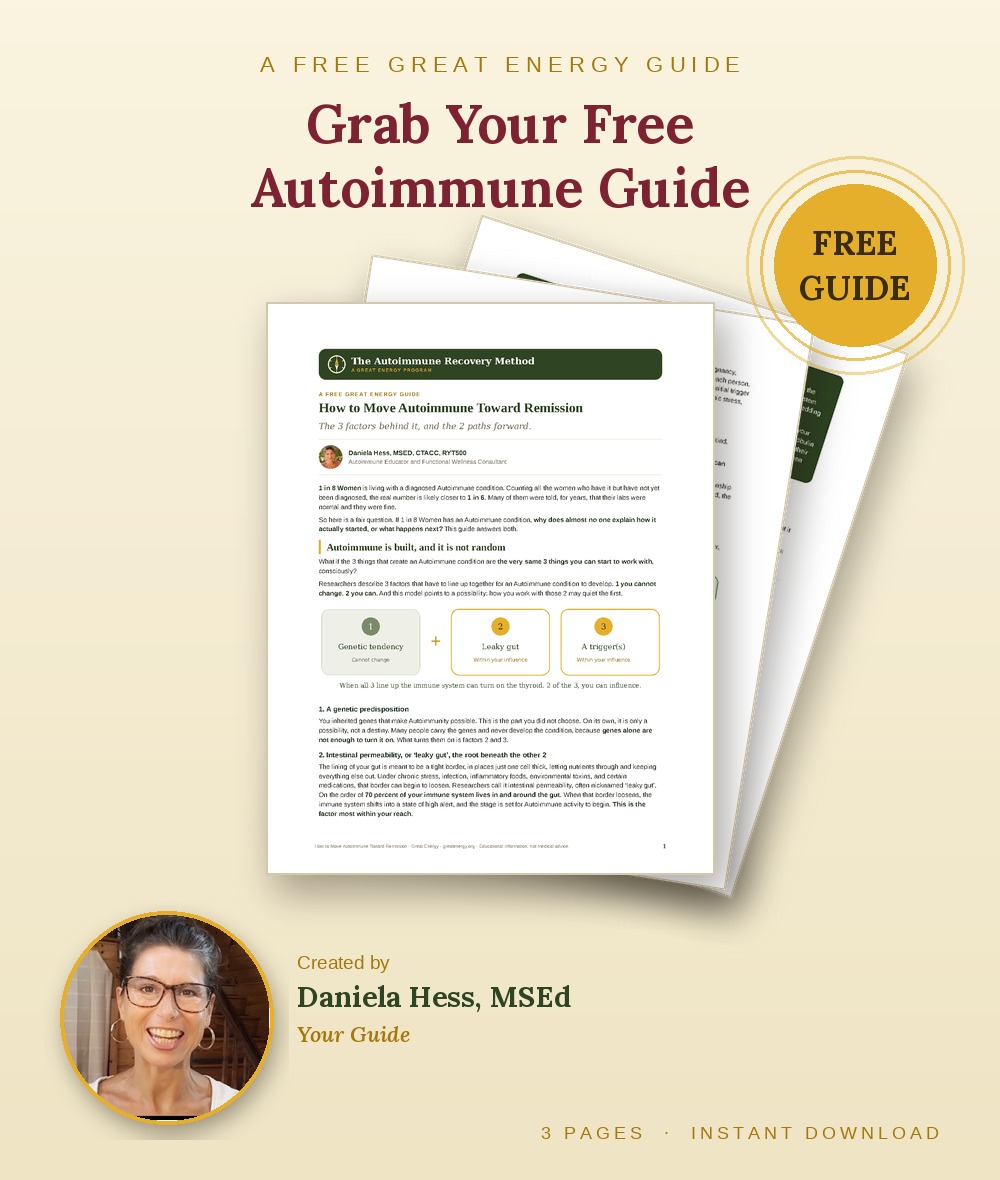
How to Move Autoimmune Toward Remission
The 3 factors behind an Autoimmune condition and the 2 paths forward, free, straight to your inbox.
No spam. Unsubscribe anytime.
Your guide is on its way. You can also open it now (PDF).

Articles from Daniela
Daniela Hess, MSEd, is a co-founder of Great Energy and an Autoimmune Educator and Functional Wellness Consultant who lives and thrives with Hashimoto’s. She is not a licensed medical provider.
AIP recipes to try
A place to start in the kitchen while you work on this with your own clinician: