Multi-system and other
Schnitzler syndrome
Schnitzler syndrome is a rare, adult-onset condition that pairs a chronic hive-like rash with a specific abnormal blood protein, most often a monoclonal IgM gammopathy, and signs of ongoing inflammation. Current understanding describes it as a late-onset acquired autoinflammatory syndrome in which the inflammatory signal interleukin-1 plays a central role, rather than a classic antibody-against-self autoimmune disease. Research notes that the relationship between the autoinflammatory features and the abnormal blood protein is still not fully understood, and the underlying mechanism remains an area of active study.
Because it is extremely rare, precise prevalence figures are not well established in the literature, and diagnosis often takes years since the combination of symptoms is uncommon and easy to mistake for other conditions. A notable feature is that people with Schnitzler syndrome tend to respond well to medications that block interleukin-1, which supports the autoinflammatory understanding of the disease.
Common signs
The hallmark is a recurring rash that looks like hives, often with recurrent fevers, bone or joint pain, fatigue, and sometimes swollen lymph nodes or an enlarged liver or spleen. Symptoms tend to come and go.
This is a plain-language summary for orientation, not a diagnosis. Mechanisms are described as current understanding, not settled fact. Work with your own clinician for your care.
Questions people ask
Is Schnitzler syndrome an autoimmune disease?+
What causes Schnitzler syndrome?+
How is Schnitzler syndrome treated?+
In a doctor’s words
“You give them anakinra and everything disappears within a few hours.”
Dan Lipsker, MD, Dermatologist, University of Strasbourg, France; developer of the Lipsker diagnostic criteria for Schnitzler syndrome
Read more at ASH Clinical News (American Society of Hematology) ↗
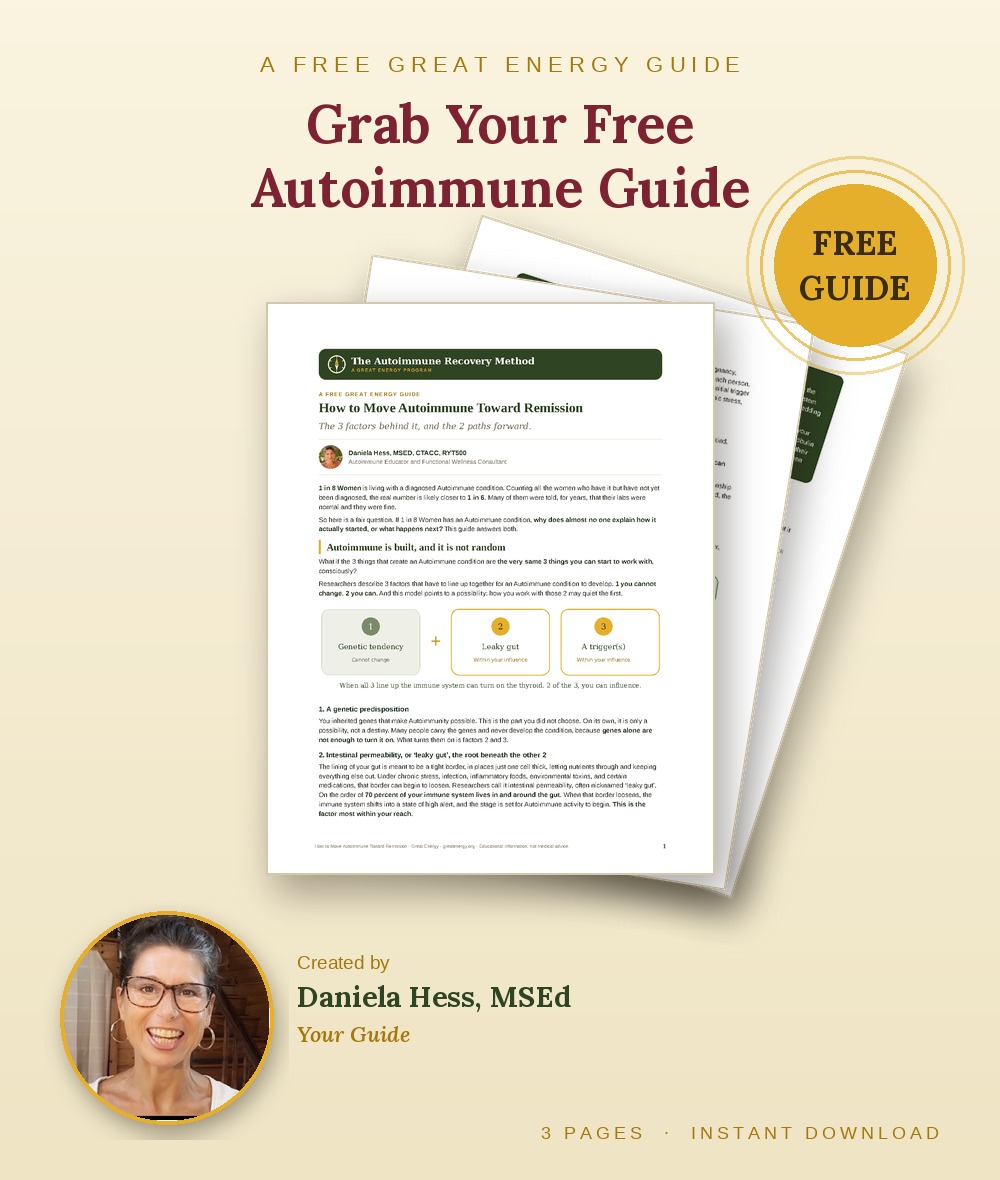
How to Move Autoimmune Toward Remission
The 3 factors behind an Autoimmune condition and the 2 paths forward, free, straight to your inbox.
No spam. Unsubscribe anytime.
Your guide is on its way. You can also open it now (PDF).

Articles from Daniela
Daniela Hess, MSEd, is a co-founder of Great Energy and an Autoimmune Educator and Functional Wellness Consultant who lives and thrives with Hashimoto’s. She is not a licensed medical provider.
AIP recipes to try
A place to start in the kitchen while you work on this with your own clinician: