Joints, muscles, and connective tissue
Scleroderma (systemic sclerosis)
Systemic sclerosis is a condition in which the immune system and connective tissue interact in a way that leads to thickening and hardening of the skin, and in its systemic form, involvement of internal organs including the lungs, heart, kidneys, and digestive tract. Current understanding describes both an inflammatory autoimmune process and an overgrowth of collagen, the protein that gives connective tissue its structure, driving the fibrosis seen in affected organs.
A 2023 analysis of global data estimated the worldwide incidence at roughly 8.6 per 100,000 person-years and prevalence around 19 per 100,000 people, translating to an estimated 1.47 million people affected globally, though rates vary widely by region and are notably higher in North America and Europe than in East Asia. Systemic sclerosis is markedly more common in women and typically diagnosed in mid-adulthood.
Common signs
Thickening and tightening of the skin, often starting in the fingers and hands, along with Raynaud's (fingers turning white or blue in the cold). People may notice puffy or stiff fingers, heartburn and swallowing trouble, and, depending on organ involvement, shortness of breath or other signs.
This is a plain-language summary for orientation, not a diagnosis. Mechanisms are described as current understanding, not settled fact. Work with your own clinician for your care.
Questions people ask
What causes scleroderma?+
What are the early symptoms of scleroderma?+
Is there a cure for scleroderma?+
In a doctor’s words
“In a previous era, he would be housebound at best.”
Lee Shapiro, MD, Rheumatologist, Director of Albany Medical Center's Scleroderma Clinic (Designated Scleroderma Research & Treatment Center) and Chief Medical Officer of the Steffens Scleroderma Foundation
Read more at Albany Med Health System news, "Scleroderma Clinic Offers Expertise – and Reassurance" ↗
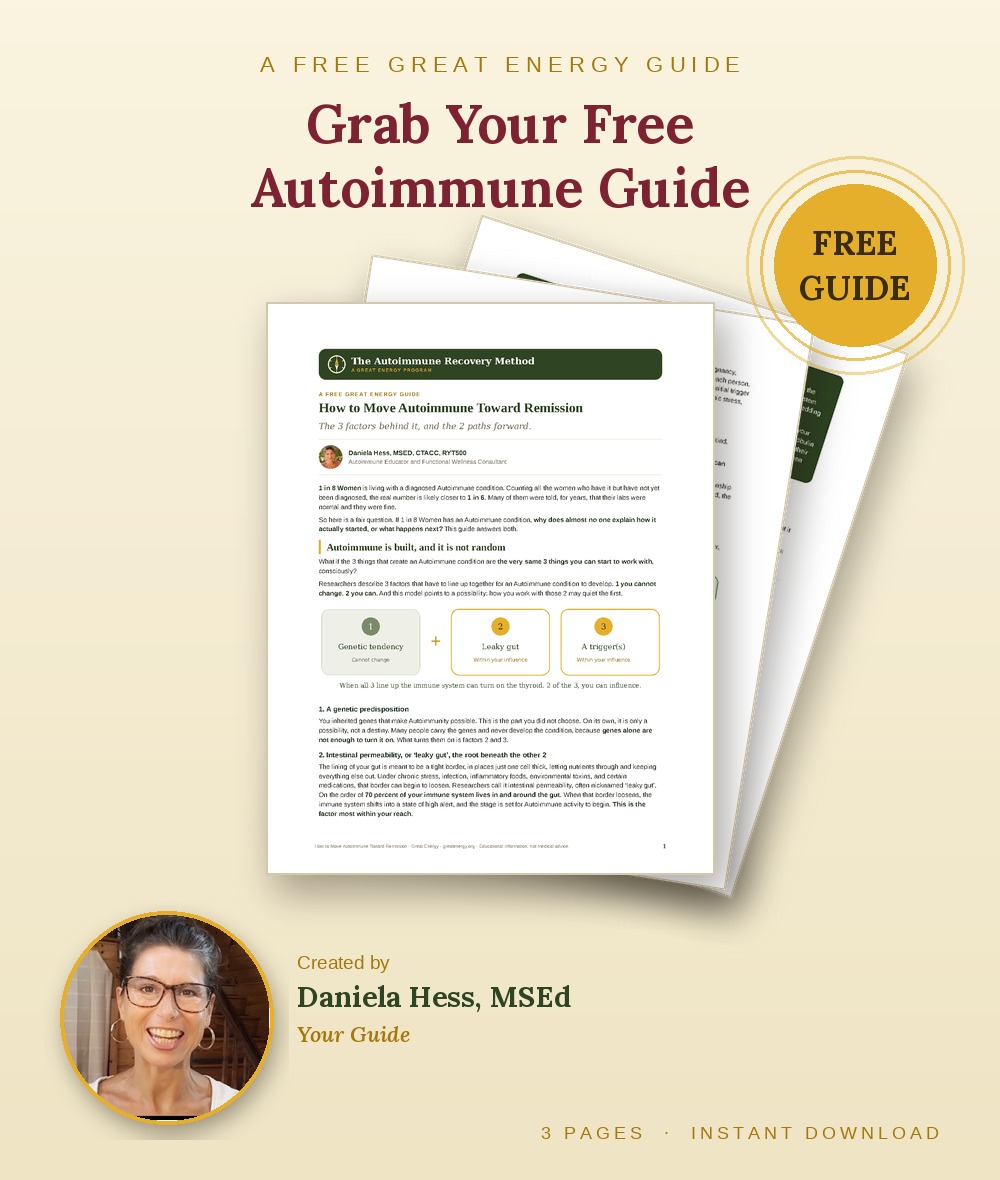
How to Move Autoimmune Toward Remission
The 3 factors behind an Autoimmune condition and the 2 paths forward, free, straight to your inbox.
No spam. Unsubscribe anytime.
Your guide is on its way. You can also open it now (PDF).

Articles from Daniela
Daniela Hess, MSEd, is a co-founder of Great Energy and an Autoimmune Educator and Functional Wellness Consultant who lives and thrives with Hashimoto’s. She is not a licensed medical provider.
AIP recipes to try
A place to start in the kitchen while you work on this with your own clinician: