Kidney and eye
Sympathetic Ophthalmia
Sympathetic ophthalmia affects both eyes after one eye has been injured or had surgery. The immune system appears to react to pigment-containing tissue released from the injured eye, exposing eye-specific proteins that the immune system does not normally encounter, and a delayed hypersensitivity response then inflames the uvea of the uninjured eye as well. It is considered a rare condition.
Research describes the estimated incidence as roughly 0.2 to 0.5 percent following penetrating eye injuries and about 0.01 percent following intraocular surgery, and onset can range from days to decades after the original injury, though most cases develop within the first year. Because it can threaten sight in the uninjured eye, it needs prompt care from an eye specialist, and management typically involves corticosteroids alongside longer-term immunomodulatory therapy.
Common signs
In the second, uninjured eye, blurred vision, floaters, light sensitivity, eye pain, and difficulty focusing. Onset can range from days to years after the original injury.
This is a plain-language summary for orientation, not a diagnosis. Mechanisms are described as current understanding, not settled fact. Work with your own clinician for your care.
Where this comes from
Questions people ask
What is sympathetic ophthalmia?+
How long after an eye injury can sympathetic ophthalmia develop?+
What are the symptoms of sympathetic ophthalmia in the unaffected eye?+
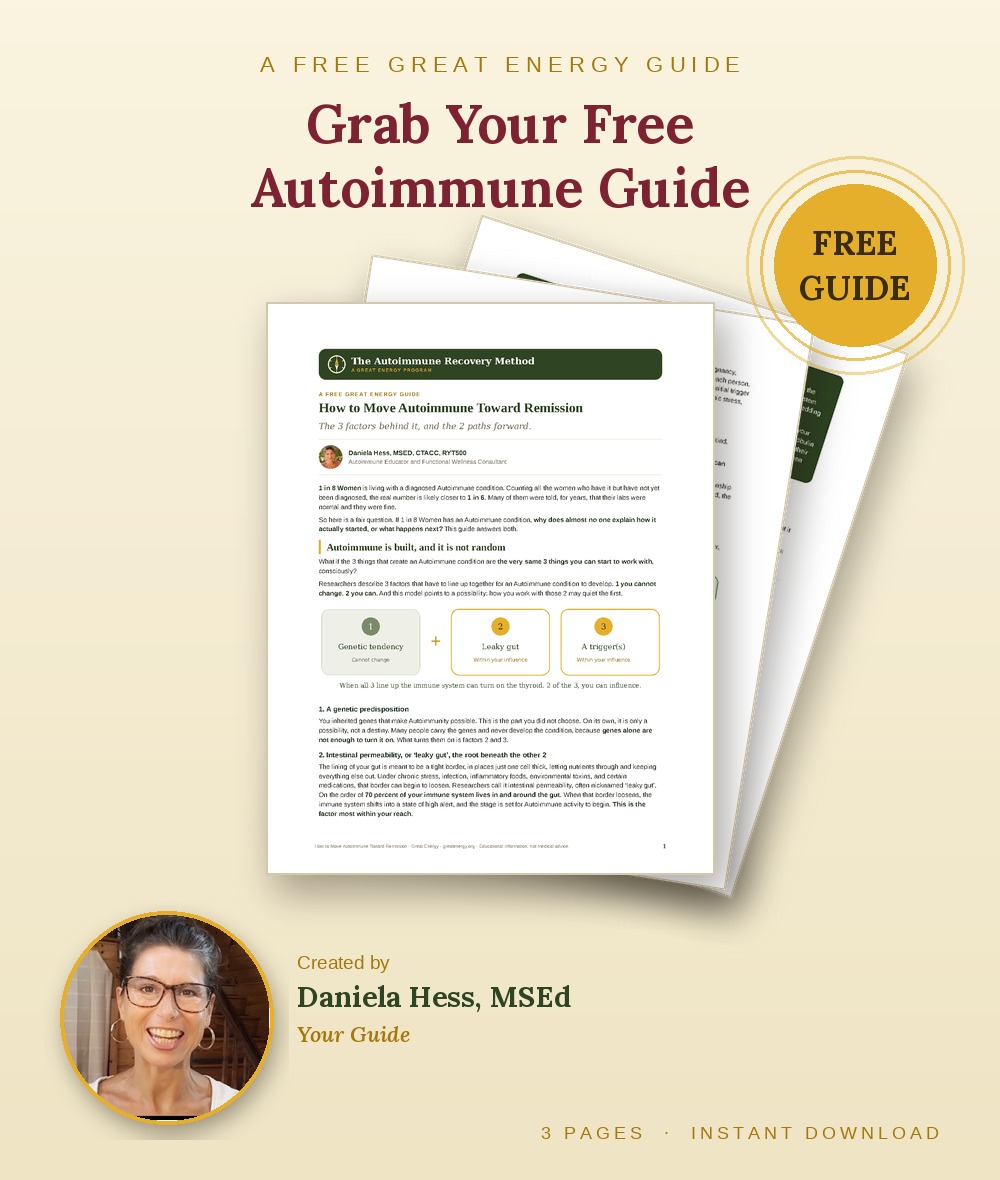
How to Move Autoimmune Toward Remission
The 3 factors behind an Autoimmune condition and the 2 paths forward, free, straight to your inbox.
No spam. Unsubscribe anytime.
Your guide is on its way. You can also open it now (PDF).

Articles from Daniela
Daniela Hess, MSEd, is a co-founder of Great Energy and an Autoimmune Educator and Functional Wellness Consultant who lives and thrives with Hashimoto’s. She is not a licensed medical provider.
AIP recipes to try
A place to start in the kitchen while you work on this with your own clinician: