Blood and blood vessels
Thrombotic thrombocytopenic purpura (TTP)
Thrombotic thrombocytopenic purpura is a rare and serious condition in which small clots form throughout the small blood vessels of the body, using up platelets and damaging red blood cells as they pass through narrowed vessels. The acquired, immune-mediated form is driven by autoantibodies against ADAMTS13, an enzyme that normally helps regulate a clotting protein called von Willebrand factor, leaving that regulation severely impaired.
Research describes an incidence for the immune-mediated form of roughly 1.8 to 4 cases per million people per year, making it one of the rarer conditions in this category. Because clots can form quickly and affect organs including the brain and kidneys, TTP is treated as a medical emergency requiring urgent, specialist-led care rather than a condition to monitor and wait on.
Common signs
Easy bruising and petechiae, fatigue and pale or yellowish skin from anemia, fever, confusion, headache or other neurological changes, and reduced urine output. Because symptoms can come on quickly and severely, prompt specialist care matters.
This is a plain-language summary for orientation, not a diagnosis. Mechanisms are described as current understanding, not settled fact. Work with your own clinician for your care.
Questions people ask
What causes thrombotic thrombocytopenic purpura?+
Is TTP a medical emergency?+
How is TTP treated?+
In a doctor’s words
“Adzynma provides patients with a treatment option that replaces their deficient ADAMTS13 enzyme and offers a favorable efficacy and safety profile and reduced administration time and volume compared to current plasma-based therapies. Today marks a significant achievement, providing new possibilities for the cTTP patient community.”
Spero R. Cataland, MD, Professor of Internal Medicine, Wexner Medical Center at The Ohio State University; Codirector, US Thrombotic Microangiopathy Alliance; Adzynma clinical trial investigator
Read more at AJMC (American Journal of Managed Care) ↗
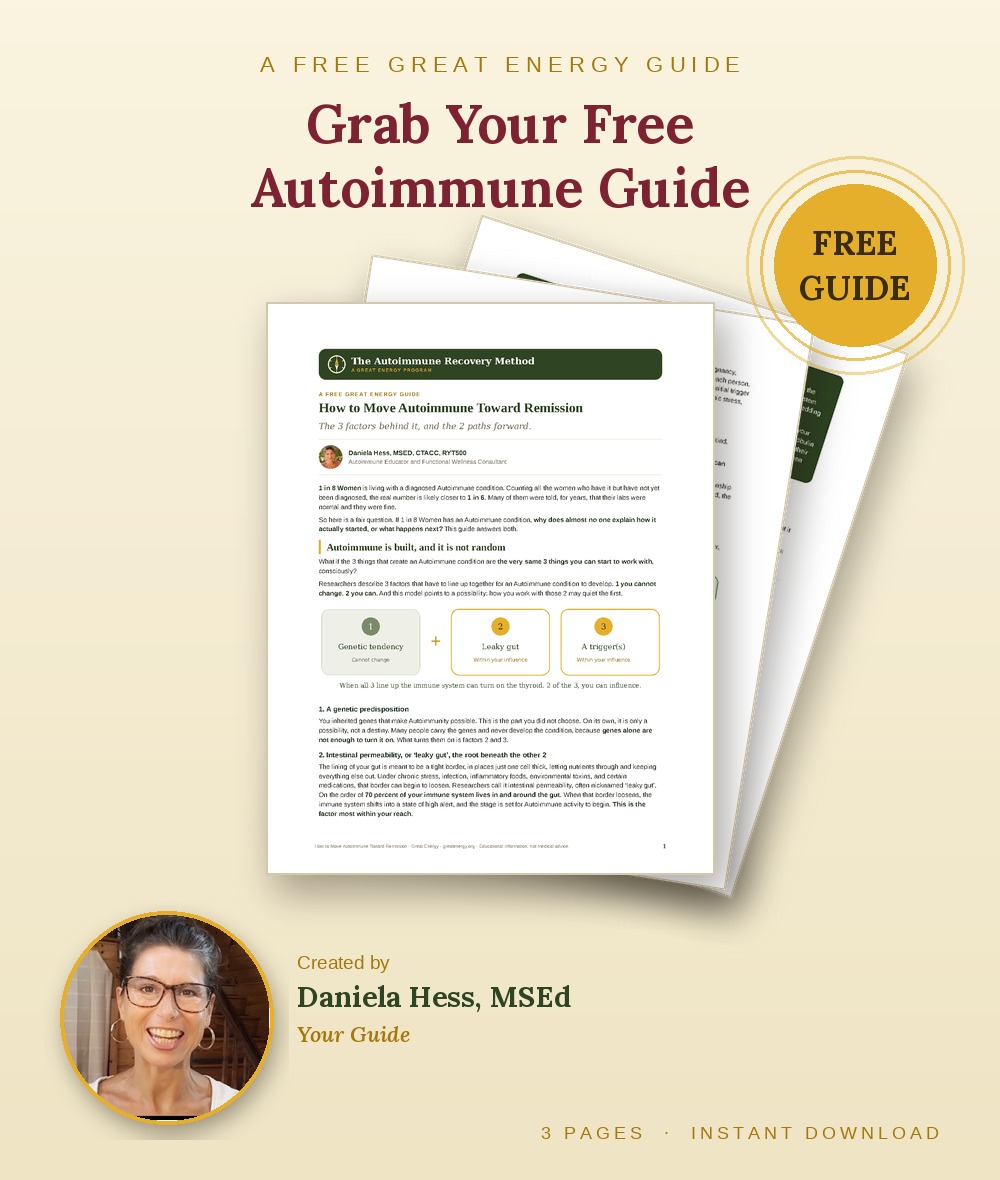
How to Move Autoimmune Toward Remission
The 3 factors behind an Autoimmune condition and the 2 paths forward, free, straight to your inbox.
No spam. Unsubscribe anytime.
Your guide is on its way. You can also open it now (PDF).

Articles from Daniela
Daniela Hess, MSEd, is a co-founder of Great Energy and an Autoimmune Educator and Functional Wellness Consultant who lives and thrives with Hashimoto’s. She is not a licensed medical provider.
AIP recipes to try
A place to start in the kitchen while you work on this with your own clinician: