← All conditions

Endocrine system

Type 1 diabetes (T1D)

Type 1 diabetes occurs when the immune system's T cells destroy the insulin-producing beta cells in the pancreas, eventually leaving the body unable to produce enough insulin on its own. The process is often marked by specific autoantibodies, including anti-GAD65, anti-insulin, and anti-islet cell antibodies, that can appear years before symptoms do.

People with type 1 diabetes carry a meaningfully higher risk of developing other autoimmune conditions, most often autoimmune thyroiditis and celiac disease, which is part of why clinicians often screen for both.

Common signs

frequent urination, intense thirst, unexpected weight loss, constant hunger, fatigue, blurred vision, and slow-healing cuts. Symptoms can come on quickly.

This is a plain-language summary for orientation, not a diagnosis. Mechanisms are described as current understanding, not settled fact. Work with your own clinician for your care.

Questions people ask

Is there a cure for type 1 diabetes?+
This page describes type 1 diabetes as the result of the immune system's T cells destroying the insulin-producing beta cells in the pancreas, a process that leaves the body unable to produce enough insulin on its own. That description is about an ongoing loss of insulin-producing cells rather than a single reversible event, which is why long-term management and screening for related autoimmune risk is what this page covers. Questions about emerging treatments or a cure are best directed to your own endocrinologist, since that is outside what this page addresses.
Can you get type 1 diabetes as an adult?+
This page doesn't state a specific age of onset. It does describe autoantibodies, including anti-GAD65, anti-insulin, and anti-islet cell antibodies, that can appear years before symptoms show up, which is part of why the process is understood as gradual rather than sudden. For a direct answer about the age type 1 diabetes can start, talk with an endocrinologist or your own doctor.
Is type 1 diabetes genetic?+
This page doesn't address genetic inheritance directly. It does note that people with type 1 diabetes carry a meaningfully higher risk of developing other autoimmune conditions, most often autoimmune thyroiditis and celiac disease, which is part of why clinicians often screen for both. Questions about family risk and genetics are best asked of an endocrinologist or genetic counselor.
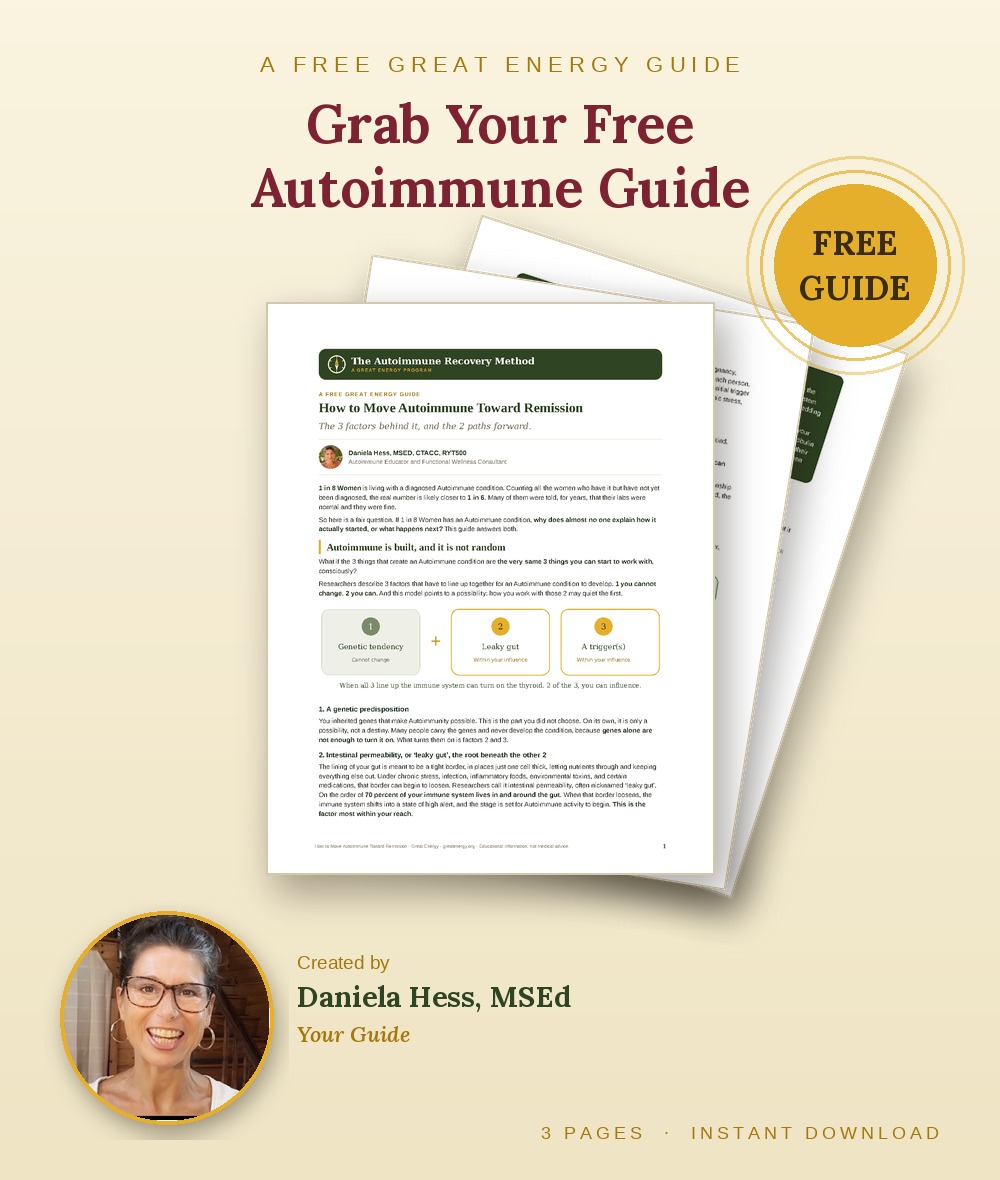
The free guide, How to Move Autoimmune Toward Remission, by Daniela Hess
Receive the free guide

How to Move Autoimmune Toward Remission

The 3 factors behind an Autoimmune condition and the 2 paths forward, free, straight to your inbox.

No spam. Unsubscribe anytime.

Thank you. Please check your email.

Your guide is on its way. You can also open it now (PDF).

Daniela Hess

Articles from Daniela

Daniela Hess, MSEd, is a co-founder of Great Energy and an Autoimmune Educator and Functional Wellness Consultant who lives and thrives with Hashimoto’s. She is not a licensed medical provider.

Autoimmunity explained: what the immune system is doing and whyYour microbiome: why diversity is the goal and how AIP supports itIntestinal permeability and autoimmunity: the gate that should be closed

AIP recipes to try

A place to start in the kitchen while you work on this with your own clinician: