Multi-system and other
VEXAS syndrome
VEXAS syndrome is a rare, adult-onset condition caused by an acquired mutation in the UBA1 gene within blood-forming cells, which leads to widespread inflammation and blood abnormalities. It is classed as an autoinflammatory disease, meaning the innate immune system drives the inflammation, rather than a classic antibody-based autoimmune disease, though it can overlap with autoimmune and blood conditions such as myelodysplastic syndrome. Because the mutation arises in the X chromosome and is acquired rather than inherited, VEXAS is described almost exclusively in men, typically diagnosed after age 50.
Research estimates it affects roughly 1 in 4,000 men over 50, making it more common than once assumed for a condition first described only in 2020, and some regional cohorts report lower prevalence than others. People often have recurring fevers, skin and cartilage inflammation, lung and blood vessel involvement, and low red blood cell counts with enlarged red cells, and the condition carries meaningful risk from both the inflammation itself and related infections.
Common signs
The cartilage inflammation often centers on the ears or bridge of the nose, sometimes mimicking relapsing polychondritis, and skin flares can look like Sweet syndrome, with tender red bumps or plaques. Blood clots in the veins are also common. Because the pattern overlaps so closely with several other rheumatic and blood conditions, VEXAS is often first mistaken for one of those before genetic testing confirms it.
This is a plain-language summary for orientation, not a diagnosis. Mechanisms are described as current understanding, not settled fact. Work with your own clinician for your care.
Questions people ask
Is VEXAS syndrome inherited?+
How common is VEXAS syndrome?+
Is there a cure for VEXAS syndrome?+
In a doctor’s words
“We're finally seeing the first drug trial specifically for VEXAS syndrome, and that's a big step forward for patients.”
Danielle Hammond, M.D., Leukemia specialist and physician-researcher, The University of Texas MD Anderson Cancer Center
Read more at MD Anderson Cancer Center, Cancerwise ↗
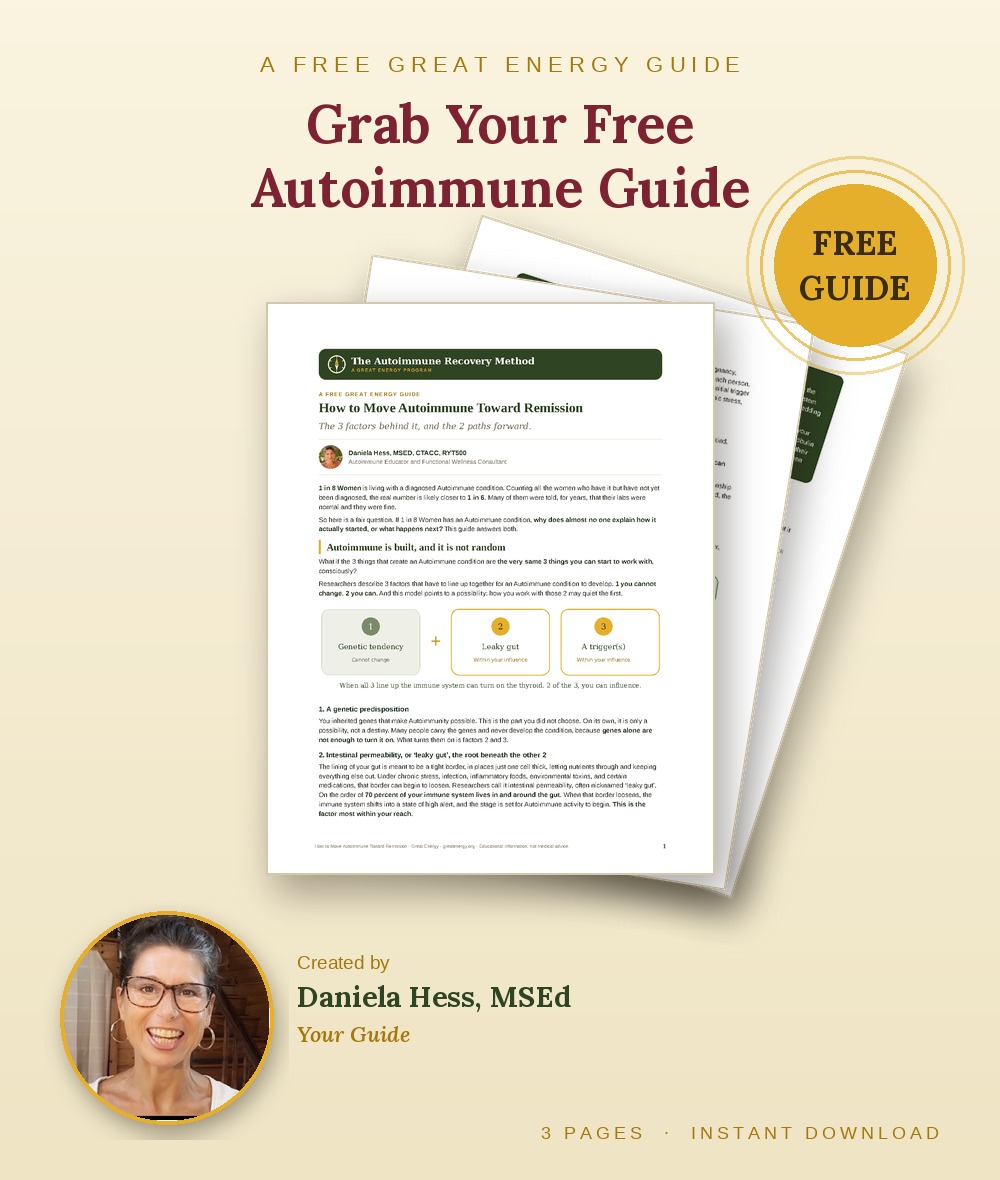
How to Move Autoimmune Toward Remission
The 3 factors behind an Autoimmune condition and the 2 paths forward, free, straight to your inbox.
No spam. Unsubscribe anytime.
Your guide is on its way. You can also open it now (PDF).

Articles from Daniela
Daniela Hess, MSEd, is a co-founder of Great Energy and an Autoimmune Educator and Functional Wellness Consultant who lives and thrives with Hashimoto’s. She is not a licensed medical provider.
AIP recipes to try
A place to start in the kitchen while you work on this with your own clinician: