Desserts & treats
AIP carob birthday cupcakes sweetened only with plantain and blueberries, with a carob coconut-cream frosting, no added sugar
Desserts & treats · serves 9 · 30-60 min
Core AIP · Elimination phase compliant
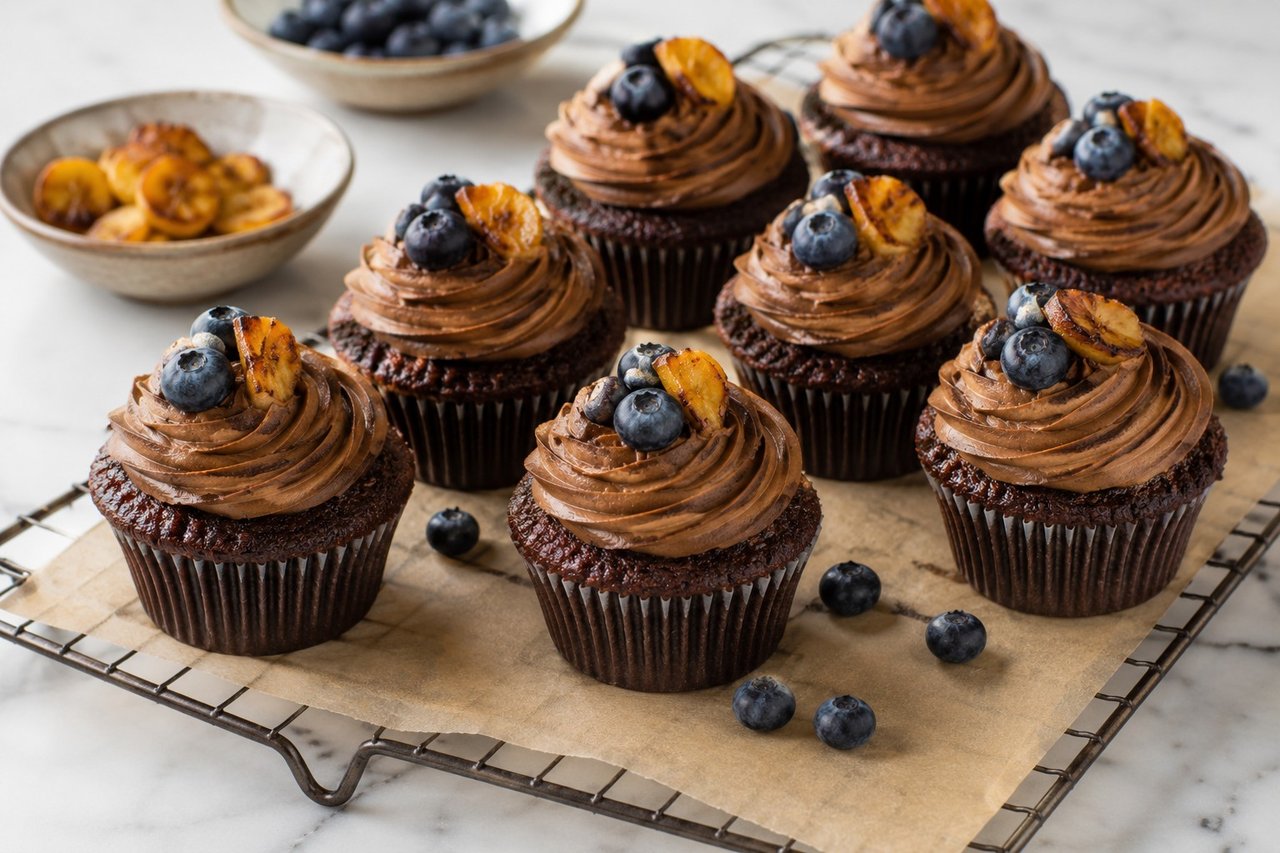
A birthday without cake becomes a small, quiet loss, the kind that is easy for other people to miss and hard for you to explain. This cupcake exists so that does not have to happen this year. No added sweetener anywhere; the sweetness comes entirely from ripe plantain and blueberries baked into the batter, and it is fully within the protocol. Put a candle in one. Let someone sing to you.
Carob, standing in for cocoa here, has real fiber and a modest amount of calcium in its own right, and its naturally sweet, slightly earthy flavor does the work cocoa would normally do. The 1/2 cup of blueberries folded into the batter is where a good share of the color and the polyphenol content comes from, the same class of plant compound this way of eating leans on to help quiet inflammation, cupcake-sized amount and all. Between the plantain, the avocado, and the fruit, this cake gets its sweetness and its structure from whole foods start to finish.
The gelatin in the frosting and the batter comes from grass-fed sources, worth choosing well, since it is doing real structural work here rather than just holding a recipe together. Frost it cold, eat it cold, and call it what it is: a real cake.
Ingredients
For the cupcakes
- 9 oz yellow plantain, peeled (ripe, yellow with some spots)
- 6 oz avocado (about 1 medium avocado)
- 1/2 cup fresh blueberries
- alcohol-free vanilla extract, to taste (or vanilla powder)
- 1 teaspoon apple cider vinegar
- 1/4 cup palm shortening
- 1 gelatin egg (see method)
- 1/2 cup plus 2 tablespoons carob powder
- arrowroot flour (quantity not confirmed in source)
- coconut flour (quantity not confirmed in source)
- 1/2 teaspoon baking soda
- pinch of sea salt
For the carob coconut-cream frosting
- 1 cup chilled coconut cream (from a can refrigerated overnight)
- 1/4 cup carob powder
- 1 teaspoon grass-fed gelatin
- pinch of sea salt
Method
- Make the gelatin egg first: sprinkle 1 tablespoon of grass-fed gelatin over 3 tablespoons of cold water in a small pot. Let it bloom for 2 minutes, then warm gently over low heat until liquid. Remove from heat and whisk briskly until the mixture becomes light and slightly foamy. Use immediately.
- Heat the oven to 350F and line 9 muffin cups with paper liners.
- In a blender, combine the plantain, avocado, blueberries, vanilla, apple cider vinegar, and palm shortening. Blend until completely smooth. Pour in the gelatin egg while the blender is running on low, or blend briefly after adding.
- Add the dry ingredients, carob powder, arrowroot flour, coconut flour, baking soda, and salt, to the blender. Blend until a thick, scoopable batter forms. It should be significantly thicker than a conventional cupcake batter.
- Divide the batter among the 9 lined muffin cups, filling each about three-quarters full. Smooth the tops with a damp spoon.
- Bake for about 20 minutes, until the tops are set and a toothpick inserted in the center comes out clean. Cool completely on a rack before frosting, warm cupcakes will melt the frosting.
- For the frosting: open the chilled coconut cream and scoop out the thick cream that has risen to the top (reserve any liquid for smoothies). Use a hand mixer or whisk to beat the cream to soft peaks. Stir in the carob powder, gelatin, and salt until smooth.
- Frost the cooled cupcakes and refrigerate immediately. The frosting holds best cold. Serve chilled and store refrigerated up to 3 days.
Notes
The frosting is stabilized with a small amount of gelatin but will soften at room temperature, keep frosted cupcakes cold until serving. Use only ripe plantain (yellow with brown spots); under-ripe plantain will not provide the sweetness or the smooth texture the batter needs. Vanilla extract should be alcohol-free for strict AIP compliance; vanilla powder works well here. The exact quantities of arrowroot and coconut flour were not preserved in the source archive and should be tested, this is flagged for recipe development.
*Adapted from grazedandenthused.com*
Nutrition
Estimated per serving (serves 9), calculated from the ingredients. Actual values vary with brands, sizes, and how much sauce or dressing you use.
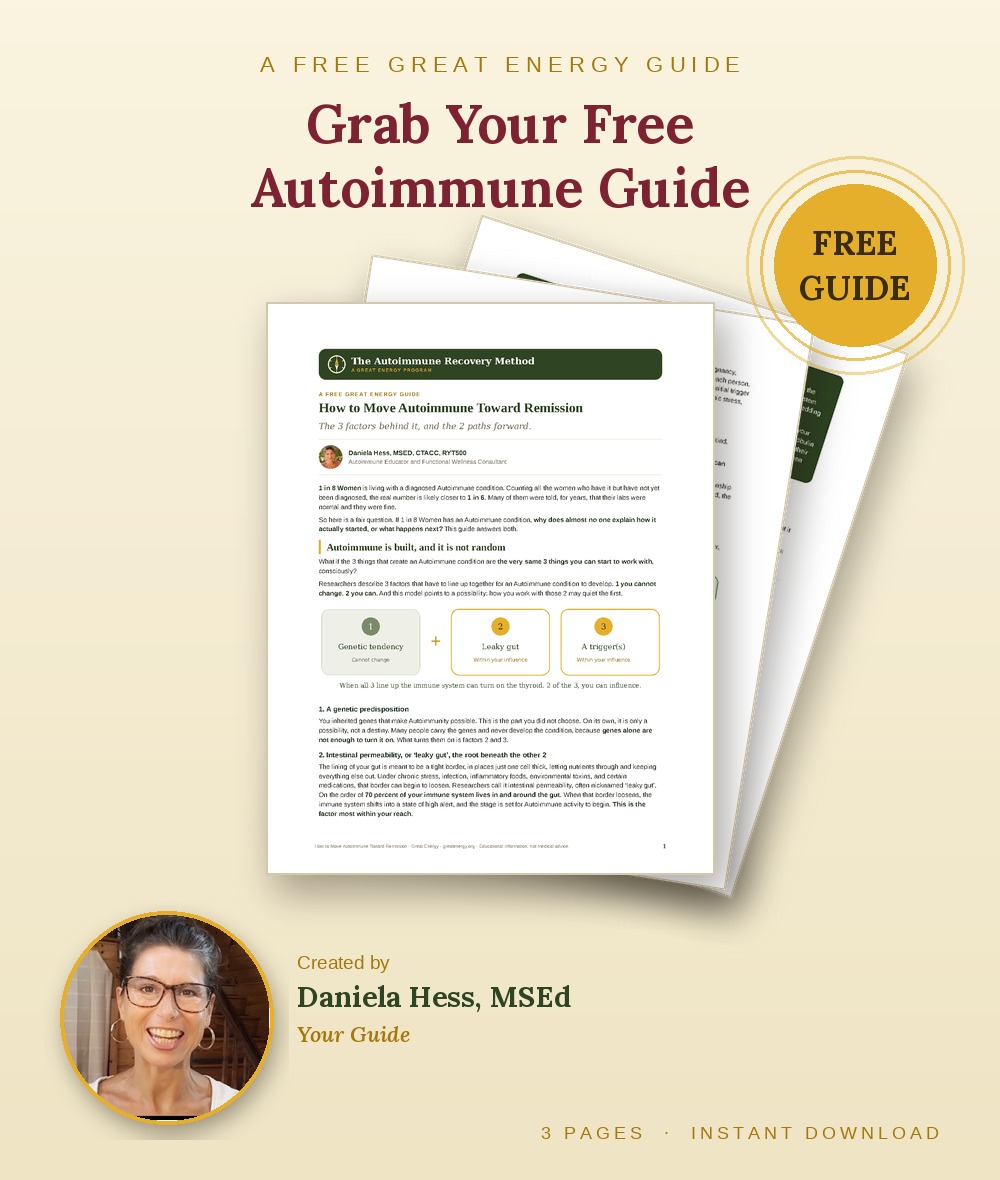
How to Move Autoimmune Toward Remission
The 3 factors behind an Autoimmune condition and the 2 paths forward, free, straight to your inbox.
No spam. Unsubscribe anytime.
Your guide is on its way. You can also open it now (PDF).
Further reading
Daniela Hess, MSEd, is a co-founder of Great Energy and an Autoimmune Educator and Functional Wellness Consultant who lives and thrives with Hashimoto’s. She is not a licensed medical provider.
From the glossary
Words in this recipe you can look up. Tap or click a term to learn what it means.
ArrowrootCarobCoconut creamCoconut flourFiberGelatin eggInflammationPlantainPolyphenolEvery ingredient in this recipe is on the Core Autoimmune Protocol food list.
Download the Core Food List (PDF) Explore the food list