Baking & bread
AIP Gingerbread Cinnamon Rolls
Baking & bread · serves 8 · 30-60 min
Core AIP · Elimination phase compliant
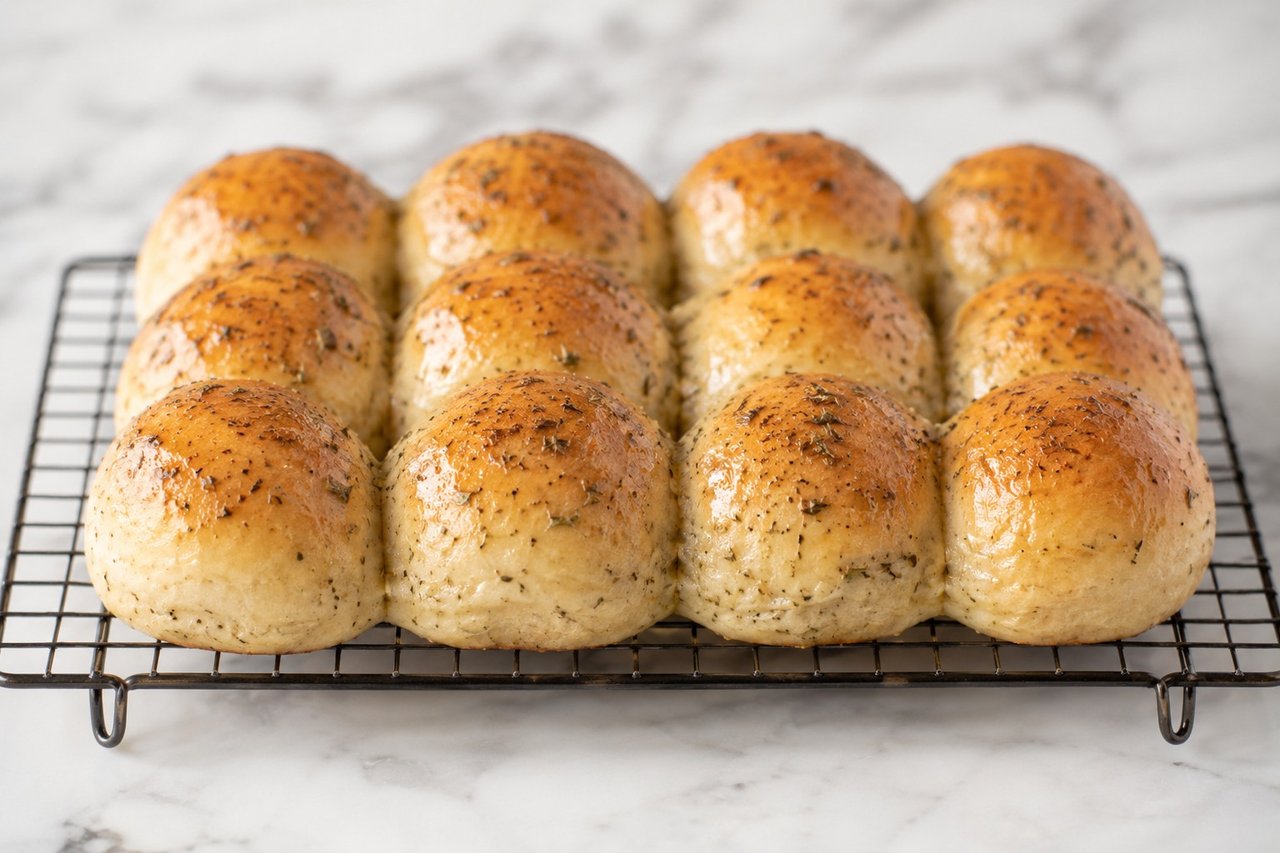
Cinnamon rolls are one of those foods that carry an almost disproportionate amount of emotional weight. They smell like mornings that feel safe. They feel festive without requiring an occasion. This version is grain-free and egg-free, built on a Japanese sweet potato dough that is genuinely workable and produces a soft, cakey roll. The gingerbread spicing - cinnamon, ginger, a touch of blackstrap molasses - makes these feel specifically suited to winter holidays, though nothing stops you from making them in July.
Japanese sweet potato is the variety that matters here. The source author is clear: other sweet potato varieties tend to produce a dough that is too wet to roll. Japanese sweet potato has a drier, starchier flesh that holds together. It is also a source of vitamin C, potassium, and beta-carotene, which the body converts to vitamin A. Ginger is involved in modulating inflammatory pathways and supporting healthy digestion. Cinnamon is involved in supporting healthy blood sugar regulation, which is worth noting in a recipe that uses both maple syrup and coconut sugar. Blackstrap molasses is a source of iron, calcium, and magnesium in trace amounts - genuinely more nutritious than refined sugar, which is part of why it earns a place here.
There is no yeast and no rise step. These rolls bake from shaping directly to the oven. That makes them faster than a traditional cinnamon roll and removes one more source of protocol complexity. Make them on a holiday morning when you want something warm and special and still on-protocol.
Ingredients
For the dough
- 1.5 cups mashed Japanese sweet potato (boiled and mashed; cooled before using)
- 1/4 cup palm shortening
- 1/3 cup maple syrup
- 1/2 cup arrowroot starch (or tapioca starch, 1:1)
- 1/2 cup coconut flour
- 1/4 cup tigernut flour
- 1 tablespoon grass-fed gelatin
- 1 teaspoon AIP-compliant baking powder (see notes)
- 1 teaspoon cinnamon
For the filling
- 5 tablespoons coconut sugar
- 1 tablespoon blackstrap molasses
- 1 teaspoon cinnamon
- 3/4 teaspoon ground ginger
For the drizzle
- 2 tablespoons coconut butter, melted
- coconut oil, for brushing before baking
Method
- Prepare the sweet potato ahead: boil peeled Japanese sweet potato pieces until completely fork tender, about 15 to 20 minutes. Drain, mash very smooth, and allow to cool completely before using in the dough. The cooling step matters -- warm mash can affect the gelatin and the flour absorption.
- Heat the oven to 375F and line a baking sheet with parchment.
- In a mixing bowl or stand mixer, cream the palm shortening with the maple syrup until combined. Add the cooled sweet potato mash and mix well.
- In a separate bowl, whisk together the arrowroot starch, coconut flour, tigernut flour, gelatin, baking powder, and cinnamon.
- Add the dry ingredients to the wet and mix until a soft, cohesive dough forms. It will be somewhat tacky. If it is very sticky, add a small amount of additional arrowroot or coconut flour, a teaspoon at a time.
- Turn the dough out onto a large sheet of parchment lightly dusted with arrowroot starch. Place a second sheet of parchment on top and roll the dough out to approximately 1/4-inch thickness, roughly 9 inches long. Remove the top parchment.
- Stir the coconut sugar, molasses, cinnamon, and ginger together into a thick paste. Spread it evenly over the surface of the dough, leaving a half-inch border at one long edge.
- Using the bottom parchment to help, roll the dough up from the long edge into a log roughly 2.5 inches in diameter and 9 inches long. The parchment acts as your hands; press any cracks together with your fingers as you go.
- Slice the log into approximately 8 rolls using unflavored dental floss (slide the floss under the log, cross the ends above the roll, and pull in opposite directions -- this gives a clean cut without compressing the dough).
- Arrange the rolls cut-side up on the lined baking sheet with a little space between them. Brush lightly with coconut oil.
- Bake for 30 to 35 minutes until the rolls are golden on top and feel set when pressed. Cool for 10 minutes, then drizzle with the melted coconut butter. Serve warm.
Notes
Japanese sweet potato is not negotiable in this recipe -- the dough will be too wet with orange or purple varieties. If you need to plan ahead, cook and mash the sweet potato the night before and refrigerate it; do not shape the raw rolls and refrigerate overnight, as they dry out and do not bake well. Standard baking powder contains corn starch and is excluded on AIP; use an AIP-compliant version (some readers use 1 part baking soda to 2 parts cream of tartar -- note that cream of tartar AIP status is debated). Arrowroot and tapioca starch are interchangeable 1:1 here. Tigernut flour can be swapped for cassava flour per one reader report. For plain cinnamon rolls without the gingerbread depth, simply omit the ginger and molasses from the filling.
*Adapted from unboundwellness.com*
---
*Provenance: source-derived (re-grounded). Method rebuilt in ARM's own words from the ingredient list in /Users/Christopher/Documents/Claude/01-Projects/ARM/aip-source-archives/unbound-wellness/aip-gingerbread-cinnamon-rolls.md (unboundwellness.com, author Michelle Hoover). Ingredient quantities and times used as factual reference from the source recipe facts. Introduction and health framing written fresh from ARM's food-as-medicine framework. No third-party method text reproduced. Japanese sweet potato variety is essential to dough hydration. AIP-compliant baking powder and vanilla extract flagged. Blackstrap molasses AIP status noted and flagged.*
Nutrition
Estimated per serving (serves 8), calculated from the ingredients. Actual values vary with brands, sizes, and how much sauce or dressing you use.
How to Move Autoimmune Toward Remission
The 3 factors behind an Autoimmune condition and the 2 paths forward, free, straight to your inbox.
No spam. Unsubscribe anytime.
Your guide is on its way. You can also open it now (PDF).

Further reading
Daniela Hess, MSEd, is a co-founder of Great Energy and an Autoimmune Educator and Functional Wellness Consultant who lives and thrives with Hashimoto’s. She is not a licensed medical provider.
From the glossary
Words in this recipe you can look up. Tap or click a term to learn what it means.
ArrowrootBeta-caroteneBlood sugarCassava flourCoconut flourCoconut sugarCream of tartarGelatinMagnesiumMolassesPotassiumTigernut flourVitamin AVitamin CEvery ingredient in this recipe is on the Core Autoimmune Protocol food list.
Download the Core Food List (PDF) Explore the food list