Neuromuscular and nervous system
Hashimoto's encephalopathy (SREAT)
Hashimoto's encephalopathy, also called steroid-responsive encephalopathy associated with autoimmune thyroiditis (SREAT), is a brain condition that occurs in some people who have elevated thyroid antibodies, especially anti-thyroid peroxidase (anti-TPO). Current understanding is that the exact mechanism isn't fully worked out, and the thyroid antibodies are thought to be a marker of a broader autoimmune process rather than a direct cause of the brain inflammation itself. Diagnosis rests on three things together: neurological symptoms after other causes are ruled out, elevated antithyroid antibodies, and meaningful improvement after immune-modulating treatment, which is also how the condition got its name, even though not everyone responds to steroids.
Hashimoto's encephalopathy is rare, with one commonly cited estimate placing prevalence around 2.1 per 100,000 people, though data remain limited.
Common signs
Confusion, memory and thinking problems, sometimes stroke-like episodes, seizures, tremor or jerking movements, and mood or psychiatric changes, which can come on fairly quickly or fluctuate.
This is a plain-language summary for orientation, not a diagnosis. Mechanisms are described as current understanding, not settled fact. Work with your own clinician for your care.
Questions people ask
Is Hashimoto's encephalopathy curable?+
How is Hashimoto's encephalopathy diagnosed?+
Is Hashimoto's encephalopathy the same as Hashimoto's thyroiditis?+
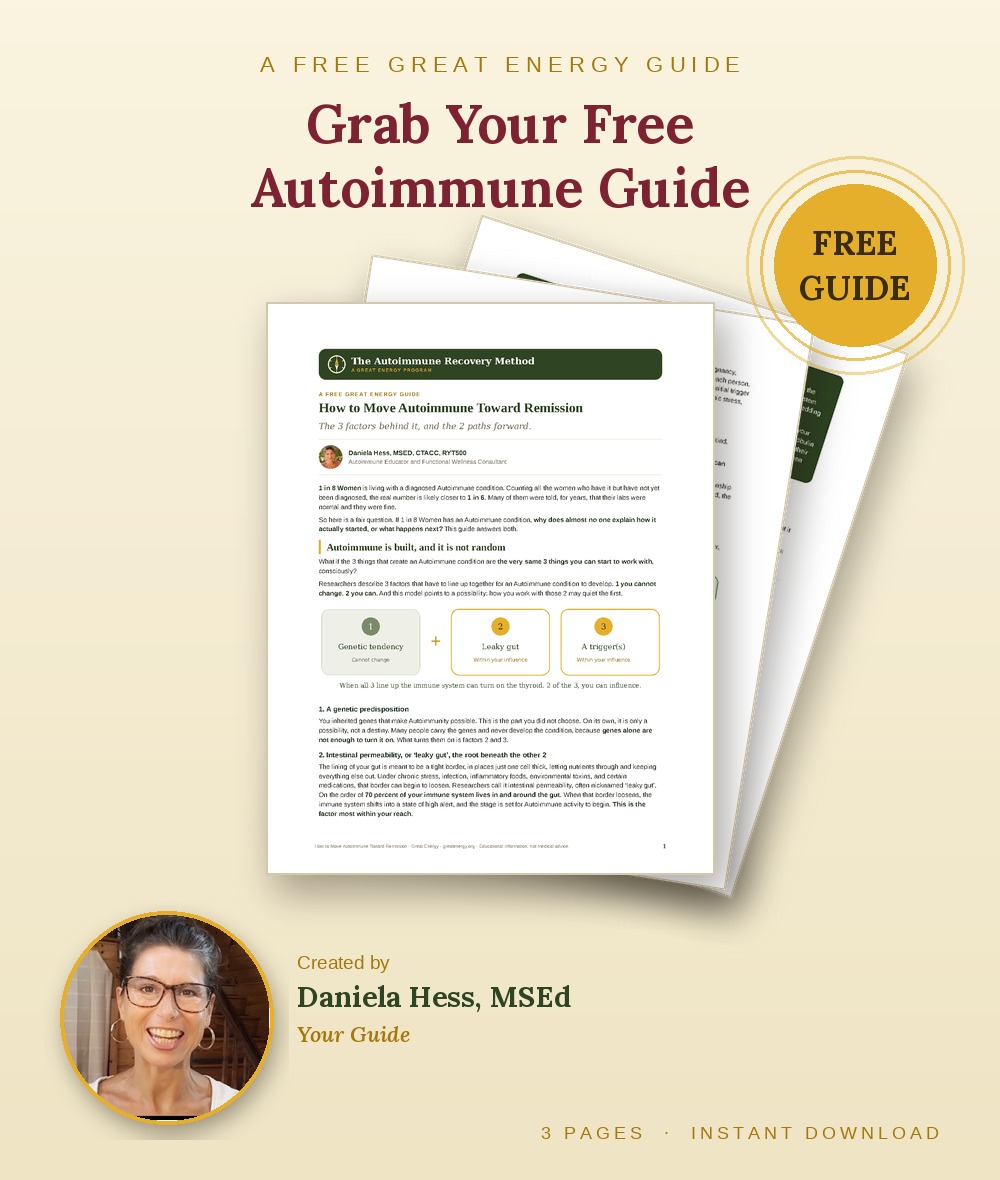
How to Move Autoimmune Toward Remission
The 3 factors behind an Autoimmune condition and the 2 paths forward, free, straight to your inbox.
No spam. Unsubscribe anytime.
Your guide is on its way. You can also open it now (PDF).

Articles from Daniela
Daniela Hess, MSEd, is a co-founder of Great Energy and an Autoimmune Educator and Functional Wellness Consultant who lives and thrives with Hashimoto’s. She is not a licensed medical provider.
AIP recipes to try
A place to start in the kitchen while you work on this with your own clinician: