Sides & vegetables
Roasted squash with balsamic-orange glaze: a holiday plate worth celebrating
Sides & vegetables · serves 4 · 30 to 60 min
Core AIP · Elimination phase compliant
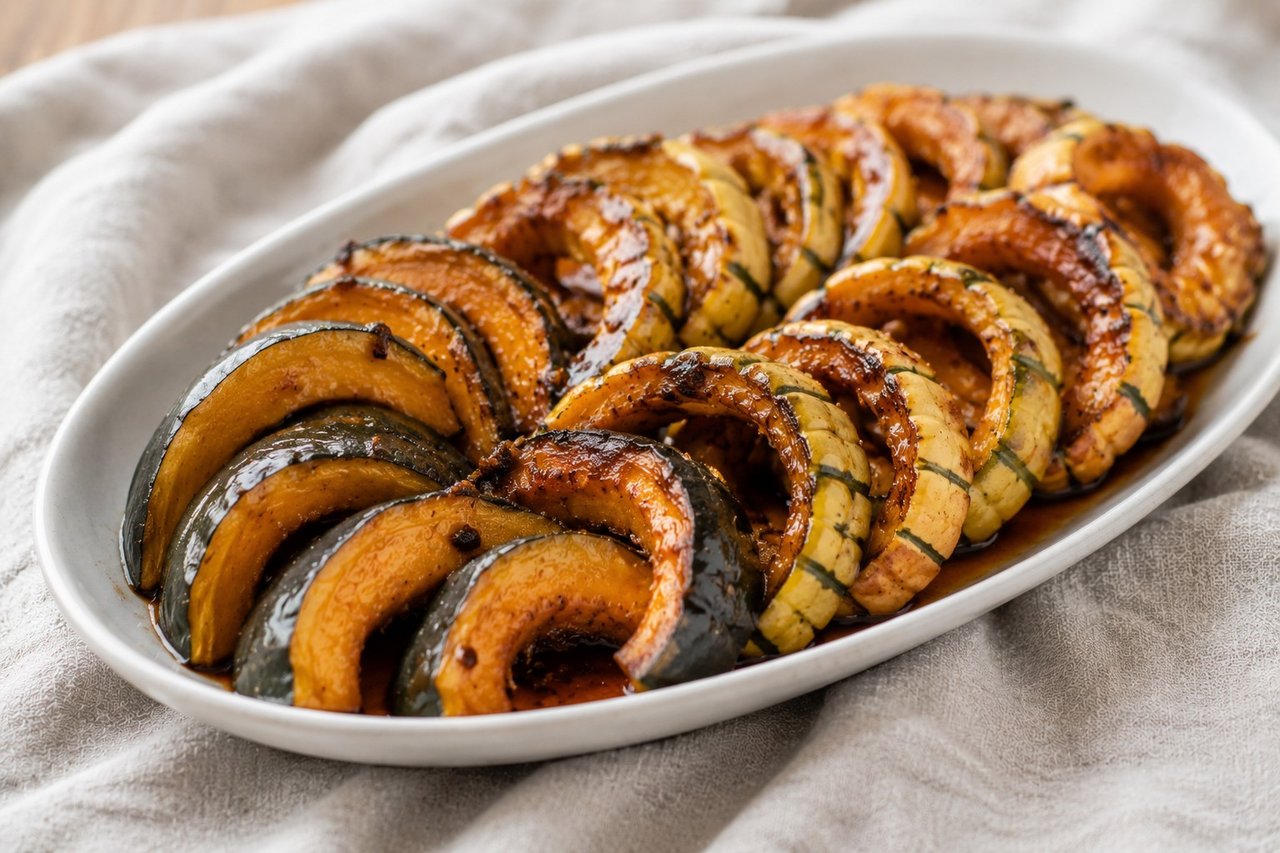
This dish belongs on any celebration table, and it is simple enough to earn a spot on a plain Tuesday too. It tastes festive, it looks like it belongs on a holiday plate, and it is built entirely from real, whole ingredients.
Winter squash earns its place here. Kabocha and delicata are rich in beta-carotene, a source of vitamin A studied for its role in immune and mucosal health, and they bring fiber that supports a healthier gut community. The orange in the glaze adds vitamin C, and the long, slow roast turns the squash sweet and caramelized on its own, the natural sugars doing the work any refined sweetener would otherwise have to do. A little honey rounds it out, modest and easy to leave out entirely if you prefer.
These are real vegetables, grown and harvested, and the cooking is mostly the oven's work. When the squash comes out golden, arrange it on a platter with care and spoon the warm glaze over it just before serving. Let the color do some of the work, the deep orange squash, the dark glaze pooling at the edges. A plate that looks cared for tends to get eaten more slowly, and that matters too.
Ingredients
- 1 small kabocha squash (about 2 lbs), peeled and cut in half-inch wedges
- 1 large delicata squash (about 1.5 lbs), seeded and cut in half-inch slices
- olive oil or avocado oil
- 1/2 tsp sea salt
Glaze:
- juice of 2 small oranges (about 1/2 cup)
- 1 tbsp balsamic vinegar
- 1 tbsp honey
- pinch of sea salt
Method
Spread each squash in a single layer on its own sheet pan. This is the key to good browning, so do not crowd them. Toss with oil and salt.
Roast at 400 F for about 30 minutes, tossing once or twice, until both squashes are golden and fork tender.
While they roast, simmer the orange juice, balsamic vinegar, honey, and a pinch of salt in a small saucepan for about 10 minutes, until it reduces to a syrupy glaze.
Arrange the warm squash on a platter and spoon the glaze over the top right before serving.
To make it ahead, store the glaze separately, bring the squash toward room temperature, rewarm the glaze, and dress at the last minute.
Air fryer variation
The squash roasts well in the air fryer in batches. Toss the wedges and slices with oil and salt, then cook at around 380 to 400 F for 12 to 18 minutes, shaking the basket once or twice, until golden and tender. Make the glaze on the stovetop as written and spoon it over at the end. This conversion is untested in our kitchen, so treat the time as a starting range and watch the edges for browning.
*Adapted from asquirrelinthekitchen.com*
Nutrition
Estimated per serving (serves 4), calculated from the ingredients. Actual values vary with brands, sizes, and how much sauce or dressing you use.
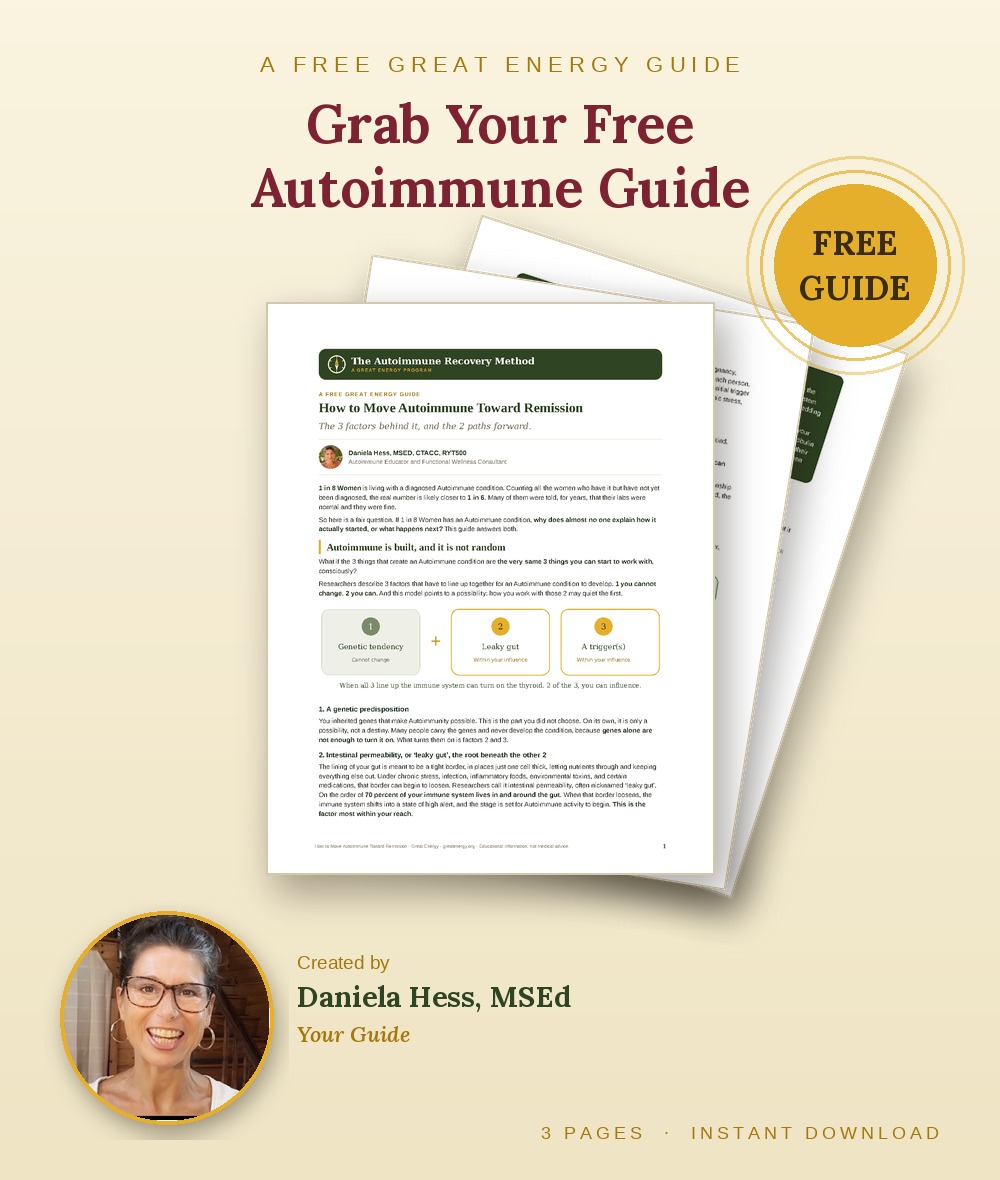
How to Move Autoimmune Toward Remission
The 3 factors behind an Autoimmune condition and the 2 paths forward, free, straight to your inbox.
No spam. Unsubscribe anytime.
Your guide is on its way. You can also open it now (PDF).
Further reading
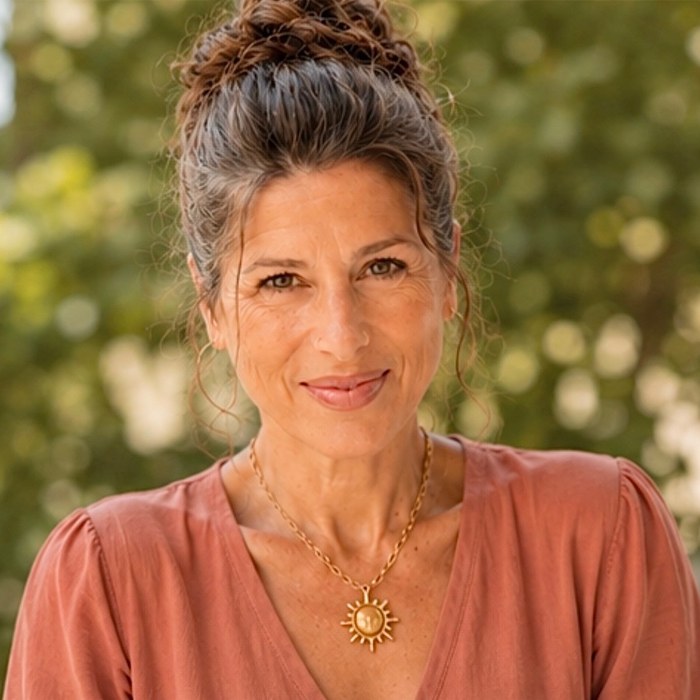
Daniela Hess, MSEd, is a co-founder of Great Energy and an Autoimmune Educator and Functional Wellness Consultant who lives and thrives with Hashimoto’s. She is not a licensed medical provider.
More recipes with Kabocha squash, Delicata squash, or Orange
A Bright Strawberry Orange Sorbet, No Special Equipment RequiredA bright fruit salad you can make in one bowlA fruit salad that lets the fruit leadAIP herb-rubbed pork tenderloin with warm blueberry-balsamic-shallot sauceAIP maple-lemon electrolyte water - filtered water with lemon juice, maple syrup, and sea salt, a homemade sports-drink alternativeAIP orange cream soda - a honey and maple vanilla syrup stirred into orange juice and sparkling water over iceAIP oven-roasted fruit cups - pineapple, mango, and raspberries baked with citrus zest, topped with coconut vanilla ice creamAIP roasted delicata squash and kale salad with figs and a basil-balsamic dressingFrom the glossary
Words in this recipe you can look up. Tap or click a term to learn what it means.
Beta-caroteneDelicata squashFiberKabocha squashVitamin AVitamin CEvery ingredient in this recipe is on the Core Autoimmune Protocol food list.
Download the Core Food List (PDF) Explore the food list