Baking & bread
AIP Garlic Herb Dinner Rolls
Baking & bread · serves 4 · 30-60 min
Core AIP · Elimination phase compliant
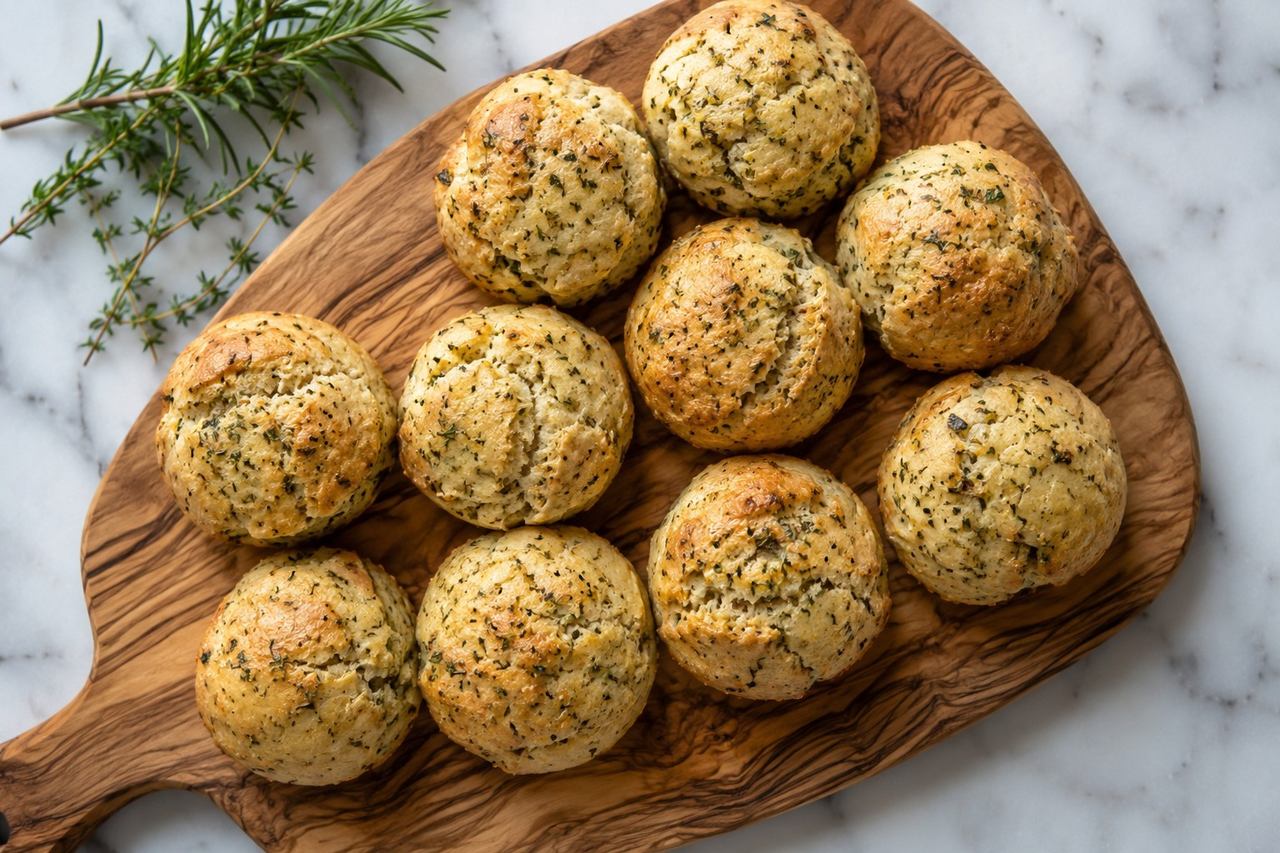
Bread is one of the things people mourn most on AIP. Not because it is the most nutritious food or the most irreplaceable - it is not - but because it is woven into so many ordinary moments. Dinner with other people. The piece of bread that soaks up the sauce at the end of a stew. These rolls will not taste identical to a wheat dinner roll, and they will not rise like one. But they are genuinely good: a crisp bottom, a soft and slightly chewy center, and a real garlic-and-herb flavor that makes them worth putting on the table. They are fully elimination-compliant with no eggs, no grains, no dairy, and no yeast.
The structural work here is done by tapioca starch and coconut flour, which behave very differently from wheat flour - tapioca gives stretch and a slightly chewy bite, while coconut flour absorbs liquid and provides structure. The gelatin egg replaces the binding that eggs normally provide. Garlic is involved in supporting immune function and has been studied for its antimicrobial properties; rosemary is a source of rosmarinic acid, a polyphenol with antioxidant activity. Thyme has traditional use as a respiratory and digestive herb. These are small amounts in a dinner roll, but the cumulative effect of building every meal with thoughtful ingredients adds up over time.
There is a practical note worth taking seriously: these rolls must cool for at least 20 minutes after baking. The gelatin needs time to set the interior. Cut them too early and the centers stay gooey. Patience here is part of the method, not an afterthought.
Ingredients
- 3/4 cup tapioca starch (do not substitute arrowroot; see notes)
- 1/4 cup plus 1 tablespoon coconut flour
- 1/8 teaspoon baking soda
- 1 teaspoon garlic powder
- 1/2 teaspoon dried thyme
- 1/2 teaspoon dried rosemary
- pinch of sea salt
- 2 tablespoons olive oil, plus extra for your hands
- 1 teaspoon apple cider vinegar
- 2 tablespoons palm shortening
For the gelatin egg
- 1/2 cup cold water
- 2 tablespoons grass-fed gelatin powder
To finish
- flaky sea salt
Method
- Heat the oven to 350F. Grease a sheet of parchment and place it on a baking sheet.
- In a mixing bowl, whisk together the tapioca starch, coconut flour, baking soda, garlic powder, thyme, rosemary, and salt until evenly combined.
- Add the olive oil, apple cider vinegar, and palm shortening to the dry ingredients. Work everything together -- a fork or your fingers both work -- until the dry mix is completely coated in fat and the mixture looks like coarse, slightly damp crumbs.
- Make the gelatin egg: pour the cold water into a small saucepan and sprinkle the gelatin powder over the surface. Let it bloom for 1 to 2 minutes. Set the pan over medium-low heat and warm, stirring gently, just until the gelatin dissolves. Remove from heat and whisk briskly for about 30 seconds until the mixture is light and frothy.
- Pour the gelatin egg immediately into the dough mixture and stir quickly to incorporate. The gelatin begins to set as it cools, so work with some speed. The dough will be sticky.
- Oil your hands generously. Divide the dough into 4 or 5 portions and roll each into a ball, then flatten slightly to a dome shape. Place on the prepared parchment.
- Bake for 18 to 20 minutes until the bottoms are crisp and golden and the tops feel set when pressed lightly.
- Transfer to a rack and cool for at least 20 minutes before serving. This step is not optional -- the gelatin needs time to set the interior. Finish with a pinch of flaky salt. Best eaten the same day.
Notes
These rolls do not rise like wheat rolls -- expect a compact, dense shape. The texture is a crisp crust with a soft, slightly chewy center. Tapioca starch is essential here; readers who have tried arrowroot as a substitute report gooey centers, and cassava flour is too dense. Palm shortening gives the best texture; if it is unavailable, doubling the olive oil is the author-noted alternative, with some loss of fluffiness. Day-old rolls reheat acceptably in a microwave for 20 seconds or briefly under a broiler. Coconut flour absorbency varies by brand; if your dough is unusually dry or wet, adjust with a small amount of water or coconut flour.
*Adapted from unboundwellness.com*
---
*Provenance: source-derived (re-grounded). Method rebuilt in ARM's own words from the ingredient list in /Users/Christopher/Documents/Claude/01-Projects/ARM/aip-source-archives/unbound-wellness/aip-garlic-herb-bread-rolls.md (unboundwellness.com, author Michelle Hoover). Ingredient quantities and times used as factual reference from the source recipe facts. Introduction and health framing written fresh from ARM's food-as-medicine framework. No third-party method text reproduced. Fully AIP elimination-compliant: tapioca starch, coconut flour, gelatin egg, garlic powder, thyme, rosemary; no eggs, no grains, no dairy, no nuts, no yeast. Mandatory 20-minute cooling step for gelatin to set is core to the method.*
Nutrition
Estimated per serving (serves 4), calculated from the ingredients. Actual values vary with brands, sizes, and how much sauce or dressing you use.
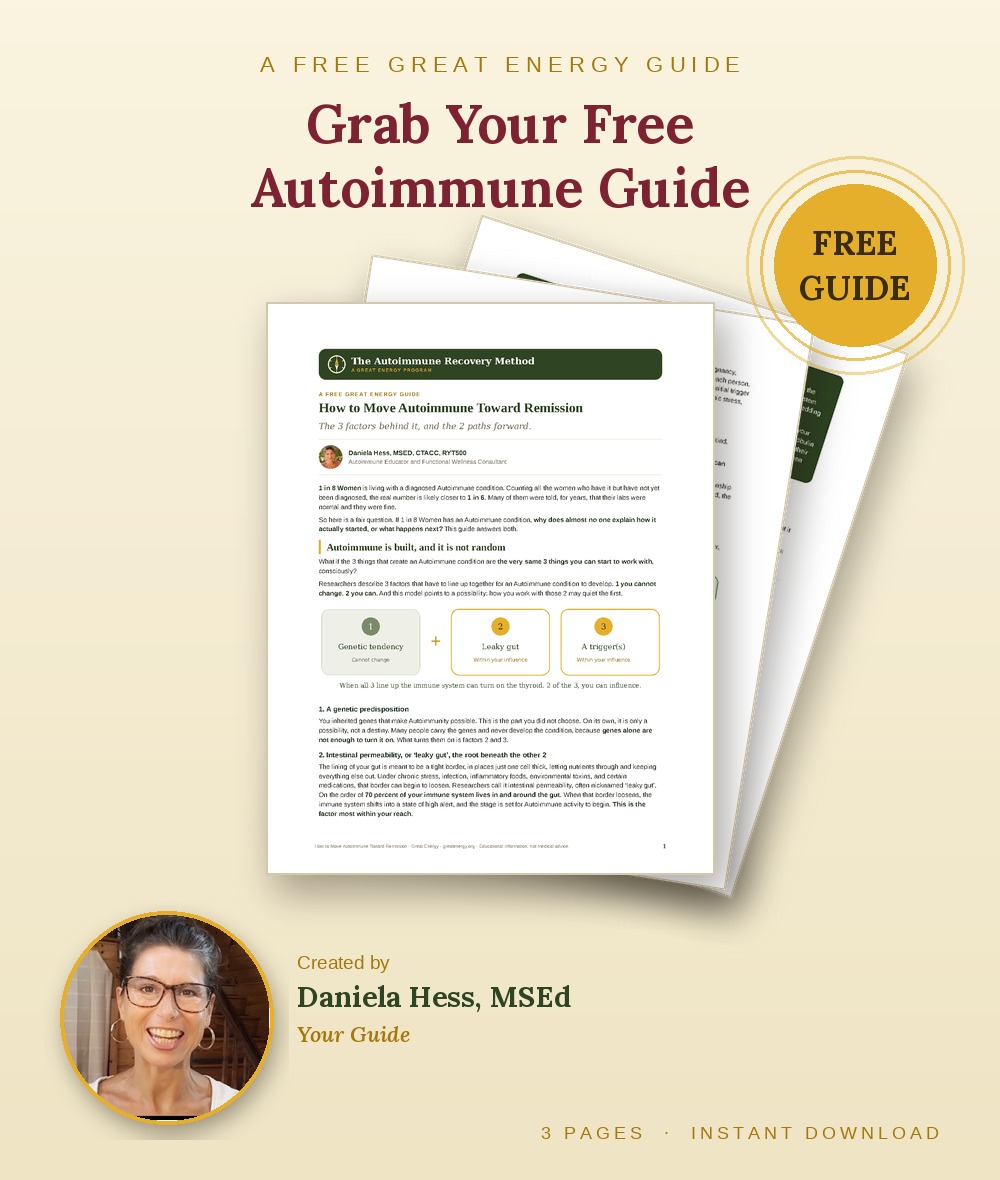
How to Move Autoimmune Toward Remission
The 3 factors behind an Autoimmune condition and the 2 paths forward, free, straight to your inbox.
No spam. Unsubscribe anytime.
Your guide is on its way. You can also open it now (PDF).

Further reading
Daniela Hess, MSEd, is a co-founder of Great Energy and an Autoimmune Educator and Functional Wellness Consultant who lives and thrives with Hashimoto’s. She is not a licensed medical provider.
More recipes with Tapioca, Garlic powder, or Thyme
7-bone beef chuck roast with root vegetables - slow-roasted foil packetA pickle-brined fried chicken sandwich rebuilt for healing, wrapped in lettuceAIP Chicken Nuggets With Sweet and Sour Dipping SauceAIP Gyro Wrap with Coconut TzatzikiAIP Mac and CheeseAIP Minestrone SoupAIP cottage pie - seasoned ground beef and grated vegetables under a white sweet potato mashAIP curried roasted vegetables with turmeric and thymeFrom the glossary
Words in this recipe you can look up. Tap or click a term to learn what it means.
AntioxidantArrowrootCassava flourCoconut flourGelatin eggPolyphenolTapiocaEvery ingredient in this recipe is on the Core Autoimmune Protocol food list.
Download the Core Food List (PDF) Explore the food list