Mains
chicken korma with deep-fried onion base and warming AIP spices
Mains · serves 4
Core AIP · Elimination phase compliant
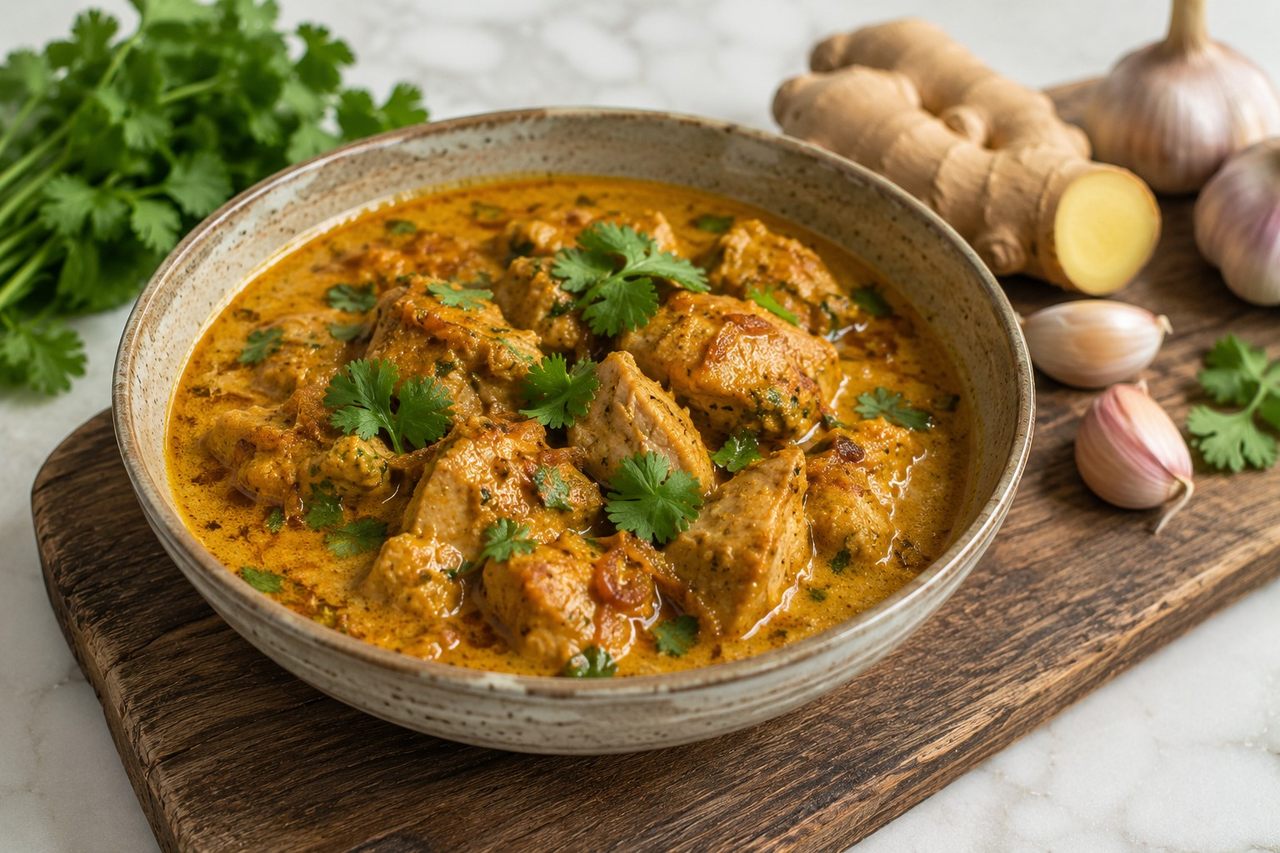
Standing at the stove and coaxing 2 sliced onions into a deep amber paste is not a step you can rush through on a hard day, and that is worth naming honestly. It is closer to slow work than a weeknight shortcut, and the elimination phase already asks for enough patience without adding a fussy technique on top of it. But a properly fried onion base is what gives this korma its actual depth, and once you have made it 1 time, that patience stops feeling like a cost and starts feeling like a skill you own.
Ginger anchors the whole dish, and the gingerols in it are thought to calm an overactive inflammatory response rather than just warm up the flavor. Cinnamon and clove hold their own polyphenols, part of that same anti-inflammatory work, and mace, the lacy covering around a nutmeg seed, is what gives the sauce its particular warmth without tipping into anything sharp.
The chicken in this dish gave its actual life for this meal, and a dish that asks this much patience from you is also a chance to give that fact its due. Source it from a farm you trust if you can find one. When the sauce is finally done, take in its color and its scent before the first bite, because that pause is earned too.
Ingredients
For frying the onions:
- About 1 cup avocado oil (for deep frying)
- 2 medium red onions, thinly sliced
- 1 tbsp cassava flour (optional - helps the onions caramelize and thicken the paste)
- Pinch of sea salt
For the curry:
- 2 tbsp coconut oil
- 2 bay leaves
- 1 1/2 lb boneless chicken thighs, cut into bite-size pieces
- 2 tbsp ginger-garlic paste (see below)
- 1 tsp ground cinnamon
- 1/2 tsp ground mace
- 1/4 tsp ground clove
- 1 tsp salt
- 1 cup water
- 1 tsp kewra water (or rose water)
- 1/4 cup fresh cilantro leaves, finely chopped
Ginger-garlic paste:
- 1 whole head of garlic, cloves peeled (about 10 to 12 cloves)
- One 1-by-2-inch piece of fresh ginger, peeled and roughly chopped
- About 2 tbsp extra virgin olive oil
*Excluded from AIP version: black cardamom, green cardamom, coriander powder, black pepper, Kashmiri chilli - all omitted.*
Method
Make the ginger-garlic paste first. Place the garlic cloves and chopped ginger in a small blender or food processor. Add the olive oil. Blitz to a smooth paste, scraping down the sides once or twice. Set aside.
Fry the onions. Pour the avocado oil into a deep, heavy-bottomed pot and warm over medium-high heat. Toss the sliced onions with the cassava flour and a pinch of salt if using. Working in batches if needed, fry the onions in the hot oil, stirring often, until they are a deep, uniform golden brown - around 8 to 12 minutes. Do not rush this. Remove with a slotted spoon and spread on a paper towel to drain. Once the onions have cooled slightly, transfer them to a blender with a tablespoon or two of water and blitz to a smooth paste. Set aside.
Brown the chicken. In a wide, heavy pot, warm the coconut oil over medium heat. Add the bay leaves and let them sizzle for 30 seconds until fragrant. Add the chicken pieces in a single layer - work in two batches if needed - and cook, turning once, until lightly golden on both sides. Around 4 to 5 minutes total. Remove the chicken and set aside briefly.
Build the sauce. In the same pot, add the ginger-garlic paste. Stir over medium heat for 1 to 2 minutes until the raw smell softens. Add the fried onion paste and stir to combine. Add the cinnamon, mace, and clove, stir well, and cook for another minute. Return the chicken to the pot along with any resting juices. Add the salt and water. Stir everything together, bring to a gentle simmer, cover, and cook on low heat for 20 to 25 minutes until the chicken is cooked through and the sauce has thickened around it.
Finish. Remove the bay leaves. Stir in the kewra or rose water. Taste and adjust salt. Scatter the fresh cilantro over the top. Serve with cauliflower rice, roasted plantain slices, or cassava flatbreads.
Instant Pot variation
Set the Instant Pot to Saute (high). Warm the coconut oil, add the bay leaves for 30 seconds, then add the ginger-garlic paste and stir for 1 to 2 minutes. Add the fried onion paste, spices, salt, and chicken. Pour in 3/4 cup water and stir to combine. Cancel Saute. Lock the lid, seal the vent, and set to High Pressure for 10 minutes. Natural release for 5 minutes, then quick-release the remaining pressure. Open the lid, stir in kewra water and cilantro, and serve.
*Adapted from Cook2Nourish (Indira Shyju)*

How to Move Autoimmune Toward Remission
The 3 factors behind an Autoimmune condition and the 2 paths forward, free, straight to your inbox.
No spam. Unsubscribe anytime.
Your guide is on its way. You can also open it now (PDF).

Further reading
Daniela Hess, MSEd, is a co-founder of Great Energy and an Autoimmune Educator and Functional Wellness Consultant who lives and thrives with Hashimoto’s. She is not a licensed medical provider.
More recipes with Onion, Chicken, or Garlic
A Japanese beef bowl rebuilt over cauliflower riceA Make-Ahead Meal for the Days You Cannot CookA blended chicken and asparagus soup on a sweet potato base, finished with arugula, asparagus tips, and lemonA gentle, nightshade-free vindaloo you stir together and walk away fromA hot and sour soup that keeps the comfort and skips the pepper heatA warming curried chicken stew with cauliflower rice and mango, built on a seedless nightshade-free curry blendAIP Chicken BulgogiAIP Minestrone SoupFrom the glossary
Words in this recipe you can look up. Tap or click a term to learn what it means.
CaramelizeCassava flourGingerolsInstant PotMacePlantainSauteEvery ingredient in this recipe is on the Core Autoimmune Protocol food list.
Download the Core Food List (PDF) Explore the food list