Mains
Filipino chicken adobo: braised in vinegar and coconut aminos until the sauce turns glossy
Mains · serves 4 · 30-60 min
Core AIP · Elimination phase compliant
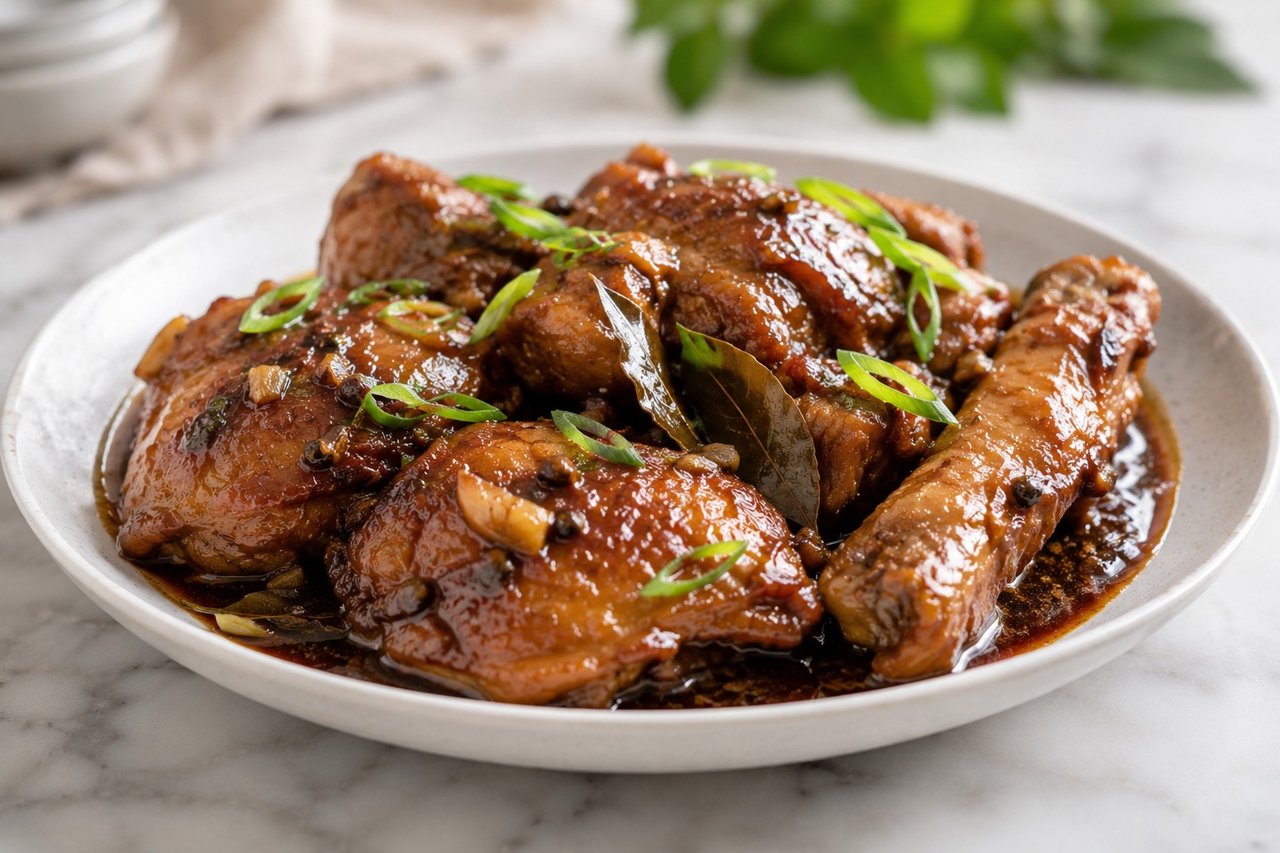
Adobo is one of those dishes that gets better with time, not worse. The chicken marinates in vinegar and coconut aminos, sears, then braises in its own marinade until the sauce reduces down to something glossy and clinging. Leftovers the next day taste even deeper than the first night.
The vinegar here is not just for flavor. It is part of what tenderizes the chicken as it marinates, and apple cider vinegar carries a small amount of its own beneficial acids along the way. Garlic goes in heavy, and it is not decoration. Between the marinade and the braise, this dish gets a real dose of it.
The traditional recipe includes black pepper and a pinch of chili flakes. Both are left out here rather than swapped. The garlic and bay leaves carry enough depth that neither is missed.
Ingredients
- 1 1/2 pounds chicken thighs and drumsticks, bone-in
- 1/2 cup apple cider vinegar
- 1/3 cup coconut aminos
- 6 garlic cloves, minced
- 1 teaspoon sea salt
- 2 tablespoons avocado oil
- 4 bay leaves
- 2 teaspoons coconut sugar
- 1/3 cup water
- 1 tablespoon green onion, chopped, for garnish
Method
Start the marinade well before you plan to cook. Pat the chicken dry, then stir the vinegar, coconut aminos, garlic, and salt together in a bowl big enough to hold everything. Turn the chicken through it, cover, and set it in the fridge. Thirty minutes will work if you are short on time, but overnight is where this dish really opens up.
When you are ready to cook, lift the chicken out piece by piece and set the marinade aside; do not discard it. Get a deep skillet hot over medium-high heat with the avocado oil, then lay the chicken in without crowding the pan. Give it a few undisturbed minutes on each side, just long enough for the skin to color and tighten before you flip it.
Once every piece has picked up some color, pour the reserved marinade back over the chicken and drop in the bay leaves, coconut sugar, and water. Put the lid on, drop the heat until it's just barely bubbling, and leave it alone for about half an hour. Check near the end: the liquid should have pulled back into something thick enough to coat the back of a spoon. If it still looks thin, take the lid off for the last few minutes and let it reduce further. Scatter the green onion over the top and serve it over cauliflower rice, spooning extra sauce from the pan onto each plate.
*Adapted from unboundwellness.com by Michelle Hoover*

How to Move Autoimmune Toward Remission
The 3 factors behind an Autoimmune condition and the 2 paths forward, free, straight to your inbox.
No spam. Unsubscribe anytime.
Your guide is on its way. You can also open it now (PDF).

Further reading
Daniela Hess, MSEd, is a co-founder of Great Energy and an Autoimmune Educator and Functional Wellness Consultant who lives and thrives with Hashimoto’s. She is not a licensed medical provider.
More recipes with Chicken, Garlic, or Clove
A Fast Pork Stir-Fry for the Nights You Have Nothing LeftA Japanese beef bowl rebuilt over cauliflower riceA Make-Ahead Meal for the Days You Cannot CookA blended chicken and asparagus soup on a sweet potato base, finished with arugula, asparagus tips, and lemonA gentle, nightshade-free vindaloo you stir together and walk away fromA hot and sour soup that keeps the comfort and skips the pepper heatA pickle-brined fried chicken sandwich rebuilt for healing, wrapped in lettuceA reworked AIP tikka masala, warm and creamy, built without the nightshades and seedsFrom the glossary
Words in this recipe you can look up. Tap or click a term to learn what it means.
AdoboBraiseCoconut aminosCoconut sugarReduceEvery ingredient in this recipe is on the Core Autoimmune Protocol food list.
Download the Core Food List (PDF) Explore the food list