Sauces, condiments & dressings
Orange and avocado dressing: the creamy citrus pour-over for salads and bowls
Sauces, condiments & dressings · serves 6 · under-15 min
Core AIP · Elimination phase compliant
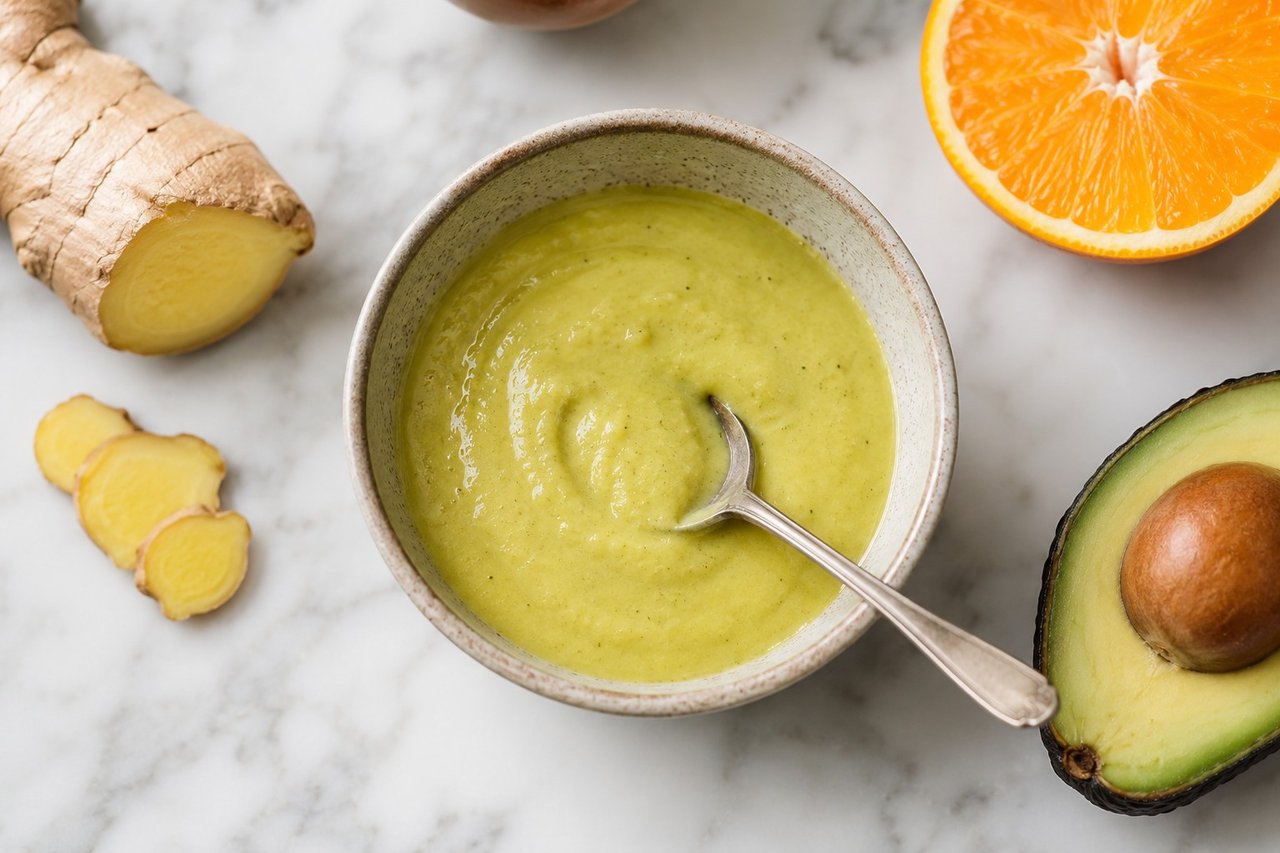
This dressing uses avocado in the way a traditional creamy dressing uses dairy - as an emulsifier and fat source that gives the liquid a body and richness that olive oil alone cannot produce. The avocado is completely blended into the dressing rather than left chunky, so it acts more like a cream than a topping. You taste the orange and ginger first, then the richness of the avocado underneath.
Avocado is one of the better sources of fat in AIP cooking: monounsaturated fat that supports anti-inflammatory pathways, potassium, and small amounts of magnesium. Combined with olive oil, the dressing delivers a meaningful dose of fat-soluble nutrients that help the body absorb the fat-soluble vitamins in the greens it goes over.
Fresh orange juice is the key here. Bottled juice is pasteurized and oxidized; it will make the dressing taste flat and faintly metallic. Use one medium orange squeezed fresh and the dressing will be bright and slightly floral.
Ingredients
- 1 ripe avocado
- Juice of 1 orange (about 1/3 cup fresh-squeezed)
- 1/4 cup extra-virgin olive oil
- 1/4 cup apple cider vinegar
- 1/4 cup water
- 1/2-inch piece fresh ginger, peeled and roughly chopped
- 1/2 tsp fine sea salt
Yield: About 1.5 cups - enough to dress 4 to 6 generous salads.
Method
Halve and pit the avocado. Scoop the flesh into a blender. Add the orange juice, olive oil, apple cider vinegar, water, ginger, and salt.
Blend until completely smooth. The dressing should be pale green, creamy, and pourable. If it is too thick, add a tablespoon of water at a time and blend again.
Taste and adjust - more ACV if it needs brightness, more salt if it tastes flat, a small slice more of ginger if you want more heat.
Note on color: Avocado darkens as it oxidizes. The dressing will stay green for 1 to 2 days but will discolor by day 3. Squeeze a little extra lemon juice into the sealed jar to slow oxidation if you plan to store it longer.
How to use it
- Dress a spinach salad with grated carrot, sliced cucumber, and olives (the original pairing)
- Use as a dressing for a cold roasted beet and arugula salad
- Pour over a grain-free breakfast bowl with roasted sweet potato and soft-cooked beets
- Use as a dip for cassava chips or jicama sticks
- Thin slightly with additional water and use as a marinade for chicken breasts before roasting
- Drizzle over a warm bowl of roasted root vegetables and spinach
Storage
Refrigerator: up to 3 days, sealed tightly. The dressing will darken on the surface - stir or shake before using. The flavor is best within the first 2 days.
*Adapted from autoimmunewellness.com/spinach-salad-with-orange-avocado-dressing/ by Mickey Trescott*
Nutrition
Estimated per serving (serves 6), calculated from the ingredients. Actual values vary with brands, sizes, and how much sauce or dressing you use.
How to Move Autoimmune Toward Remission
The 3 factors behind an Autoimmune condition and the 2 paths forward, free, straight to your inbox.
No spam. Unsubscribe anytime.
Your guide is on its way. You can also open it now (PDF).

Further reading
Daniela Hess, MSEd, is a co-founder of Great Energy and an Autoimmune Educator and Functional Wellness Consultant who lives and thrives with Hashimoto’s. She is not a licensed medical provider.
More recipes with Avocado, Orange, or Ginger
Avocado and radish over greens: a creamy, citrus-bright side that travelsno-cook radish and greens salad with a blended avocado-citrus dressingA bright fruit salad you can make in one bowlA bright raw slaw of shredded carrot and radish tossed in a no-cook mint and turmeric pestoAIP herb-rubbed pork tenderloin with warm blueberry-balsamic-shallot sauceAIP teriyaki sauce: the Asian pantry staple, rebuilt without soy or sugarBacon, apple, and avocado with lemon-ginger dressing: a salad that builds the habitBeet and carrot salad: bright, make-ahead, and forgivingFrom the glossary
Words in this recipe you can look up. Tap or click a term to learn what it means.
CassavaEmulsifierJicamaMagnesiumPotassiumEvery ingredient in this recipe is on the Core Autoimmune Protocol food list.
Download the Core Food List (PDF) Explore the food list